Common Mistakes Parents Make When Applying to Private Schools

private_school_admissions_mistakes

My team and I personally work with U.S. as well as international families (who reside in the U.S. or are abroad) during the private school application admissions process.  We have worked with families from over 130 different countries and on all seven continents. My firm works with families who are interested in top day and boarding schools primarily on the east and west coast.

Year after year, I hear about the number of mistakes that parents make during the admissions process.  I hear about these mistakes from parents whose children were rejected and waitlisted from schools and wish to engage our services. I thought I would share what I believe to be five frequent, significant mistakes.

  1. Assuming that it’s all about your connections. Many parents assume that admissions into competitive schools are about connections.  Parents often ask me if they should have their friends, neighbors and/or colleagues who have a relationship with a private school write a recommendation letter for their child. As I always state to parents: everyone has connections.  Schools are also aware that parents try to leverage their perceived connections.  But the truth of this matter is those connections do not always result in connecting your child to receive an acceptance letter.  The letters of recommendation should be meaningful and demonstrate that the recommender knows your child well.  In my experience, I have read letters of recommendations that parents perceive to be excellent when in fact they contain damaging information that will certainly cause rejections.
  2. Not preparing for the parental and student interviews. Being thorough and picky about a private school choice is extremely important.  But one thing is certain; top private schools will be equally as picky when choosing your child to be a member of their prestigious community.  Is your child ready to answer any and all of the private school interview questions?  In addition, admissions officers are proficient in observing non-verbal cues and evaluating character attributes that communicate true student feelings and whether parents complement a school’s educational philosophy. Though the private school exam results are very important in the admission’s process, the interview is another hurdle, set to be more selective. The admissions committee is going to judge your child (and parents) based on the way they answer their questions. I personally conduct in-depth, multiple interview-preparation sessions with my clients.
  3. ProcrastinationIdeally parents should start researching and visiting schools at least a year before they plan to apply. The private school admissions process is competitive and it takes time to research schools and determine which schools are appropriate for your child. I often see my clients’ peers beginning the process late in the game. These families usually do not have a good admissions outcome – the child is rejected.  I work with many international families who are quite accustomed to competitive private school placement. Together, we start to plan admissions strategies a year in advance.  The result of this strategy: this year, all of my clients (both international and U.S.) were accepted into their top choice schools.
  4. Parental Hubris. Many parents may assume that their skill sets, professional title or socio-economic status will be the ticket for their child to be accepted to the school of their choice.  Simply put, schools are accepting the entire family. They carefully take into consideration parental behavior at interviews and throughout the admissions process when considering a child as a part of their community.  Parents, if you think that only your child needs to prepare for the admissions process, THINK AGAIN.  You have just as much homework as your child does. Top private schools take the whole family into consideration when they are making their decisions.  Schools interview parents because of the crucial role they play in their child’s experience at school.  They also want to know that you are applying for the right reasons, share their educational philosophy and will carry it over at home. 
  5. Not Seeking Professional Advice:  Private school admissions and placement is no longer about just developing a spreadsheet, visiting schools, filling out applications and hoping for the best.  Professional admissions advisors regularly visit schools to gain first hand knowledge, insight and experience of each school’s unique perspective, workings and admissions policies.  Once settled on a school or school list, an admissions advisor can aid families in building an admissions plan to follow so that no piece of the admission process suffers from short shrift or omission. Professional admissions advisors can also help a family manage the application process and prepare for school interviews.  With regard to the competitive admissions process to top private schools, like a professional Olympic coach, a professional admissions advisor provides that competitive edge.

It’s better to avoid mistakes early and during the admissions process than end up having multiple rejections and huge disappointments later!

———————————————————————————————————————————–

Dr. Paul Reginald Lowe is the managing director and lead admissions expert at Pinnacle Educational Center Admissions Advisors Group’s Private School Admissions Advisors.   Dr. Lowe specializes in providing exclusive concierge-type admissions advisory services for U.S. and international families and students who are interested in applying to top U.S. boarding and day schools.  Dr. Lowe also helps U.S. and international students gain admissions into their top choice private schools after they have been wait-listed and rejected.
 

6 Common Mistakes International Students Make During the College Admissions Process

International Students

As an admissions advisor and educational consultant for over 20 years, I have seen more and more international students who are enrolled in their local high schools or U.S. boarding schools applying to U.S. colleges.  Year after year, I have observed common mistakes that they make during the college admissions process that cause their applications to be rejected.

  1. Not doing research:  Most international students know a little about a few universities and not much more. They haven’t researched key things like academic programs and financial aid. They haven’t considered the accessibility, weather or cost of living in the city where they’ll be living.
  2. Not asking questions: Many international students don’t ask questions.  To many it’s not culturally appropriate. By not asking questions they may obtain misinformation and be misguided during the admissions process. 
  3. Not planning ahead: Most international students expect U.S. college admissions to be very streamlined and the same at each university.  In reality, every university has a different process and schedule.  International students need to develop a timeline and checklist and plan ahead accordingly.
  4. Not understanding the Common Application:  The Common Application is a way which schools assess students and select students.  Many international students misunderstand the complexity and nuances of the Common Application and make egregious and irrevocable mistakes on the Common Application which inevitably result in rejections.
  5. Not Marketing Themselves:  The competitive college admissions process is about developing and marketing your personal brand not just about your A-levels, TOEFL scores, or SAT scores.  Many international students view college admissions selection process quantitatively not qualitatively.  They need to understand the American schools’ expectations during the selection process. They need to share their accomplishments and achievements in a meaningful and compelling way to schools through the Common App.
  6. Depending solely on educational agents:  While educational agents in their countries are resources for international students, many agents in their countries do not constantly travel to U.S. colleges and universities to know, in real-time, the changes in each university admissions policies.  For example, Harvard’s admissions policy and mission is different from Yale, Princeton, Brown, MIT, Columbia, etc.

———————————————————————————————————————-

Dr. Paul Reginald Lowe is the managing director and lead admissions expert at Pinnacle Educational Center Admissions Advisors Group.  Dr. Lowe specializes in providing exclusive concierge-type admissions advisory services for U.S. and international families and students who are interested in applying to Ivy League and highly selective colleges and combined BS/MD programs.  Dr. Lowe also helps students gain admissions into their top choice private schools and colleges after they have been deferred, wait-listed and rejected.

As an experienced and trusted admissions advisor for over 20 years, Dr. Paul R. Lowe is an active member of the following organizations that uphold the ethical and professional standards and principles of good admission practices in college and independent school counseling: Higher Education Consultants Association (HECA), National Association for College Admissions Counseling (NACAC), New Jersey Association for College Admission Counseling (NJACAC), New York State Association for College Admissions Counseling (NYSACAC) and International Association for College Admissions Counseling (IACAC).

Character Counts in Private School Admissions

Character in Private School Admissions Dr Lowe

Being thorough and particular when evaluating a private school choice is extremely important for parents.  But one thing is certain…the competitive private schools will be equally as picky when choosing your child as a member of its incoming class.  Private schools have been using the traditional academic criteria of SSAT/ISEE and grades for a number of decades.  However, admissions personnel have long recognized that these cognitive measures are limited in their ability to predict a student’s fit in their schools’ community and program.  Increasingly they are determining how to accurately evaluate character attributes of a student as a factor in private school admissions.

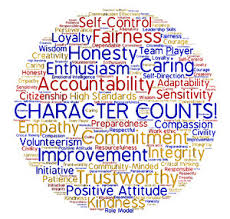
Numerous traits were evaluated and discussed by admissions professionals participating in think tanks and summit meetings regarding admissions and character. Character attributes were then rated according to importance.  Among these character attributes, honesty, integrity, empathy, curiosity, creativity, teamwork, adaptability, resilience, community, generosity, self-control, adaptability and optimism were included on the list of the most important.

Each institution considers the positive attributes in the light of the goals of the school with regard to their students’ success. They have spent the last several years determining the best way to evaluate students’ character attributes during the admissions process.

Intended to complement the cognitive measures currently assessed in the admission process, the new Character Skills Assessment (CSA) which is a non-cognitive assessment will offer insights into an applicant’s character attributes and add great value to the holistic evaluation of applicants.

This new assessment is intended to provide a more complete and comprehensive picture of each applicant, providing insight into important issues of character that currently are often difficult to evaluate.  Schools will use these assessments to make even better informed decisions.

The Character Skills Assessment will be fully implemented in the 2017-2018 private school admissions season.

———————————————————————————————————————————-

Dr. Paul Reginald Lowe is the managing director and lead admissions expert at Pinnacle Educational Center Admissions Advisors Group’s Private School Admissions Advisors.   Dr. Lowe specializes in providing exclusive concierge-type admissions advisory services for U.S. and international families and students who are interested in applying to top U.S. boarding and day schools.  Dr. Lowe also helps U.S. and international students gain admissions into their top choice private schools after they have been wait-listed and rejected.

Ready to Start Thinking About Applying to Boarding School?

The kids are settling in summer camp.  Moms and Dads have a much needed respite from the demands of school schedules, play dates, practices, rehearsals and other extracurricular activities.  But soon enough, it will be time to start the seemingly daunting tasks of the private school admissions season.  It is important to realize that the private school application process has become increasingly competitive due to increased interest from international families, as well as domestic families looking for alternatives to public school and the even more heightened competition for day school admissions.  It would be wise, therefore, to begin thinking of admissions strategies and to consider visiting these schools as well as other schools in your area to get an idea of which school would be best for your child.

When you are ready to start the process for boarding school admissions, here is a list of schools for you to consider that many of our clients end up attending:  Phillips Exeter Academy, Exeter, NH;  Phillips Academy Andover, Andover, MA;  St. Paul’s School, Concord, NH;  Deerfield Academy, Deerfield, MA;  Groton School, Groton, MA;  The Lawrenceville School, Lawrenceville, NJ;  Milton Academy, Milton, MA;  Middlesex School, Concord, MA;  The Hotchkiss School, Lakeville, CT;  Choate Rosemary Hall, Wallingford, CT;  Peddie School, Hightstown, NJ;  The Taft School, Watertown, CT;  The Loomis Chaffee School, Windsor, CT;  Concord Academy, Concord, MA;  St. George’s School, Newport, RI;  Blair Academy, Blairstown, NJ;  The Masters School, Dobbs Ferry, NY;  St. Mark’s School, Southborough, MA;  Kent School, Kent, CT ;  Northfield Mount Hermon, Mount Hermon, MA;  Berkshire School, Sheffield, M;  Emma Willard School, Troy, NY;  The Governor’s Academy, Byfield, MA;  The Hill School, Pottstown, PA;  Westminster School, Simsbury, CT;  Westover School, Middlebury, CT;  Mercersburg Academy, Mercersburg, PA;  Suffield Academy, Suffield CT;  Brooks School, North Andover, MA;  Portsmouth Abbey School, Portsmouth, RI;  Miss Porter’s School, Farmington, CT and The Hun School of Princeton, Princeton, NJ.

———————————————————————
Dr. Paul Reginald Lowe is the managing director and lead admissions expert at Pinnacle Educational Center Admissions Advisors Group’s Private School Admissions Advisors.   Dr. Lowe specializes in providing exclusive concierge-type admissions advisory services for U.S. and international families and students who are interested in applying to top U.S. boarding and day schools.  Dr. Lowe also helps U.S. and international students gain admissions into their top choice private schools after they have been wait-listed and rejected.