Disappointed That You’ve Been Rejected From Your Top Choice Colleges? Find Out What Your Next Step Should Be!

Based on my over 20 years experience as a college admissions advisor and admissions strategist, I thought I would share some advice with students who have been receiving disappointing decision results.

Admissions committees give careful, individual attention to each applicant.  They review each applicant with a magnifying glass and compare each applicant to other qualified applicants.  They accept applicants who will inspire those around them during their college years and beyond.

My firm’s strategies involve widening the lens through which our applicant-clients are viewed, recognizing and valuing the different dimensions that shape each student.  We understand, in real-time, how an admissions committee at a particular college may view each dimension separately and collectively in comparison to other students during the selection process by visiting schools and talking with admissions officers.  As an alternative to settling for a rejection decision (which most students do) to a student’s first choice school, I posit this possible solution:

The student may consider reapplying as a transfer student.  It is not too early for a high school senior to consider this.  I call it our Admissions Second Chance Program.  I review and investigate what went wrong, because,  in all cases of rejection decisions, something wasn’t right!  Usually I find innumerable mistakes or homogeneity on the Common Application and/or school-specific supplemental essays.  Many times I have discovered that no matter how “amazing” the student sounds on paper (top grades, high GPA and SATs, volunteerism, extracurricular activities, recommendations, ESE (Expensive Summer Experiences), to me, they were unconvincing to the admissions committee at a specific school for many reasons.  In these cases, we make recommendations to improve the student’s profile and properly connect the dots within their application and beyond.  In unique cases, we have been retained by clients who were initially rejected and after our review and intervention the student’s application was reconsidered and ultimately accepted for admission.

By visiting the Ivies and highly selective schools, understanding the dynamic changes and nuances in individual colleges, and knowing what to do to make a student stand out amongst other applicants, my team and I gain an insightful perspective of each school and develop strategies to help our clients get accepted.

“Admissions is a competitive sport!  Why gamble with uncertainty?” – Dr. Paul Lowe.

Dr. Paul Reginald Lowe, founder and managing director of Pinnacle Educational Center Admissions Advisors Group, provides comprehensive counseling advice, exclusively for admissions to top private schools; Ivy League and highly-selective colleges/universities; BS/MD programs; graduate and medical schools and top visual and performing arts programs.   The admissions affiliate: Ivy League Admissions Advisors specializes in admissions to Ivy League and highly selective colleges,  Dr. Lowe also specializes in helping students who have been wait-listed, deferred or rejected gain admission into their top-choice schools: College Application Rejected. and student who wish to transfer to another college:  College Transfer Admissions Advisors.
Ivy League Application Boot Camp 2018

Pinnacle Educational Center/Admissions Advisors Group (PECAAG) announces the launch of its 2018 Ivy League Application Boot Camp.  The 2-day comprehensive, intensive and informative application boot camps, held during the summer, are specifically for high school rising seniors (current juniors) who have decided to apply to Ivy League colleges and universities. (see Dr. Lowe’s blog: Why Your Child Should Apply to Ivy League College or University?)

The camp is also for current college students who are interested in transferring and current high school seniors who were rejected the first time around and interested in reapplying to the Ivies.  Camp activities include: Application (including essay) brainstorming, review, editing during the camp, followed by an application consultation prior to submission of application.  The fee is $8,500.

The rejection rate for Ivy League schools is as high as 95%.  On average 35,000 applicants apply to each school.  That means that on average 25,000 to 33,000 students are REJECTED each year from each school. “Schools like Harvard Yale and Princeton could pick everyone with 4.0s, perfect SAT scores (and top violinist and pianist) and they could fill an entire class 10 times over,” said camp coordinator, Dr. Diana Alexandrova, the camp’s coordinator and Pinnacle’s International Student Advisory’s managing director.  “Our camp is also beneficial to international students who attend U.S. boarding schools or schools in their respective countries who want a competitive edge in the Ivy League application process.”

“The numbers are staggering and speak to the value and worth of an Ivy League degree” said Dr. Paul R. Lowe, Pinnacle’s CEO and president and the camp’s director.  “It is enjoyable to help students in this way.  Our camp attendees benefit from our discovery of mistakes they could have made on their applications.”

Dr. Paul Reginald Lowe, founder and managing director of Pinnacle Educational Center Admissions Advisors Group, provides comprehensive counseling advice, exclusively for admissions to top private schools; Ivy League and highly-selective colleges/universities; BS/MD programs; graduate and medical schools and top visual and performing arts programs.   The admissions affiliate: Ivy League Admissions Advisors specializes in admissions to Ivy League and highly selective colleges,  Dr. Lowe also specializes in helping students who have been wait-listed, deferred or rejected gain admission into their top-choice schools: College Application Rejected. and student who wish to transfer to another college:  College Transfer Admissions Advisors.
Regular Decision Notification Dates: 2018

It’s March 8, 2018! That means that within 20 days high school seniors will begin to discover, after all their hard work, where they will be accepted, wait-listed or rejected

Based on our research and discussions with directors of admissions, many colleges  regular admission decisions ready by March 31 or April 1.

Here are regular decision notification dates (and approximate times) for Ivy League and highly selective colleges and universities:

  • Barnard College:  Late March
  • Brown University:  March 28, 2018
  • Cal Tech:  Mid March – TBA
  • Carnegie Mellon University:  Mid April
  • Columbia University:  March 28, 2018
  • Cornell University:  March 29, 2018
  • Dartmouth University:  March 28, 2018
  • Duke University:  April 1, 2018
  • Georgetown University:  April 1, 2018
  • Georgia Institute of Technology:  March 10, 2018
  • Hamilton College:  Late March
  • Harvard University:  March 28, 2018
  • Johns Hopkins University:  March 16, 2018
  • Lehigh University:  Late March
  • MIT:  March 14, 2018 (Pi Day)
  • Northwestern University: Late March
  • Purdue University: (Jan 15 – March 15, 2018
  • Princeton University: March 28, 2018
  • Stanford University:  April 1, 2018
  • Swarthmore College: April 1, 2018
  • Tufts University:  April 1, 2018
  • University of Chicago:  Late March
  • University of Michigan: Late March
  • University of Notre Dame:  Late March
  • University of Pennsylvania:  March 28, 2018
  • University of Virginia:  Late March
  • Vanderbilt University:  April 1, 2018
  • Vassar College:  Late March
  • Villanova University:  Late March
  • Wesleyan University:  Late March
  • Yale University:  March 28, 2018

“Admissions is a competitive sport!  Why gamble with uncertainty?” – Dr. Paul Lowe

Dr. Paul Reginald Lowe, founder and managing director of Pinnacle Educational Center Admissions Advisors Group, provides comprehensive counseling advice, exclusively for admissions to top private schools; Ivy League and highly-selective colleges/universities; BS/MD programs; graduate and medical schools and top visual and performing arts programs.   The admissions affiliate: Ivy League Admissions Advisors specializes in admissions to Ivy League and highly selective colleges,  Dr. Lowe also specializes in helping students who have been wait-listed, deferred or rejected gain admission into their top-choice schools: College Application Rejected. and student who wish to transfer to another college:  College Transfer Admissions Advisors.
Top Colleges Enhance Efforts To Enroll Low-Income Students

As the cost of college continues to rise, college enrollment is becoming out of reach for low-income students.   According to the College Board, the average cost of tuition and fees for the 2017–2018 school year was $34,740 at private colleges, $9,970 for state residents at public colleges, and $25,620 for out-of-state residents attending public universities.

Launched in December 2016, the American Talent Initiative (ATI), funded by Bloomberg Philanthropies, was founded with a national goal of educating 50,000 additional high-achieving, lower-income students at the 270 colleges and universities with the highest graduation rates by 2025.

Based on the most recent federal data available, there are approximately 430,000 lower-income students enrolled at these 270 institutions.  ATI aims to increase and sustain the total number of lower-income students attending these top-performing colleges to about 480,000 by 2025. To reach this ambitious goal, ATI will work to support its members’ work while adding more top-performing colleges to its membership in the coming months and years. 

ATI now has 97 member colleges that are taking the steps toward socio-economic diversity in colleges. Each ATI member institution has started to enhance its own efforts to recruit, enroll, and support lower-income students, learn from each other, and contribute to research that will help other colleges and universities effectively serve lower-income students

Educators, college administrators and legislature recognize that America’s top-performing colleges have an important role to play in this effort.  Research shows that when high-achieving, lower-income students attend high-performing institutions, they graduate at higher rates, and have a greater chance of attaining leadership positions and other opportunities throughout their lives.  Yet in each graduating high school class, there are at least 12,500 lower-income young people with outstanding academic credentials who do not enroll at institutions where they have the greatest likelihood of graduating…

ATI currently represents many of the country’s most elite colleges and universities.  To date, all the Ivy League schools are ATI members.   Here is a direct effect of ATI:  After 28 years without transfer students, Princeton University will begin accepting students from community colleges in fall 2018.

Dr. Paul Reginald Lowe, founder and managing director of Pinnacle Educational Center Admissions Advisors Group, provides comprehensive counseling advice, exclusively for admissions to top private schools; Ivy League and highly-selective colleges/universities; BS/MD programs; graduate and medical schools and top visual and performing arts programs.   The admissions affiliate: Ivy League Admissions Advisors specializes in admissions to Ivy League and highly selective colleges,  Dr. Lowe also specializes in helping students who have been wait-listed, deferred or rejected gain admission into their top-choice schools: College Application Rejected. and student who wish to transfer to another college:  College Transfer Admissions Advisors.
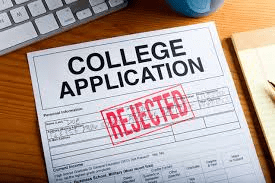
2018 Hardest Colleges To Get Into In America

College admissions decisions will be released in late March through early April.  Many top high schools seniors will be disappointed when they check their emails to discover that they will be rejected from the Ivies and highly-selective colleges.  Even with having a high GPA, top SAT scores, high grades and a “manufactured” application and personal statement will be rejected from these schools.  Year after year, I hear the horror stories from parents whose kids got in nowhere because they thought the college admissions race was just about grades, SAT scores, their perceived  ‘unique’ applications, generic essays and perfect connections.

Niche, a company that researches and compiles information on educational institutions released its latest list of the hardest colleges to get into in America.  The hardest colleges ranking is based on acceptance (rejection) rates and SAT/ACT test scores using data from the U.S. Department of Education.  The rejection rates of these colleges range from 85% to 95%.

Here is a list of the top 25:

  1. Harvard University:  95%
  2. Stanford University:  95%
  3. Yale University:  94%
  4. Massachusetts Institute of Technology:  92%
  5. California Institute of Technology:  92%
  6. Princeton University:  93%
  7. University of Chicago:  92%
  8. Columbia University:  93%
  9. Vanderbilt University:  89%
  10. Brown University:  91%
  11. University of Pennsylvania:  91%
  12. Duke University:  88%
  13. Dartmouth College:  88%
  14. Harvey Mudd College:  87%
  15. Pomona College:  91%
  16. Northwestern University:  88%
  17. Rice University:  89%
  18. Johns Hopkins University:  87%
  19. Swarthmore College:  87%
  20. Claremont McKenna College
  21. Washington University in St. Louis:  83%
  22. Cornell University:  87%
  23. Amherst College:  86%
  24. Bowdoin College:  85%
  25. Tufts University:  86%

Ivy League and highly selective colleges use holistic, committee-based and team-based approaches and review processes when evaluating applicants for admission.  That means admission to these colleges is not based on a simple formula of grades and test scores.  Instead, these colleges consider a variety of factors including but not limited to:  the student’s academic record, extracurricular interests, intellectual achievements, character, emotional intelligence and cultural intelligence and personal background to decide who will be rejected or accepted.

Dr. Paul Reginald Lowe, founder and managing director of Pinnacle Educational Center Admissions Advisors Group, provides comprehensive counseling advice, exclusively for admissions to top private schools; Ivy League and highly-selective colleges/universities; BS/MD programs;  graduate and medical schools and top visual and performing arts programs.  He also specializes in helping students who have been wait-listed, deferred or rejected gain admission into their top-choice schools: College Application Rejected. and student who wish to transfer to another college:  College Transfer Admissions Advisors.
College Transfer Admissions Tips

The college application season begins to draw to a close (decisions for competitive schools are being released in late March), one would believe that everything is slowing down.  But actually, we are in the throes of the college transfer season!  Many college freshmen and sophomores, after a semester or so,  have already decided that they need to transfer to another college.  Throughout the years, I have encountered many students who wish to transfer.  It is now becoming a growing trend.  In our practice, we are increasingly even seeing students who are making the decision to transfer while in their first semester, freshman year.  Here are some of the main reasons I see why students decide to transfer:

  • They are unhappy:  Why remain in an environment for four years where you will be unhappy and miserable – and pay tuition, room and board that will cost you (or your parents) $200,000 – $250,000.
  • Fresh start:  For time to time, a student may have faced unexpected challenges, disciplinary actions at a college and they need a new college environment
  • Institutional prestige:  You may be attending your safety school and you want a second shot or you were discouraged from applying to your dream school.  In any case, you desire what we call an UPGRADE.
  • Pre-graduate school preparation:  Your current college may not have a strong pre-law,  pre-med or pre-business program needed for graduate school admissions preparation or employment.

Whatever reason you may have for transferring, the bottom line is that you need to develop an effective action plan to transfer.   Here are ten tips for prospective college transfer students:

  1. Obtain your high school transcript:  As a transfer applicant, colleges like to see your official high school and college transcripts.
  2. Obtain college letters of recommendations:  What professors have known you and can write you a meaningful letter of recommendation?
  3. Common App Transfer Application:  Colleges use the Common App.  Take it seriously and be mindful of deadlines and required supporting documents.  Colleges have different policies for transfer students.
  4. Transfer Essays:  College transfer applicants must write meaningful and convincing essays to transfer into their top-choice school.  The main essay: What are your reasons for transferring?  Watch out for the school-specific supplementals!
  5. Provide a current college transcript:  Grades matter!  What are your current academic courses?
  6. Standardized tests:  If you have taken standardized tests make sure that you report them on your Common App.
  7. Extracirricular activities:  In what school organizations are you involved?  Are you involved in activities outside of school?
  8. Disciplinary actions:  If for any reason, no matter how minor, you had a disciplinary action while in college, it’s best (and honest) to report it on your Common App.  under Family Educational Rights and privacy Act (FERPA), your current college can disclose your school records, without your consent to other schools to which you are transferring.
  9. Research and visit your target schools:  It’s important to research as many schools as possible, develop of a short list and visit schools on this list.
  10. Consider seeking professional, expert advice:  Why?  In my professional experience, I find that prospective transfer students need to develop individualized, effective transfer plans and implement them.  As a transfer student, you no longer have the assistance of your public high school guidance or private high school college counselor.  You will need an educational consultant who specializes in college transfer admissions.  You’re basically on your own in a process that is even more competitive than when you applied to college the first time!

Dr. Paul Reginald Lowe, founder and managing director of Pinnacle Educational Center Admissions Advisors Group, provides comprehensive counseling advice, exclusively for admissions to top private schools; Ivy League and highly-selective colleges/universities; BS/MD programs;  graduate and medical schools and top visual and performing arts programs.  He also specializes in helping students who have been wait-listed, deferred or rejected gain admission into their top-choice schools: College Application Rejected. and student who wish to transfer to another college:  College Transfer Admissions Advisors.

Do Admissions Officers Consider Diversity In College Admissions?

Diversity in college admissions

Diversity in college admissions:  Colleges are looking for cultural, intellectual and meta-cognitive diversity in their classes as well as students who can relate to diverse populations.  Colleges accept classes not just great students.  They are seeking students who understand and appreciate other races cultures and ethnicities.  With regard to diversity, admissions committees ask the following questions: Can the applicant co-exist in our diverse community of different students who are global thinkers?  Does the applicant profile demonstrate a lack of a diversity experience?  Has the applicant meaningfully interacted with people outside of their socio-economic, cultural and ethnic norms?  It has been my observation that college admissions officers and deans of admissions behave like forensic investigators; they analyze and assess how, why and when dots are connected.

Colleges want talented, intellectually engaged students who will be meaningful contributing members of a diverse incoming class and future alumni who will be their global ambassadors.  They do not seek students who are “unique just like everyone else” in their respective communities.  In my experience, applicants who are accepted are those who can standout and lucidly articulate their achievements, goals and personalities and project themselves in a positive light to a committee of six to ten diverse people!

In my firm, which consists of a culturally, ethnically and racially diverse team, we truly appreciate and understand this emphasis, and we innately embrace the meaning and value of standing out and apply it to the competitive admissions process.  Our “Diversity Competitive Advantage” translates to successful admissions results for our clients!

Dr. Paul Reginald Lowe, founder and managing director of Pinnacle Educational Center Admissions Advisors Group, provides comprehensive counseling advice, exclusively for admissions to top private schools; Ivy League and highly-selective colleges/universities; BS/MD programs;  graduate and medical schools and top visual and performing arts programs.  He also specializes in helping students who have been wait-listed, deferred or rejected gain admission into their top-choice schools: College Application Rejected.

College Admissions Tips for Art Students

High school students who are interested in arts programs or majoring in art in college must prepare for the college admissions process in the same manner as other college-bound students.  However, in addition to grades, GPA, extracirricular activities and college applications, they must develop a professional art portfolio.  The art portfolio requirements vary at each college so it is essential to contact each college Art department for these specifications.

Here are several useful tips for college-bound art students:

  1. Have your artwork photographed, videotaped, scanned or graphically converted to display in a professional manner.
  2. Show a range of techniques and mastery in the works you choose.
  3. Choose works that show creative thinking and a unique perspective.
  4. Begin developing your portfolio during your junior year so that you may evaluate what works you already have and plan to create works in areas that you are lacking.
  5. Take your works to a professional for critiquing!  An art teacher, local artist, art professor or a current art student may be good sources to give your portfolio a trial run.
  6. Since your art portfolio is a part of your college admissions process, you should consider retaining the services of an admissions advisor who has experience in working with art students and understands the philosophy and academic mission of each of your target colleges.

Dr. Paul Reginald Lowe is the managing director of Pinnacle Educational Center Admissions Advisors Group network.  He and his team of admissions advisors, through the admissions affiliate, Ivy League Admissions Advisors help students gain admissions to Ivy League and high selective colleges and universities.

2017 College Admissions Trends in Review

The National Association for College Admission Counseling in association with the US Department of Education and the Higher Education Research Institute developed a report that reflects trends college admissions in 2017.

Here are some of the highlights of trends in 2017 that you may need to follow in 2018:

  • Number of Applications per Student:  The increase in number of colleges to which each student applies continues a nearly perfect upward trend.
  • Application Volume:  There was continued growth in college application volume in 2017.   The number of applications from firs-time freshmen and international students increased.
  • Top factors in admissions offices decisions:  The most important were grades in college preparatory courses, overall high school GPA, admission test scores and strength of curriculum.  Among the next most important factors were the college essay, counselor and teacher recommendations, extracurricular activities and class rank.
  • Student-Counselor Ratios:  The average student-to-counselor ratio was 281-to-1.  The number exceeds the 250-to-1 maximum ration recommended by the American School Counselor Association.
  • Postsecondary/college admissions counseling by school counselors: On average, the time that counselors spend on postsecondary/college admissions counseling: 21 percent.
  • Early Decision and Early Action Activity:  There is an increase in the  number of applicants applying Early Decision and Early Action.
  • International Applicants:  A greater proportion of colleges rated the essay/writing sample as considerably important for international applicants, likely because of the additional confirmation of English skills that the essay provides.

Knowing and understanding past college admissions trends will be helpful for high school juniors (class of 2019) when they are in the throes of the college admissions process.  Trends help us (Pinnacle Educational Center Admissions Advisors Group) to develop and implement admissions strategies so that our clients are accepted to their top choice colleges and universities!

Dr. Paul Lowe is the managing director of Pinnacle Educational Center Admissions Advisors Group network.  He and his team of admissions advisors, through the admissions affiliate, Ivy League Admissions Advisors help students gain admissions to ivy League and highly selective colleges and universities.  Through his admissions affiliate:  College Application Rejected, he specializes in  helping students who have been rejected deferred, or waitlisted.  For college students who wish to transfer because they desire a better college or they simply dislike their current college: College Transfer Admissions Advisors.

The Changing Landscape of College Admissions

For years, elite colleges have tried to address a proportional decline of students arriving from areas beyond metropolitan and suburban areas.  These colleges have been implementing additional measures to address diversity issues on college campuses.  Increasingly, private elite colleges are seeking small-town and rural students.

One thing has not changed with regard to college admissions and diversity.  Recent studies by the National Center for Education Statistics have shown that even with Affirmative Action policies, Black and Latino students are more underrepresented at these colleges and the percentages of students in these schools have remained flat over the last 35 years.  The only increase in percentage of students by race are Asian students.

Research studies have shown admissions biases against rural students with financial needs; and found that leadership roles popular in rural communities, such as 4H clubs, Future Farmers of America and ROTC worked against the students who claimed them on applications.  As a result of the decrease in students from low-income and working-class white families from rural areas, colleges are now increasing their admissions effort to recruit these students.

What are some of the elite and selective colleges doing to address these issues?  Swarthmore has a created a program called Small Town Swarthmore.  Princeton has increased their recruitment efforts through transfer programs from community colleges to help students from rural backgrounds.

Colleges want U.S. geographical diversity, not just students predominantly from metropolitan and suburban areas.  As schools implement their plans to increase diversity in their incoming classes based on small town and rural students (as well as Black, Latino and Indigenous students), expect to see a change in demographics on elite college campuses that properly reflects the true diversity throughout the U.S. population.

Dr. Paul Lowe is the managing director of Pinnacle Educational Center Admissions Advisors Group network.  He and his team of admissions advisors, through the admissions affiliate, Ivy League Admissions Advisors help students gain admissions to Ivy League and highly selective colleges and universities.  Through his admissions affiliate:  College Application Rejected, he specializes in helping students who have been rejected, deferred or waitlisted.