College Admissions is a Competitive Sport- – How To Win Your Personal Admissions Game!

Many parents, students, guidance counselors, and even my fellow educational consulting colleagues are under the belief that college admissions is an exercise in determining the “right fit” and that gaining acceptance into the Ivies and highly selective colleges is just a game of chance and luck.  I disagree!

In participating in competitions these days, many students (K-12) are taught that everyone wins.  With regard to the college admissions process, it is acceptable and recommended that students believe they will eventually like whichever college where they end up.  That’s called SETTLING!

This statement may appear callous and insensitive.  But it is a statement that addresses the harsh reality of the competitiveness of college admissions.  The sooner one addresses this reality, the easier the college admissions process will seem.  Indeed, this reality would seem less harsh if students were to stop treating the college admissions process as a structured maze to be followed to a definitive end or as a predetermined algorithm.

I approach college admissions as a non-formulaic, competitive sport.  It’s about WINNING the ultimate trophy – acceptance into your top choice college.  After all, students are not taking all those APs, attempting to get perfect SAT scores, requesting seemingly perfect letters of recommendation, and getting A’s to lose!  By definition, you don’t play a competitive sport to lose!

Highly selective schools certainly have their choice of the cream-of-the-crop students as a result of all the applications they receive.  Therefore, the real part of the competition is to understand and recognize how you can stand out and win, especially in applications to the Ivies.

Because college admissions is a competitive sport, we proceed accordingly with our advisory services and prepare our clients as competitive athletes – to win!  We know that successful athletes must cultivate the positive qualities that are necessary to achieve victory-to win.

  • Persistence:  Endure until the end.  Persistence is simply the quality of always continuing to move forward and to continue regardless of perceived or real setbacks and challenges.  We cultivate our clients’ positive aspirations by encouraging persistent determination.
  • Have a positive mindset:  Being positive is an integral and intrinsic aspect of having the right winning mindset.  We constantly help our clients maintain a positive mindset to win!
  • Self-Confidence:  Really successful athletes are secure in their ability to play their best game.  We believe that qualified students should project themselves as successful athletes with inner confidence through their body language in a positive manner, a sort of positive posture.   We encourage our clients convey energy, enthusiasm and a positive attitude in communicating their achievements to key admissions officers and admissions committees.
  • Humility:  Ego (parental and student) is one of the largest reasons why qualified applicants are rejected. I recall and Ivy League officer stating that when reading many students’ applications: “these students think they are all that”.  If you practice humility, you will become an internally motivated person.  You will seek to achieve and improve yourself not for external validation, but to satisfy your own desire to keep growing as an athlete and a person.
  • Practice, Practice, Practice:  Practice deliberately with a purpose. Ultra-successful athletes reach their success by practicing with a deliberate purpose. They understand that in order to perform a skill at the highest level, they must practice it until they master it.  Successful athletes waste no time getting right into their routine and practice with mindfulness.  They don’t zone out or go through the motions.  Instead, successful athletes focus on the mechanics, feel, vibe and repetition of developing new skills in order to become an elite athlete.  We encourage and motivate our clients to constantly practice with a purpose.
  • Rhythm:  Rhythm is defined as the expression of timing, and its practicality in sports is vast.  Linear speed requires a well-timed sequence of (rhythmic) contralateral action.  Any delays or errors in this timing can drastically limit velocity of movement.  Rhythm plays a significant role in an athlete’s ability to successfully change direction fluidly and in time with extraneous factors such as teammates, opponents and apparatus (i.e. ball etc.).  Rhythm is a singular characteristic within the broader scope of coordination.  As a jazz harmonicist and banjoist (and physicist) who applies African Drumming, Blues, R&B, Calypso, Reggae, Funk, Hip Hop, Go-Go Swing, I naturally apply the use of rhythm to the competitive college admissions and application process.  It helps our clients adapt in an improvisational, non-linear and harmonic way to the nuances and changes in their college admissions journey and ultimately gets them accepted into their top choice colleges.

As a successful college admissions advisor, I apply my special “athletic coaching” skills and “rhythmic” musical strategies to help my clients successfully achieve their college admissions goals: ACCEPTANCE LETTERS.  Our strategic vision allows us to create, design and develop a compelling, authentic and distinctive personal brand for each of our clients.  This vision elevates and differentiates our clients in the competitive admissions environment so that they become WINNERS and are accepted into their top-choice schools.

“Admissions is a competitive sport!  Why gamble with uncertainty?” – Dr. Paul Lowe

Dr. Paul Reginald Lowe, founder and managing director of Pinnacle Educational Center Admissions Advisors Group, provides comprehensive counseling advice, exclusively for admissions to top private schools; Ivy League and highly-selective colleges/universities; BS/MD programs; graduate and medical schools and top visual and performing arts programs.   The admissions affiliate: Ivy League Admissions Advisors specializes in admissions to Ivy League and highly selective colleges,  Dr. Lowe also specializes in helping students who have been wait-listed, deferred or rejected gain admission into their top-choice schools: College Application Rejected. and student who wish to transfer to another college:  College Transfer Admissions AdvisorsSummer Camps:  BS/MD Application Boot Camp and Ivy League Application Boot Camp.

It’s Getting Tougher To Transfer To Top Colleges!

It’s the aftermath of the 2018 college admission season.  We are now aware of the Ivy League and highly selective college rejection rates.  The Ivy League colleges had a record number of applications and rejection percentages.  The rejection rates ranged from Cornell’s 89.7% to Harvard’s 95.4%.

Because so many “perfect” students were rejected, this will cause a trickle-down effect to second-tier and third tier schools.  In my firm, we are discovering that many families who are devastated by their children’s rejections are calling us regarding transfer.  Here is what students and their parents NEED to know:

  1. Transferring to the Ivies and elite colleges will be more difficult this year.  We have discovered, through our current research, that many students who were accepted are already committing to attend these schools.  Parents and students are aware of the value of an Ivy League degree.
  2. There are fewer spots available for transfer students.  Therefore, it’s even more competitive to transfer!
  3. Transfer applications are not viewed in the same way as regular applications to freshman classes.
  4. You may replicate the same mistakes that were on your Common Application.
  5. Students are on their own during the transfer process:  No college counseling support will be available from their current guidance counselors or private high school college advisors and there is no transfer help from the school which they will be attending in the fall.  Why would a school that accepted a student assist the student to transfer?
  6. The college transfer admissions process starts now!

As many concerned parents call us, stunned by the rejection decisions received by their children, we strongly advise parents that they need an experienced educational advisor to review their children’s Common Application because: something wasn’t right.  Now is the time to plan summer activities and create a “revised” game plan and positive momentum for their upcoming college freshman year to transfer.  See blog: College Transfer Admissions Tips.

It’s important that parents understand that transfer (especially to the Ivies) is even more competitive and involves even more diplomacy than traditional college admissions!

This year, all of our college transfer clients were accepted to their top choice colleges including Harvard, Yale and Columbia and Cornell and UPenn.  We are very proud of our success and extremely happy for these students and their parents!

“Admissions is a competitive sport!  Why gamble with uncertainty?” – Dr. Paul Lowe.

Paul Reginald Lowe, founder and managing director of Pinnacle Educational Center Admissions Advisors Group, provides comprehensive counseling advice, exclusively for admissions to top private schools; Ivy League and highly-selective colleges/universities; BS/MD programs; graduate and medical schools and top visual and performing arts programs.   The admissions affiliate: Ivy League Admissions Advisors specializes in admissions to Ivy League and highly selective colleges,  Dr. Lowe also specializes in helping students who have been wait-listed, deferred or rejected gain admission into their top-choice schools: College Application Rejected. and student who wish to transfer to another college:  College Transfer Admissions Advisors.


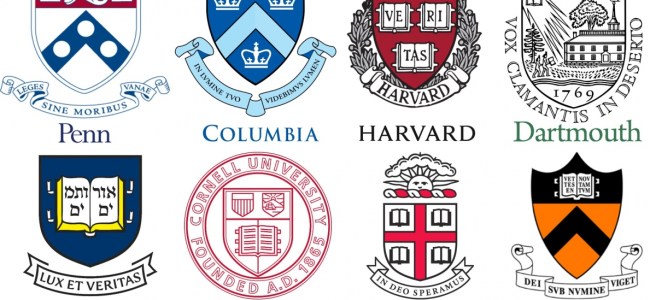
Why Your Child Should Apply to an Ivy League College or University?

I often hear from some parents in my college admissions seminars or who call my firm inquiring about our service: “It doesn’t really matter if you attend an Ivy League school” or “it doesn’t  make a difference if you attend an Ivy League school” and finally, “its all about the fit; it doesn’t matter where you go to college”.  I even hear from many of my peer independent educational consultants, public high school guidance counselors and private school college counselors (who are not Ivy League undergraduate alumni) that it really doesn’t matter if that a student should applies to the Ivies or attends the Ivies.  I even hear from parents whose children have applied to the Ivies (after they have taken 9 AP courses, received tutoring in order to achieve near-perfect SAT scores and written that perceived awesome essay) that it does really matter.  Really?

As an Ivy-trained physician-scientist, prior to entering the admissions advisory field 22 years ago, I like to corroborate and validate my professional recommendations and advice with meaningful studies and reports, and real data that have linear correlations.

Year after year, thousands of students apply for coveted spots and are rejected (see my blog on rejection rates).  There must be a reason or reasons why each year one reads the following statistic 30,000 students applying for 2,000 spots, or why there is an uptick in the number of international applicants to Ivy Leagues schools.

So let’s review the reasons why your child should apply to the Ivies:

  1. A study in the journal, Research in Social Stratification and Mobility, confirms parental suspicions that the best route to a top job is to attend an Ivy League school.  According to Dr. Lauren Rivera, the author of the study, “Elite professional service employers rely more on academic pedigree more than any other factor.  Where you went to school rather than what you did there makes the difference”.
  2. PayScale Inc., an online provider of global compensation data, in a survey demonstrated that an Ivy League diploma is still worth its price of admission and tuition.   An Ivy League education makes a job candidate stand out, even before a recruiter talks to them!   The median starting salary for Ivy Leaguers is 32% higher than that of liberal-arts college graduates and at 10 or more years into graduates’ working lives, the spread is 34%.
  3. “Because of the bitter competition for premium salaries, elite educational credentials are often a precondition for even landing a job interview. With so many applicants for every vacancy, many consulting firms and investment banks, for example, now consider only candidates from a short list of top-ranked schools. Degrees from elite schools clearly open doors. For example, more than 40 percent of the 2007 graduating class at Princeton landed one of the most highly sought prizes: a position in the lucrative financial services industry.”  Dr. Robert H. Frank
  4. According to a U.S. Department of Education report, the median annual earnings for an Ivy League graduate 10 years after starting amount to well over $70,000 a year. For graduates of all other schools, the median is around $34,000. But things get really interesting at the top end of the income spectrum. The top 10 percent of Ivy League grads are earning $200,000 or more ten years after starting school. The top earners of other schools, on the other hand, earn $70,000.
  5. Top 20 universities producing billionaires is dominated by blue-chip, elite U.S. institutions.  Billionaires are likely to have attended some of the traditionally most prestigious universities.  Top universities have become the place where “global players gather”.  (Educational insights from an annual profile of the uber-rich – Wealth-X and UBS Billionaire Census.)
  6. Business Insider’s “The 48 best colleges in the Northeast” – 2015:  Of the top 10 colleges, the 8 Ivy League colleges/universities were on the list.
  7. Wall Street Journal article: “In Producing Presidents, Ivies Still Have It”. Ivy League colleges are the top U.S. President-producing schools.
  8. Globally, extreme wealth is closely connected to elite education. “The economic sectors where the very wealthy are most closely connected to elite education are hedge funds, venture capital, the internet, law and finance. Those fields may require greater smarts, better training and stronger elite social connections.”  – Wealth X Study
  9. “Elite firms hire from elite universities” from “Pedigree: How Elite Students Get Elite Jobs” by Lauren A. Rivera.
  10. The Economist has established that there is a direct correlation between education, the inheritance of privilege and class. According to an extensive report in The Economist: “For those at the top of the pile, moving straight from the best universities into the best jobs, the potential rewards are greater.”

The next time you are out and about and you see decals that have an Ivy League university, or a parent with sweatshirt that states: ” Ivy League school Mom” ask yourself does it really matter?

Dr. Paul Reginald Lowe, founder and managing director of Pinnacle Educational Center Admissions Advisors Group, provides comprehensive counseling advice, exclusively for admissions to top private schools; Ivy League and highly-selective colleges/universities; BS/MD programs; graduate and medical schools and top visual and performing arts programs.   The admissions affiliate: Ivy League Admissions Advisors specializes in admissions to Ivy League and highly selective colleges,  Dr. Lowe also specializes in helping students who have been wait-listed, deferred or rejected gain admission into their top-choice schools: College Application Rejected. and student who wish to transfer to another college:  College Transfer Admissions Advisors.

College Transfer Admissions Tips

The college application season begins to draw to a close (decisions for competitive schools are being released in late March), one would believe that everything is slowing down.  But actually, we are in the throes of the college transfer season!  Many college freshmen and sophomores, after a semester or so,  have already decided that they need to transfer to another college.  Throughout the years, I have encountered many students who wish to transfer.  It is now becoming a growing trend.  In our practice, we are increasingly even seeing students who are making the decision to transfer while in their first semester, freshman year.  Here are some of the main reasons I see why students decide to transfer:

  • They are unhappy:  Why remain in an environment for four years where you will be unhappy and miserable – and pay tuition, room and board that will cost you (or your parents) $200,000 – $250,000.
  • Fresh start:  For time to time, a student may have faced unexpected challenges, disciplinary actions at a college and they need a new college environment
  • Institutional prestige:  You may be attending your safety school and you want a second shot or you were discouraged from applying to your dream school.  In any case, you desire what we call an UPGRADE.
  • Pre-graduate school preparation:  Your current college may not have a strong pre-law,  pre-med or pre-business program needed for graduate school admissions preparation or employment.

Whatever reason you may have for transferring, the bottom line is that you need to develop an effective action plan to transfer.   Here are ten tips for prospective college transfer students:

  1. Obtain your high school transcript:  As a transfer applicant, colleges like to see your official high school and college transcripts.
  2. Obtain college letters of recommendations:  What professors have known you and can write you a meaningful letter of recommendation?
  3. Common App Transfer Application:  Colleges use the Common App.  Take it seriously and be mindful of deadlines and required supporting documents.  Colleges have different policies for transfer students.
  4. Transfer Essays:  College transfer applicants must write meaningful and convincing essays to transfer into their top-choice school.  The main essay: What are your reasons for transferring?  Watch out for the school-specific supplementals!
  5. Provide a current college transcript:  Grades matter!  What are your current academic courses?
  6. Standardized tests:  If you have taken standardized tests make sure that you report them on your Common App.
  7. Extracirricular activities:  In what school organizations are you involved?  Are you involved in activities outside of school?
  8. Disciplinary actions:  If for any reason, no matter how minor, you had a disciplinary action while in college, it’s best (and honest) to report it on your Common App.  under Family Educational Rights and privacy Act (FERPA), your current college can disclose your school records, without your consent to other schools to which you are transferring.
  9. Research and visit your target schools:  It’s important to research as many schools as possible, develop of a short list and visit schools on this list.
  10. Consider seeking professional, expert advice:  Why?  In my professional experience, I find that prospective transfer students need to develop individualized, effective transfer plans and implement them.  As a transfer student, you no longer have the assistance of your public high school guidance or private high school college counselor.  You will need an educational consultant who specializes in college transfer admissions.  You’re basically on your own in a process that is even more competitive than when you applied to college the first time!

Dr. Paul Reginald Lowe, founder and managing director of Pinnacle Educational Center Admissions Advisors Group, provides comprehensive counseling advice, exclusively for admissions to top private schools; Ivy League and highly-selective colleges/universities; BS/MD programs;  graduate and medical schools and top visual and performing arts programs.  He also specializes in helping students who have been wait-listed, deferred or rejected gain admission into their top-choice schools: College Application Rejected. and student who wish to transfer to another college:  College Transfer Admissions Advisors.