Tolerance of Differences in Education and Beyond

Tolerance-of_Differences_In_Education_and_Beyond_Dr_Paul_Lowe_Ivy_League_Admissions_Advisor

Some people view DIVERSITY as a nebulous and intangible descriptor, a court-ordered societal mandate or, in some cases, even unconstitutional.  In truth, our differences represent an invaluable asset and in the economic sense has been proven to provide an unlimited ROI.

Every person is a unique individual.  Yes, we have commonalities. But the differences make life challenging, interesting and a learning experience.  These are the qualities that keep us moving forward, progressing and improving life.

Some differences are easily recognized.  Some differences go unnoticed unless there is a direct interaction.  (For example, can you recognize a deaf person in a crowd?) The question is do you embrace difference and try to learn from it?  Or do you just ignore it?  Do you find the positive qualities in all the people that you meet?  Are you a tolerant individual?  Educational institutions (especially Ivy League and highly selective ones) expect their applicants to not be fearful of our interconnected and constantly changing global society.

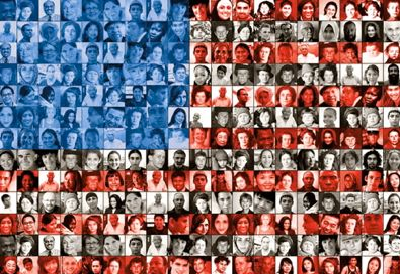
Some people may believe that living in small, homogeneous and insular communities is best.  But in truth, diversity has always been America’s greatest asset!  It is exemplified in the evolution of our American language, music, art, architecture, math, science and dance.  It is what has allowed our innovations and our artistic and cultural leadership.  Diversity was a necessary precondition to the formation of our democracy, The United States of America, and has provided the impetus for engagement in the full kaleidoscope of “The American Culture”.
Tolerance_of-Differences_In_Education_and_Beyond_Diversity_US_flag_Dr_Paul_Lowe_Ivy_League_Admissions_Advisor

Intolerance in education is like placing a wall between you and what is to be learned.  In fact, intolerance in scholastic and academic circles is viewed as ignorance and intellectual ineptitude. Tolerance of differences helps us to learn more and to succeed globally.   This is one of the important reasons why colleges embrace diversity and why authentic, meaningful interaction and immersion in different communities are important realities of our clients’ college admissions journey and success!
 

Dr_Paul_Lowe_Ivy_League_Admissions_Expert_Advice

Admissions is a competitive sport!  Why gamble with uncertainty? – Dr. Paul Lowe

We provide our clients access to our specialized knowledge! – Dr. Paul Lowe

Dr. Paul Reginald Lowe, founder and managing director of Pinnacle Educational Center Admissions Advisors Group, provides comprehensive counseling advice, exclusively for admissions to top private schools; Ivy League and highly-selective colleges/universities; BS/MD programs; graduate and medical schools and top visual and performing arts programs.   Its medical school admissions affiliate: Medical School Admissions Advisors. The admissions affiliate: Ivy League Admissions Advisors specializes in admissions to Ivy League and highly selective colleges,  Dr. Lowe also specializes in helping students who have been wait-listed, deferred or rejected gain admission into their top-choice schools: College Application Rejected and student who wish to transfer to another college:  College Transfer Admissions Advisors.

Why Parents Are Choosing Private Schools

Private Schools vs Public schools Dr Paul Lowe

This season, I have increased my annual tour of schools to include a wider variety of private schools.  I have had the opportunity to speak with heads of schools, directors of admissions, admissions and development office personnel, administrative and support staff, faculty members, students, alumni and especially parents. Having had this opportunity, I have developed list of reasons why parents are sending their children to private schools.

(1)  Small class size.   Private schools assign on average about 9.8 students to each teacher, thus guaranteeing the individual attention each child needs to thrive intellectually, socially and emotionally.

(2)  Excellent educators.  Private school teachers teach as well as educate.  They passionately nurture and motive young minds.  They provide a truly bespoke education for your child. Personal development intellectually, socially and emotionally and academic achievement are par for the course.

(3) Personalized education. Private school education is not a one-size-fits-all affair.  Independent schools come in all shapes and sizes.

(4) Diversity. Private schools are multicultural and embrace diversity. They are committed to creating and fostering a welcoming community that is inclusive for all its members (faculty and students) regardless of race, ethnicity, ability, socio-economic status, religion, age, gender, sexual orientation, or any other attribute that does not define a person’s character.

(5) College counseling. Private schools have college counselors whose job is to specifically help students in the college admissions process. The National Association for College Admission Counseling’s 2014 State of College Admissions reported that on average, public high school guidance counselors spend only 24 percent of their time on college admissions counseling, while their private school counterparts spent 52 percent of their time on college admissions counseling.

(6) Sense of community.  In private schools, the atmosphere is cooperative and collaborative.  Private schools are like large families, with every member eager to contribute their individual characteristics to the good of every other member and the good of the whole school community.

(7) Building Relationships.  Many parents stated that in addition to receiving a superior education, their children would be building meaningful and long-lasting relationships with peers from well-connected families that would prove invaluable in the future.

There is truly a private school for every child. I have found that each school has a different atmosphere and chemistry.  The independent sector gives parents the opportunity to CHOOSE a school that is right for their child.  However, because of the increase in numbers of domestic as well as international applicants, the private school admissions process has become extremely competitive!

Though the cost of private school is not inexpensive, (the average tuition for day schools is $30,000 and for seven-day boarding is approximately $55,000 per year) the true value and dividends for educating your child, watching them happily learn and successfully thrive, is priceless!

————————————————————————————————-
Dr. Paul Reginald Lowe is the managing director and lead admissions expert at Pinnacle Educational Center Admissions Advisors Group’s Private School Admissions Advisors.   Dr. Lowe specializes in providing exclusive concierge-type admissions advisory services for U.S. and international families and students who are interested in applying to top U.S. boarding and day schools.  Dr. Lowe also helps U.S. and international students gain admissions into their top choice private schools after they have been wait-listed and rejected.

Top Advantages of Being Accepted to BS/MD Programs

Top BS/MD Programs

High school students who are interested in a medical career should consider combined BS/MD programs. Many of these medical school-from-high school pathways reduce the overall number of years students will spend studying to become a medical doctor.

If you are certain that your child wants to be a physician, why wait? You may want your child to consider the accelerated BS/MD option that guarantees acceptance into medical school after college.

Many of these specialized programs don’t even require the MCATs so students don’t have to worry about studying or registering for MCAT prep courses. Because students in these programs already know that they are admitted to medical school, they can pursue a major of interest rather than a “traditional” premed major although they will have to take basic premed courses: organic chemistry, biology physics and other courses.  There is also the financial aspect.  It cost thousands of dollars to apply to medical school:  MCAT prep courses, visiting medical schools, unpaid internships and application fees.  In addition depending on the program if it’s a 7-year med program, you could save as much as $100,000.

Of course, one of the great advantages that I observe with our BS/MD admissions clients is that in their senior year in high school they know that they can be called “Dr.”

————————————————————————————————————————–

Dr. Paul Reginald Lowe is the managing director and lead admissions expert at Pinnacle Educational Center Admissions Advisors Group‘s BS/MD Admissions Advisors.  

Intellectual Wealth and Education

Intellectual wealth and education

When people hear the word “wealth” they think of finances, economics of dollars, pounds, gold, etc. or making money. These are actually the materialization of what is seldom discussed: Intellectual Wealth.  What is Intellectual Wealth? What does it have to do with education and wealth?

Intellectual Wealth results from the acquisition of intellectual capital. Specifically, intellectual wealth results from obtaining knowledge, multiple intelligences and education. Intellectual wealth is not passive; it is very active.  Education is a critical component of intellectual wealth, especially in the global economy.

According to Wealth X, a leading global wealth information and insight firm, more and more international students are applying to elite and prestigious private day and boarding schools, as well as Ivy League undergraduate and graduate school programs. Affluent international parents consider the education of their children as their premier investment.  To international parents, a superior education and a pedigree degree for their child, is worth more than real estate or luxury items.  Education has become the new global currency and path to wealth.

———————————————————————————————-

Dr. Paul Reginald Lowe is the managing director and lead admissions expert at Pinnacle Educational Center Admissions Advisors Group. Dr. Lowe specializes in providing exclusive concierge-type admissions advisory services for U.S. and international families and students who are interested in applying to Ivy League and highly selective colleges and combined BS/MD programs. Dr. Lowe also helps students gain admissions into their top choice private schools and colleges after they have been deferred, wait-listed and rejected.

As an experienced and trusted admissions advisor for over 20 years, Dr. Paul R. Lowe is an active member of the following organizations that uphold the ethical and professional standards and principles of good admission practices in college and independent school counseling: Higher Education Consultants Association (HECA), National Association for College Admissions Counseling (NACAC), New Jersey Association for College Admission Counseling (NJACAC), New York State Association for College Admissions Counseling (NYSACAC) and International Association for College Admissions Counseling (IACAC).

Are You Ready To Be Admitted to Your Dream College or University (5 Reasons Why You Must Hire College Admissions Experts)

Because of the increasing competition to get into top colleges, many families feel overwhelmed and stressed by the college admissions process. Moreover, the process can seem so complex that families may want the assistance, resources and knowledge of an expert who focuses solely on the college admissions process and who spends more time and individualized attention than guidance counselors can provide.  Many parents and students discover too late (their children receive rejection letters) in the college admissions process that they should have hired a college admissions expert.

If your child is applying to Ivy League and highly selective colleges as well as combined BS/MD programs, you may want to consider the below:

(1) In a February 2015, in an op-ed piece in USA Today, former First Lady Michelle Obama, wrote eloquently: “There’s the world of the schools most of our kids attend where school counselors are too often under-valued and overstretched, and they simply don’t have what they need to do their jobs. While the American School Counselor Association recommends no more than 250 students per counselor, the national average is one counselor for every 471 students. And often, school counselors are burdened with all kinds of unrelated responsibilities such as proctoring exams, substitute teaching, even monitoring the lunchroom. Many school counselors find themselves doing triage, juggling those duties while trying to help kids in crisis and also keep up with the latest college admissions deadlines and requirements.”

(2)  The National Association for College Admission Counseling’s (NACAC) 2014 State of College Admissions reported that on average, high school guidance counselors spend only 24 percent of their time on college admissions counseling. High school guidance counselors spend the majority of their time on school activities unrelated to college admissions.

(3)  The National Association for College Admission Counseling survey indicated that high school guidance counselors have an average caseload of 125 to as high as 500 students making them unable to provide adequate college guidance.

(4) The Independent Educational Consultants Association (IECA) stated: “An educational consultant brings to the family the knowledge and skills of an experienced professional coupled with a commitment to assuring the [student’s] best interests are met. Educational consultants counsel students and their families in the selection of educational programs based on the student’s individual needs and talents.”

(5) The Higher Education Consultants Association (HECA) stated: “A professional educational consultant works one-on-one with each student, helping to identify colleges and universities that offer the best matches for the student’s unique needs, and keeping the student on track through every phase of the college application process.”

“Top qualified applicants, after all their hard work (and parents’ work) and preparation deserve the best and should not settle for less” – Dr. Paul Lowe

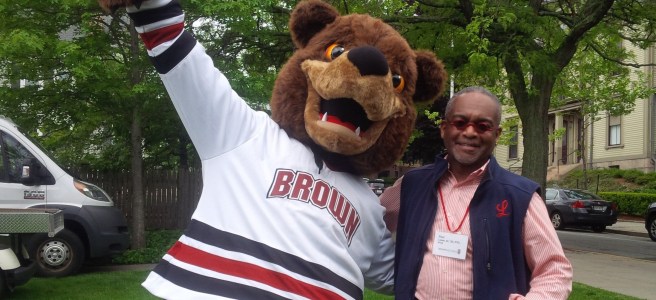
(Pictured: Dr. Lowe at his alma mater – Brown University with Bruno, Brown University’s mascot)

Why “Dr. Paul Lowe Admissions Expert Blog”?

Dear Readers,

Welcome to “Dr Paul Lowe Admissions Expert.Blog!

The purpose of the blog is to provide valuable insight and expert advice on private school, college, BS/MD program and graduate school admissions based on Dr. Paul Lowe’s over 21 -plus years experience as an independent  educational consultant and admissions advisor.

Dr. Paul Reginald Lowe, Sr. is the co-founder and CEO of Pinnacle Educational Center; and is one of the world’s leading independent educational consultants and expert admissions advisors.  Pinnacle Educational Center which has expanded into a network of admissions advisory services:  Pinnacle Educational Center Admissions Advisors Group.