It’s March 2019! That means that school seniors will begin to discovering, after all their hard work, where they will be accepted, wait-listed or rejected
Based on our research and discussions with directors of admissions, many colleges regular admission decisions ready by March 31 or April 15.
Here are regular decision notification dates (and approximate times) for Ivy League and highly selective colleges and universities:
Barnard College: March 22, 2019
Bucknell University: March 28, 2019
Brown University: March 28, 2019
Carnegie Mellon University: No later than April 15
Columbia University: March 28, 2019
Cornell University: March 28, 2019
Dartmouth University: March 28, 2019
Duke University: April 1, 2019
Georgetown University: Late March
Georgia Institute of Technology: March 9, 2019
Hamilton College: March 20, 2019
Harvard University: March 28, 2019
Johns Hopkins University: March 15, 2019
Lehigh University: Late March
MIT: March 14, 2019 (Pi Day)
Northwestern University: Late March
Princeton University: March 28, 2019
Stanford University: April 1, 2019
Swarthmore College: March 15, 2019
Tufts University: April 1, 2019
University of Chicago: Late March
University of Michigan: Late March
University of Notre Dame: Late March
University of Pennsylvania: March 28, 2019
University of Virginia: Late March
Vanderbilt University: April 1, 2019
Vassar College: April 1, 2019
Villanova University: Late March
Wesleyan University: Late March
Yale University: March 28, 2019
“Admissions is a competitive sport! Why gamble with uncertainty?” – Dr. Paul Lowe
Dr. Paul Reginald Lowe, founder and managing director ofPinnacle Educational Center Admissions Advisors Group, provides comprehensive counseling advice, exclusively for admissions to top private schools; Ivy League and highly-selective colleges/universities; BS/MD programs; graduate and medical schools and top visual and performing arts programs. The admissions affiliate: Ivy League Admissions Advisors specializes in admissions to Ivy League and highly selective colleges, Dr. Lowe also specializes in helping students who have been wait-listed, deferred or rejected gain admission into their top-choice schools: College Application Rejected. and student who wish to transfer to another college: College Transfer Admissions Advisors.
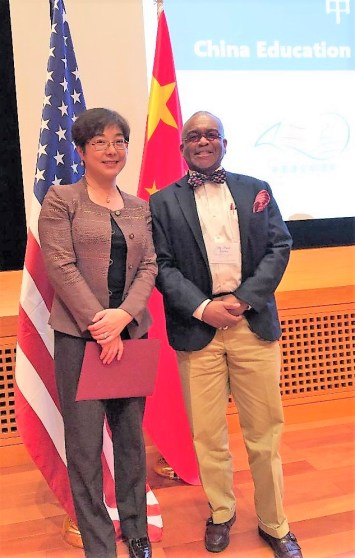
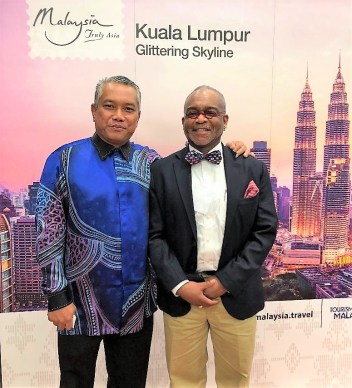
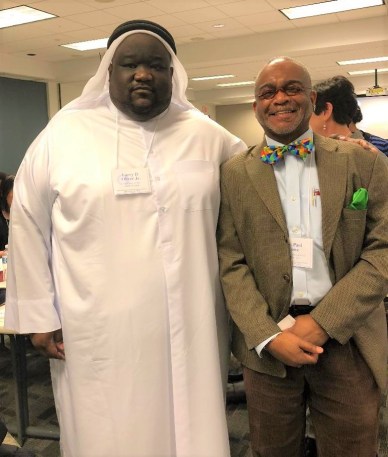
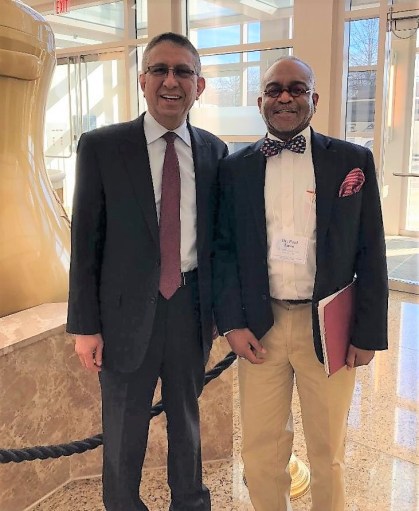
In February, Dr. Lowe participated in the Washington International Education Conference located in Washington D.C. Dr. Lowe had the opportunity to meet and network with foreign embassy officials involved with the international education community and discuss boarding school and college admissions. He also had the opportunity to discuss the latest information on visa issuance and regulations governing international students in the United States with immigration law firms.
Yang Xinyu, Minister Counselor, Embassy of People’s Republic of China with Dr. Lowe
Dr. Md. Amin bin Md. Taff, Deputy Vice Chancellor, Sultan Idris Education University, Malaysia with Dr. Lowe
Larry Oliver, Jr., Academic Manager, Embassy of the State of Qatar, Cultural Attache Office with Dr. LoweDr. Mohammed Abdullah Saud Alessia, Cultural Attache, Saudi Arabian Cultural Mission with Dr. Lowe
During the conference, Dr. Lowe networked with embassy officials from China, Saudi Arabia, Qatar, Malaysia and Oman. After the conference he also visited the Embassies of France, Germany, Kuwait, United Arab Emirates, Spain, Sweden and the Russian Federation.
According to the U.S. Department of Commerce, international students contributed $42.4 billion to the U.S. economy in 2017. The continued growth in international students coming to the U.S. for education has had a significant positive economic impact on the United States. “Our College Visits and Private School Assessment/Review programs provide embassies with real-time knowledge and third-party assessments of U.S. colleges and private day and boarding schools from an independent educational consultant prospective,” said Dr. Paul Lowe, CEO and co-founder of Pinnacle Educational Center Admissions Advisors Group and managing director of International Admissions Advisors.
“Admissions is a competitive sport! Why gamble with uncertainty?” – Dr. Paul Lowe
Paul Reginald Lowe, founder and managing director of Pinnacle Educational Center Admissions Advisors Group, provides comprehensive counseling advice, exclusively for admissions to top private schools; Ivy League and highly-selective colleges/universities; BS/MD programs; graduate and medical schools and top visual and performing arts programs. The admissions affiliate: Ivy League Admissions Advisors specializes in admissions to Ivy League and highly selective colleges, Dr. Lowe also specializes in helping students who have been wait-listed, deferred or rejected gain admission into their top-choice schools: College Application Rejected and student who wish to transfer to another college: College Transfer Admissions Advisors.
The 2018 State of College Admission report was recently released by the National Association for College Admission Counseling (NACAC). As an active member of NACAC, I have been reviewing this report that has been published over the last fifteen years. The report is based on data collected from the U.S. Department of Education and the Higher Education Research Institute.
The State of College Admission Report provides up-to-date information on a number of issues that impact students’ transition from high school to post-secondary education, as well as the admission process for transfer students and international students attending post-secondary institutions in the United States. The report covers the recruitment strategies that colleges use to attract each group of prospective students and the process by which candidates are evaluated. The report also includes a chapter dedicated to school counseling in US secondary schools, given the integral role school counselors play in putting students on the path to post-secondary success.
Here are some interesting trends in college admissions and highlights of report:
College Applications: The increase in the number of colleges to which each student applies continues a near perfectly upward trend, which is reflected in college reports of increased application volume. Growth in application volume continues: Between the Fall 2016 and Fall 2017 admission cycles, the number of applications from first-time freshmen increased 4 percent; applications from prospective transfer students increased by 3 percent; and international student applications increased by 8 percent, on average. There is continued hyper-competition to Ivy League and highly selective colleges and BS/MD Programs.
Recruitment and Yield Strategies: College admission offices use a variety of strategies to recruit prospective students, particularly those who would be likely to attend if admitted. To recruit students, colleges use the following strategies: Email, institutional websites, hosting campus visits, outreach to parents and high school counselors, high school visits, and college fairs. These strategies help schools attain their enrollment goals.
Factors in Admissions Decisions: The factors that admission officers use to evaluate student applications from first-time freshmen have remained largely consistent over the past 20 years. Students’ academic achievements—which include High School Curriculum, and Test Scores as Top Factors for First-Time Freshmen: The top factors in the admission decision were: overall high school GPA, grades in college preparatory courses, admission test scores, and strength of curriculum. Among the next most important factors were the essay, a student’s demonstrated interest, counselor and teacher recommendations, class rank and extracirricular activities. Admission decision factors for first-time international students are similar to those for domestic students, but the transfer admission decision process differs in significant ways.
Guidance Counseling Trends for College Admissions: Post-secondary admission counseling is one of many functions of school counselors. On average, the time that public high school guidance counselors spend on college admissions: 21 percent, down from 26 percent in 2017. This demonstrates that high school guidance counselors are spending less time with students on college admissions. See admissions blog: High School Guidance Counselors/College Admissions: Big Caseloads and Little Time
Student-to-Counselor Ratio: The American School Counselor Association recommends a 250-to-1 maximum student-to-counselor ratio. New Hampshire and Vermont—had ratios below this maximum. Data regarding the extent to which college advising is part of counselors’ job responsibilities showed the average student-to-college counselor ratio was 297-to-1. With this ratio, it implies that high school guidance counselors have little time to provide individualized attention to students applying to college.
“Year after year, I hear the horror stories from parents whose kids got in nowhere because they thought the college admissions race was just about grades, SAT scores, their perceived ‘unique’ applications, generic essays and perfect connections.” – Dr. Paul Lowe
“Top qualified applicants, after all their hard work (and parents’ work) and preparation deserve the best and should not settle for less.” – Dr. Paul Lowe
“Admissions is a competitive sport! Why gamble with uncertainty?” – Dr. Paul Lowe
Paul Reginald Lowe, founder and managing director of Pinnacle Educational Center Admissions Advisors Group, provides comprehensive counseling advice, exclusively for admissions to top private schools; Ivy League and highly-selective colleges/universities; BS/MD programs; graduate and medical schools and top visual and performing arts programs. The admissions affiliate: Ivy League Admissions Advisors specializes in admissions to Ivy League and highly selective colleges, Dr. Lowe also specializes in helping students who have been wait-listed, deferred or rejected gain admission into their top-choice schools: College Application Rejected and student who wish to transfer to another college: College Transfer Admissions Advisors.
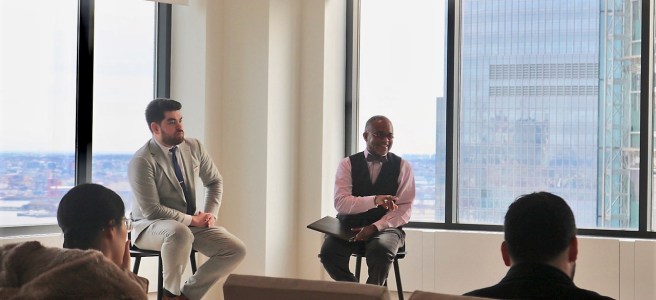
Dr. Paul Lowe was invited to speak at 99 Hudson Sales Gallery on “How to Choose the Right Education for Your Child”. His seminar focused on early childhood education through high school and primarily on top/elite private school and Ivy League and highly selective college admissions. 99 Hudson Street is a premier luxury condominium complex scheduled to be completed in December 2019, developed by the world-renowned investment and development firm China Overseas America, Inc. and designed by the highly acclaimed multi-national architecture firm Perkins Eastman.
Model of 99 Hudson
Located in Jersey City and New Jersey’s soon-to-be-tallest tower, 99 Hudson is just a four-minute PATH train ride away from the World Trade Center and also accessible to Manhattan by light rail and ferry. The China Overseas America-developed condo building will eventually soar to 887 feet with a total of 781 units. Sales for available units range in price from $557,000 to over $3,764,000.
Edwin Blanco, the Sales Manager at 99 Hudson stated, “Being the tallest building in New Jersey, 99 Hudson’s Penthouses offer 180-degree views including One World Trade, Manhattan and the Statue of Liberty. Remaining Penthouses offer at least 2300 square feet of interior space and up to 1,167 square feet of private outdoor space.”
Dr. Lowe with Edwin Blanco, Sales Manager at 99 Hudson and seminar moderator.
View from one of the penthouses at 99 Hudson
View from one of the penthouses at 99 Hudson
The interaction between Dr. Lowe and the participants at the presentation proved to be very informative. Expect the residents of this new luxury complex to take advantage of all the great educational resources that New Jersey has to offer.
“Admissions is a competitive sport! Why gamble with uncertainty?” – Dr. Paul Lowe
Paul Reginald Lowe, founder and managing director of Pinnacle Educational Center Admissions Advisors Group, provides comprehensive counseling advice, exclusively for admissions to top private schools; Ivy League and highly-selective colleges/universities; BS/MD programs; graduate and medical schools and top visual and performing arts programs.
High School Seniors are receiving their College Admissions Early Decision/Early Action results. The results are producing a mixture of palpable emotions. While some happy students settle in for the holidays with their acceptance letters in hand, others will be disappointed and distressed in discovering that they have been deferred to theregular decision pool, or worse, rejected by the college or university (after all of their hard work). For those who are deferred, their applications will be re-considered along with the thousands of Regular Decision applicants. In the Regular Decision pool, the selection process becomes even more competitive and selective.
Many students try the strategy of applying to what they perceived to be safety schools because they think the school will likely accept them early, only to discover that they are also deferred or rejected. In either case, whether deferred or rejected, SOMETHING WENT WRONG! The problem is that the application errors that caused the rejection or deferral, if not discovered, will continue without rectification to the regular decision pool and result in multiple rejections. When I mention this to parents who call us and many don’t believe me, I usually hear the horrific stories about their children being rejected from everyone of their top-choice schools and even perceived safety schools!
With only a few weeks left in the application season, I recommend that students scrupulously reevaluate their deferred or rejected early decision/early action application and carefully plan a workable strategy in this crunch-time. You may need to hire an educational consultant who is an expert in post-decision admissions advising.
For parents who engage our services after the disheartening news of deferral or rejection, I use our post-decision strategies. I discover what the student did to be rejected or deferred, build upon their current student profile and accomplishments and re-energize their application so that they are removed from the deferred list and placed on the accepted list.
Additionally, I assess the student’s Regular Decision applications (due by January 1) to identify mistakes on their Early Decision/Action application so that their mistakes do not become viral and affect the student’s Regular Decision applications. The worst thing a student can do is nothing. The worst thing parents can do is to try this post-decision process on their own.
“Admissions is a competitive sport! Why gamble with uncertainty?” – Dr. Paul Lowe
China continues to be the top country of origin for international students studying in the US, and Chinese students are coming to the US at a younger age, according to the Institute of International Education (IIE). Around 2 in 5 international students enrolled in US high schools are from China, and the number of Chinese students studying in US high schools has skyrocketed by 48 percent since 2013, according to the IIE’s report Globally Mobile Youth: Trends in International Secondary Students in the US, 2013-2016.
The growing trend among younger Chinese students to study at US elementary and secondary private schools is a result of the growing middle class in China. Chinese parents want their children to receive high-quality education at the best boarding schools to increase their chances of being accepted to Ivy League and highly selective colleges and universities.
“Our Pinnacle affiliates, Private School Admissions Advisors and Boarding School Admissions Consultants, focus on the private school entry to K-8 grades and transfer students in the 9th and 10th grades,” said Dr. Paul Lowe, CEO and co-founder of Pinnacle Educational Center Admissions Advisors Group, a Connecticut-headquartered admission-advisory firm with offices in Manhattan, Greenwich, White Plains, Fort Lee and Princeton, NJ. “Our approach highlights the potential for future opportunities in that special niche, especially for Chinese parents.”
“There is hyper-competition amongst Chinese parents seeking admissions to top boarding schools for their children, for example in schools like Choate, Exeter, Andover, Peddie, Deerfield, Lawrenceville, Taft, St. Paul’s, Loomis, Blair, Hotchkiss and Hun. That’s where we come in,” said Dr. Lowe. “As a result of our research, analysis, insider-knowledge and continual school visits, I am fluent in the language of admissions and understand the politics, psychology, culture, rhythm and diplomacy for acceptance into at top boarding schools. I also know what key admissions decision makers and key players at these schools are looking for.”
Dr. Lowe’s Private School Visits: Other independent educational consultants may depend on telephonic interviews, group speed meetings in central locations, or simply read literature and review websites and repeat it to families. I physically visit schools and actively interact with school admissions personnel, senior administrators and students. My clients are, therefore, placed in the most appropriate school for their (and their parents’) happiness. My approach ensures that your child will be placed in the best and most appropriate top-choice school. By understanding, analyzing and researching a specific school’s atmosphere, vibe, rhythm, tone, color, experience, culture diversity and mission, my team and I can clearly articulate what differentiates one school from another to consumers/families.
“Admissions is a competitive sport! Why gamble with uncertainty?” – Dr. Paul Lowe.
Dr. Paul Reginald Lowe is the managing director and lead admissions expert at Pinnacle Educational Center Admissions Advisors Group’s Boarding School Admissions Consultants. and affiliate of Private School Admissions Advisors. Dr. Lowe specializes in providing exclusive concierge-type admissions advisory services for U.S. and international students who are interested in applying to top U.S. boarding and private schools. Dr. Lowe helps U.S. and international students gain admissions into top U.S. boarding schools even after they have been wait-listed and rejected. Dr. Lowe and his team of admissions advisors also visit prestigious and elite private schools, where they have the unique opportunity of interacting one-on-one with heads of schools, directors of admissions and senior admissions personnel.
I have been an admissions advisor with specializing in BS/MD admissions for over 20 years. Many parents call my firm often shopping for free advice in the attempt to see if they can garner information. The parents who retain us know that valuable advice is not free! They also are aware that by hiring our personalized services their children will have a competitive advantage in the BS/MD admissions process. When our clients are accepted into BS/MD programs and their classmates are not, it speaks volumes to our firms collective knowledge insight and understanding of the “landmines” in the application process. Our client-parents are happy and overjoyed when they know that after years of hard work their children can be called “Dr.” as high school seniors!
There are actually 4 reasons why our clients have a competitive edge and we have a very high acceptance rate.
When we are finished with counseling our clients they stand out and don’t sound like the typical BS/MD applicant: high GPA’s, high SAT scores, scientific ad medical research, shadowed doctors, seemingly great letter of recommendations, expensive summer programs, “voluntouring” and boring. We develop our clients’ unique rhythm, vibe and voice.
Many parents wait and call us when the student is a high school senior. I guess it’s their attempt to bargain hunt? By then, the student already sounds just like every one else and have made all the irrevocable mistakes. There is nothing we can do for them at that point. It’s just too late. The damage has already been done. By then, we can not change the imperfections that will appear on their Common Applications. Our clients retain us between their child’s freshman and junior year.
Many parents retain educational consultants who are part-timers in BS/MD admissions (doctors-in-training) or who never continually visit colleges and universities BS/MD programs. My team and I continually visit colleges and universities.
We know how to avoid the application mistakes that can cause a BS/MD applicant to be instantly rejected. Trust me, there are hundreds of opportunities to make mistakes!
Tucked away on the hilltop of New Milford Connecticut you will find a treasure that some have already discovered. It is what I call one of hidden gems of boarding schools – Canterbury School. I recently visited Canterbury, my second time, this year. Canterbury is located in the northeastern portion of Connecticut – Litchfield County 150 miles from Boston, 85 miles from New York City, 45 miles from Hartford, and 35 miles from New Haven. Offering admissions for grades 9-12 and a post-grad program, the average class size is 12.
Each administrator in the Admissions Office was extremely welcoming and friendly. The office was abuzz with activity. Students stopping by would have a warm Hi! As we passed students on the tour, they were equally happy and cordial. We visited its new Robotics Lab; its Robotics Team has placed in competitions. We visited several classes, including a class taught by Kim Tester, Fine Arts Chair and observed her class as students creatively and enthusiastically engaged in their art works.
Canterbury definitely has a positive and welcoming vibe. It has a cooperative and collaborative learning atmosphere. From the tour and observation of classrooms and its student center there is conspicuous ethnic diversity and a true sense of community among students.
I had a chance to talk with Matt Mulhern (Class of 1995), Canterbury’s Director of Admissions. His enthusiasm about Canterbury was evident. He stated that students at Canterbury are encouraged – and have the support – to do it all – academically and extracurricularly (athletics, arts etc.) and that it offers students the opportunity to become their best and most dynamic selves. Under the direction of Sarah Ferland, Director of College Counseling, Canterbury has placed graduates at top colleges and universities including but not limited to: Amherst College, Boston College, Bowdoin College, Bucknell University, Carnegie Mellon University, Cornell University, Duke University, Georgetown University, Harvard College, Princeton University, Rensselaer Polytechnic Institute, University of Pennsylvania, Villanova University, Wesleyan University and Yale University.
Canterbury’s future plans: Building a new 20,000 square foot Student Commons building, creating a Campus Square and Streetscape and renovating the Hume Hall the central academic building at the heart of the campus. This treasure keeps getting better and better!
Other independent educational consultants may depend on telephonic interviews, group speed meetings in central locations, or simply read literature and review websites and repeat it to families. I physically visit schools and actively interact with school admissions personnel, senior administrators and students. My clients are, therefore, placed in the most appropriate school for their (and their parents’) happiness. My approach ensures that your child will be placed in the best and most appropriate top-choice school. By understanding and analyzing a specific school’s atmosphere, vibe, rhythm, tone, color, experience, culture and mission, I can clearly articulate what differentiates one school from another to consumers/families.
“Admissions is a competitive sport! Why gamble with uncertainty?” – Dr. Paul Lowe.
Dr. Paul Reginald Lowe is the managing director and lead admissions expert at Pinnacle Educational Center Admissions Advisors Group’s Boarding School Admissions Consultants. and affiliate of Private School Admissions Advisors. Dr. Lowe specializes in providing exclusive concierge-type admissions advisory services for U.S. and international students who are interested in applying to top U.S. boarding and private schools. Dr. Lowe helps U.S. and international students gain admissions into top U.S. boarding schools even after they have been wait-listed and rejected. Dr. Lowe and his team of admissions advisors also visit prestigious and elite private schools, where they have the unique opportunity of interacting one-on-one with heads of schools, directors of admissions and senior admissions personnel.
Over the last 2 years, I have had a 55% increase in Chinese clients who have hired our services specifically for Ivy League admissions. Each year, we place on average 20 Chinese clients in Ivy League and highly selective U.S. colleges and universities. Last year, we placed 45 Chinese students into Ivy League and highly selective U.S. colleges and universities.
Chinese students are attending U.S. colleges and universities in record numbers. Demand for Ivy League and highly selective universities such as Carnegie Mellon, MIT, Johns Hopkins, Stanford, Northwestern, California Institute of Technology (Caltech), University of Chicago, Duke, University of Michigan, Tufts, Swarthmore, University of California at Berkeley, University of California at Los Angeles, Georgetown, Barnard, Villanova, etc., is increasing exponentially.
By Chinese, I mean students from mainland China who attend high schools in China, private boarding and day schools in the U.S., Canada, UK, Italy, Singapore, Australia, all parts of the world and those who attend public schools in the U.S. Even when attending elite U.S. boarding schools where they have college counselors, the parents (or students) call us to ensure that no stone is left unturned in the college admission process to achieve the dream of an Ivy League education.
Parents all over China have the same dream. They want their children to have the best education for a better future. For Chinese parents, the benefits and the biggest advantages of an Ivy League education are undoubted and obvious – better employment opportunities, easier access to high-profile jobs, networking benefits and connections needed to start a global business. Most importantly, an Ivy League education adds transferable financial value to be utilized over their children’s lifetime on a global scale.
For Chinese parents, the choice of an Ivy League education for their child (almost always their only child) is considered a worthy financial investment, a shrewd political maneuver, and a satisfying personal sacrifice. They are appreciative of the chance for a greater opportunity for their children to study abroad in the U.S. Four years of an elite U.S. private college/university education can cost around $250,000, a considerable sum for American families, and even more so for a family from China, where average wealth is about one fifth that in the U.S. It is interesting and understandable that they are willing to make sacrifices for this pedigree degree that opens doors!
We work with many wealthy Chinese families who feel that sending a child to an elite Western university is a way of signaling status and prestige – yet “another luxury brand purchase”. For wealthy families seeking a safe haven for their assets – by one estimate more than $1 trillion in capital left China in 2015 – a U.S. college education for a child can serve as a first step towards addressing capital flight, foreign investment and even eventual emigration.
A HSBC (Hongkong Shanghai Banking Corporation) survey indicated that 80% of affluent families in China plan to send their children to study overseas. From 2009 to 2011, the number of Asian students studying in the US has increased by 40%. President Trump and former President Obama may have different political and economic views but they both agree that the U.S. has the best universities in the world! The U.S. is now the primary destination for Asian students. China is the number one source of international students. Many of the children of the Chinese economic and political elite desire Ivy League degrees. President Xi Jinping’s daughter is a Harvard grad.
Since 1999, China was the second leading place of origin for international students at Harvard, trailing only Canada. Its student numbers steadily increased to lead Harvard’s international enrollment since the last academic year, with 686 students currently enrolled (nearly 16% of the international student body). China similarly dominates international enrollment at other Ivy League schools, including Yale and Princeton. According to the Hurun Report (a research, media and investments business best known for its “Hurun China Rich List” a ranking of the wealthiest individuals in China), Harvard, Yale and Princeton are the biggest attractions for Chinese millionaires.
In March 2018, research from Hurun found China minted 206 billionaires in the last year, taking the country’s total to 819 billionaires, 40% more billionaires than in the US. Chinese billionaires are pulling away from the US for the third year running on the “Hurun Global Rich List 2018”. There are 819 Chinese billionaires in 2018 compared with 571 in the US. Just two years ago, they were neck and neck at 534 and 535. A recent Hurun annual survey of China’s elite has confirmed that 80% of the country’s wealthy families plan to send their children abroad for education.
It would seem that as long as Ivy League colleges and universities exist, wealthy and middle-class Chinese families will want their children to obtain the rare luxury brand of the unique experience of a valuable education. My team and I are here to help!
The Yueng family with Dr. Paul Lowe Pinnacle Educational Center/Admissions Advisors Group headquarters.
The Wall Street Journal/Times Higher Education Ranking 2019 was just released. Harvard is number one again. Of the top ten schools, six are Ivy League universities. The only ones missing in the top ten are Dartmouth College and Cornell University. Brown University is the only newcomer to the list. With their rarefied, global social alumni networks, door-opening reputations, and superior academics, it isn’t surprising that the schools mentioned are all brand-name institutions.
The rankings emphasize how well a college will prepare students for life after graduation. The overall ranking is based on 15 factors across four areas: Outcomes, Resources, Engagement and Environment. Each school’s overall score is determined by student outcomes (including a measure of graduate salaries), the school’s academic resources, how well it engages students and from the diversity of the students and staff. The U.S. College ranking is also partly based on the results of the Times Higher Education US Student Survey, which gathered the views of about 200,000 current university students in 2017 and 2018 to find out about their engagement with their studies, their interaction with their teachers and their satisfaction with their experience.
My team and I personally visit top colleges three times annually to understand each of their ever changing and unique admissions policies as well as the campus environment. As a result, we garner insider-knowledge to help our clients achieve admissions success. (Why Dr. Paul Lowe Visits College Campuses). This ranking is very accurate!
THE TOP TEN: Schools that achieved the highest overall scores in the ranking:











 Dr. Paul Lowe - Admissions Expert