10 Top College Application Essay Mistakes You Must Avoid

College essay mistakes to avoid by Dr Paul Lowe Admissions Expert

The thought of beginning your senior year with the attendant pressures of maintaining good grades, playing sports, filling out college applications, re-taking SATs and squeezing in college visits is stressful enough without worrying about writing one of the most important essays of your life – The College Application Essay.

Here are some mistakes you MUST avoid:

  • Mistake #10:  Using the same essay for all of the college you apply to.  All colleges have their own identity and mission statement.  Pay attention to what their ideology is and think about what you can do to cater to it.
  • Mistake #9:  Plagiarizing other students’ work.  Do not copy from other people or download essays!  Many students assume that if they copy directly from other people’s work and sources that no one will find out.  This assumption is definitely wrong!  Often, the essays they copy are littered with errors, and they don’t take time to check.  Most importantly, plagiarism violates Common Application rules and it’s dishonest.
  • Mistake #8:  Using a thesaurus for too many words.  This mistake can lead to a big awkward tangle of an essay.  Many times if you use a thesaurus and extract overly verbose words, they stick out like sore thumbs in your essay, producing an unnatural flow in your essay.
  • Mistake #7:  Not streamlining the essay with the application.  Many applicants do not pay attention to the unity of their essay and their actual application.  It is jarring to readers (See: Team-based Approach to Read Applications) to portray a different picture of the student than the application.  This can also happen when you plagiarize; things do not match, and the reader will quickly discredit you.
  • Mistake #6:  Trying to impress the essay readers.  Do not try to impress admissions officers or the admissions committee.  They will be able to sense a pretentious, patronizing or even condescending voice beneath descriptions of seemingly philanthropic contributions, grand earth-shaking events and ontological musings.  Write about what you know and about yourself in a meaningful way.
  • Mistake #5:  Picking an inappropriate topic.  In an attempt to be clever many applicants resort to self-deprecation and end up painting a less flattering image of themselves.  You may think it would be witty to write an essay about your less than perfect grades in high school, but this can be interpreted as not taking responsibility for your actions.
  • Mistake #4:  Making an essay into a resume.  Many times applicants want to impress readers so much that they completely ignore the essay prompt and make the essay into a list of their accomplishments.  Unless this is what they specifically what they asked for, just don’t do it.
  • Mistake #3:  Brownnosing.  If you are sending a school an application, they will simply assume that you want to attend.  You don’t have to “lay it on thick” by lauding their campus and faculty.
  • Mistake #2:  Proofread!  You can not edit your essay too much.  Write several drafts and edit each draft thoroughly for syntax, grammar, spelling, general structure, flow, rhythm, color and voice.   Admissions officers will immediately discredit you for making petty errors that would be easily fixable.
  • Mistake #1:  Not answering the question.  The admissions committee uses certain essay prompts for a specific reason:  They want you to answer it!  So beware of steering away from the point and running off on tangents and irrelevant topics.

Your college essay is the only part of the college application process you have complete control of.  (See:  College Application Essay Tips)  The essay or essays (short answers included) can capture an admissions committee’s imagination and make it want you on its campus.  Missing the opportunity to make this piece of your student profile outstanding is a HUGE mistake.

——————————————————————————————————————————–

Dr. Paul Reginald Lowe is the managing director of Pinnacle Educational Center Admissions Advisors Group network. He and his team of admissions advisors through its admissions affiliate: College Essay Tune Up, review, objectively critique, proofread, and constructively edit college application essays.


What College Athletic Coaches Are Looking For When Recruiting (Part 1)

You’ve been playing your sport for 5-10 years and you want to be recruited or at best recruited and receive that four year athletic scholarship from your top choice college. Don’t sell yourself short. My advice after over 20 years in the college admission business and constantly talking college coaches and Athletic Directors are these points college coaches are looking for:

  1. Ability: Coaches are interested in your abilities and performance in tournaments. A coach has a program in which they have developed an elite team; they want someone willing to fit into that mix. But this is only one part of it. There are great athletes who don’t get recruited.  Many of the best colleges recruit athletes with modest skills.  Sometimes it’s not just having skills but the fact that you are performing your personal best that matters.
  2. Academic Record: In admissions, its admissions officers who have the final word. Grades matter. As a part of the recruitment process coaches will review your transcript like admissions and seek the rigor of your curriculum and your GPA and standardized test scores. Every coach understands the academic statistics that their college’s admission office expects from his or her players individually and as a whole team.  When they decide who to recruit, they are always trying to balance the quality of players with the quality of their academic records. What this means is that after the coach determines your skill level, the better your academic record, the more likely you are to be recruited.  Remember it’s admission departments, not coaches, who admit students.
  3. Passion For the Game and College: No matter what your skill level is, Coaches want to recruit students who have a real passion for playing their game. Coaches work closely with the admissions office and they know that the athletes they recruit hardest are very likely to be admitted. They want to recruit students who are serious about playing on the team and not just using their ability as a “hook” to get in to their school.  Similarly, coaches do not like when they recruit players that choose to go elsewhere.  This also makes them look bad if they pushed hard to get you in and then you don’t come. When coaches interview you, they will always want to know why you want to come to their college rather than another that recruits players with a similar skill level and academic record.

See:  Part 2 – Points: 4-6 and Part 3 – Points: 7-8


Dr. Paul Reginald Lowe is the managing director of Pinnacle Educational Center Admissions Advisors Group network. He and his team of admissions advisors, through the admissions affiliate, Student Athlete Advisors, help student athletes develop a winning game plan to be recruited.

2017 Best Boarding High Schools in America for College Acceptance

Parents believe that there is no real difference between boarding schools.  Some actually believe that they are all “basically” the same.  That, is however, a myth when it comes to college acceptance to elite colleges.

According to John G. Palfrey (Phillips Exeter ’90), (Harvard College ’94), (Harvard Law ’01) and a former Harvard Law School professor who now serves as the Phillips Andover’s head of school, selective high schools attract potential Harvard students away from their home high schools.

Niche, a company that researches and compiles information on schools released its latest ranking of the best boarding schools in the US, specifically highlighting the best schools that prepare students for elite colleges.  By elite colleges, I am referring to colleges parents already know about: Harvard, Yale, Princeton, Columbia, Brown, UPenn,  Cornell, Dartmouth, Stanford, MIT, Duke, and Johns Hopkins.

Here are the best 25 US boarding high schools by rank:

  1. Phillips Academy – Andover, MA
  2. Phillips Exeter Academy – Exeter, NH
  3. St. Paul’s School – Concord, NH
  4. Lawrenceville School – Lawrenceville, NJ
  5. Choate Rosemary Hall – Wallingford, CT
  6. Deerfield Academy – Deerfield, MA
  7. Groton School – Groton, MA
  8. Noble & Greenough School – Dedham, MA
  9. Cranbrook School – Bloomfield Hills, MI
  10. Hotchkiss School – Lakeville, CT
  11. Hockaday School – Dallas, TX
  12. Cate School – Carpinteria, CA
  13. Middlesex School – Concord, MA
  14. Thacher School – Ojai, CA
  15. Milton Academy – Milton, MA
  16. Lake Forest Academy – Lake Forest, IL
  17. St. Albans School – Washington, DC
  18. St. Stephen’s Episcopal School – Austin, TX
  19. Hackley School – Tarrytown, NY
  20. Peddie School – Hightstown, NJ
  21. Kent School – Kent, CT
  22. Emma Willard School – Troy, NY
  23. Taft School – Watertown, CT
  24. Concord Academy – Concord, MA
  25. Madeira School – Mclean, VA

A comprehensive list isn’t publicly available, however, based on our research, Phillips Andover, Phillips Exeter, St. Paul’s, Lawrenceville, Choate and Deerfield all send 25-30 students each year to Ivy League schools over the past five years.

U.S and especially international families prefer their children enroll in schools that provide the best return on investment on (average tuition, room and board is $55,000 per year) — college placement.   “Affluent international parents consider the education of their children as their premier investment.  To international parents, a superior education and a pedigree degree for their child, is worth more than real estate or luxury items.  Education has become the new global currency and path to wealth.  –  Dr. Lowe’s blog:  Intellectual Wealth and Education

Now that you aware of the ranking, the only problem is how to get your child accepted this admissions season!  And that’s where we come in!  The first part of the your admissions plan: avoid common parental mistakes when applying with the help of a professional who knows where the “rejection” land mines are in the application process….and there are many!

————————————————————————————————————————————

Dr. Paul Reginald Lowe is the managing director and lead admissions expert at Pinnacle Educational Center Admissions Advisors Group’s Private School Admissions Advisors.   Dr. Lowe specializes in providing exclusive concierge-type admissions advisory services for U.S. and international families and students who are interested in applying to top U.S. boarding and day schools.  Dr. Lowe also helps U.S. and international students gain admissions into their top choice private schools after they have been wait-listed and rejected.

Common Mistakes Parents Make When Applying to Private Schools

private_school_admissions_mistakes

My team and I personally work with U.S. as well as international families (who reside in the U.S. or are abroad) during the private school application admissions process.  We have worked with families from over 130 different countries and on all seven continents. My firm works with families who are interested in top day and boarding schools primarily on the east and west coast.

Year after year, I hear about the number of mistakes that parents make during the admissions process.  I hear about these mistakes from parents whose children were rejected and waitlisted from schools and wish to engage our services. I thought I would share what I believe to be five frequent, significant mistakes.

  1. Assuming that it’s all about your connections. Many parents assume that admissions into competitive schools are about connections.  Parents often ask me if they should have their friends, neighbors and/or colleagues who have a relationship with a private school write a recommendation letter for their child. As I always state to parents: everyone has connections.  Schools are also aware that parents try to leverage their perceived connections.  But the truth of this matter is those connections do not always result in connecting your child to receive an acceptance letter.  The letters of recommendation should be meaningful and demonstrate that the recommender knows your child well.  In my experience, I have read letters of recommendations that parents perceive to be excellent when in fact they contain damaging information that will certainly cause rejections.
  2. Not preparing for the parental and student interviews. Being thorough and picky about a private school choice is extremely important.  But one thing is certain; top private schools will be equally as picky when choosing your child to be a member of their prestigious community.  Is your child ready to answer any and all of the private school interview questions?  In addition, admissions officers are proficient in observing non-verbal cues and evaluating character attributes that communicate true student feelings and whether parents complement a school’s educational philosophy. Though the private school exam results are very important in the admission’s process, the interview is another hurdle, set to be more selective. The admissions committee is going to judge your child (and parents) based on the way they answer their questions. I personally conduct in-depth, multiple interview-preparation sessions with my clients.
  3. ProcrastinationIdeally parents should start researching and visiting schools at least a year before they plan to apply. The private school admissions process is competitive and it takes time to research schools and determine which schools are appropriate for your child. I often see my clients’ peers beginning the process late in the game. These families usually do not have a good admissions outcome – the child is rejected.  I work with many international families who are quite accustomed to competitive private school placement. Together, we start to plan admissions strategies a year in advance.  The result of this strategy: this year, all of my clients (both international and U.S.) were accepted into their top choice schools.
  4. Parental Hubris. Many parents may assume that their skill sets, professional title or socio-economic status will be the ticket for their child to be accepted to the school of their choice.  Simply put, schools are accepting the entire family. They carefully take into consideration parental behavior at interviews and throughout the admissions process when considering a child as a part of their community.  Parents, if you think that only your child needs to prepare for the admissions process, THINK AGAIN.  You have just as much homework as your child does. Top private schools take the whole family into consideration when they are making their decisions.  Schools interview parents because of the crucial role they play in their child’s experience at school.  They also want to know that you are applying for the right reasons, share their educational philosophy and will carry it over at home. 
  5. Not Seeking Professional Advice:  Private school admissions and placement is no longer about just developing a spreadsheet, visiting schools, filling out applications and hoping for the best.  Professional admissions advisors regularly visit schools to gain first hand knowledge, insight and experience of each school’s unique perspective, workings and admissions policies.  Once settled on a school or school list, an admissions advisor can aid families in building an admissions plan to follow so that no piece of the admission process suffers from short shrift or omission. Professional admissions advisors can also help a family manage the application process and prepare for school interviews.  With regard to the competitive admissions process to top private schools, like a professional Olympic coach, a professional admissions advisor provides that competitive edge.

It’s better to avoid mistakes early and during the admissions process than end up having multiple rejections and huge disappointments later!

———————————————————————————————————————————–

Dr. Paul Reginald Lowe is the managing director and lead admissions expert at Pinnacle Educational Center Admissions Advisors Group’s Private School Admissions Advisors.   Dr. Lowe specializes in providing exclusive concierge-type admissions advisory services for U.S. and international families and students who are interested in applying to top U.S. boarding and day schools.  Dr. Lowe also helps U.S. and international students gain admissions into their top choice private schools after they have been wait-listed and rejected.


Colleges Use a Team-based Approach to Read Applications

As more and more top students apply for coveted spots at Ivy League and highly competitive schools, several of these schools have developed a new team-based approach to efficiently analyze and evaluate each applicant. Rather than work alone, each to a recruitment territory, admissions officers are now reading in pairs.  They discuss and rate each applicant according to specific criteria, mission of the college and recommend a decision (reject or accept) and type notes into a system as they simultaneously discuss the applicant simultaneously reviewing each application on separate screens.  The new approach, initially developed by University of Pennsylvania.

In this new model, one reader assesses the applicant’s academic credentials, reviewing transcripts, test scores, recommendations and course load and the other reader focuses on the student’s voice: essays, interviews and talents. This new evaluative approach allows the admissions officer pairs to have an in depth conversation about each applicant and render efficient decisions and allows the admissions offices to review thousands of applications efficiently.

I have always emphasized to my clients that admissions officers review everything.  Now, they are having a conversation about applicants as they read their applications!

———————————————————————————————————————————

Dr. Paul Reginald Lowe is the managing director and lead admissions expert at Pinnacle Educational Center Admissions Advisors Group.  Dr. Lowe specializes in providing exclusive concierge-type admissions advisory services for U.S. and international families and students who are interested in applying to Ivy League and highly selective colleges and combined BS/MD programs.  Dr. Lowe also helps students gain admissions into their top choice private schools and colleges after they have been deferred, wait-listed and rejected.

As an experienced and trusted admissions advisor for over 20 years, Dr. Paul R. Lowe is an active member of the following organizations that uphold the ethical and professional standards and principles of good admission practices in college and independent school counseling: Higher Education Consultants Association (HECA), National Association for College Admissions Counseling (NACAC), New Jersey Association for College Admission Counseling (NJACAC), New York State Association for College Admissions Counseling (NYSACAC) and International Association for College Admissions Counseling (IACAC).


College Admissions: How Will Your Character Be Assessed?

The work of selecting students for admissions into colleges and universities is becoming more complex. Each year college admissions officers and their committees review thousands of applications and seek to predict the likelihood of those applicants to meaningfully contribute socially, culturally and personally to their specific college communities.  Ivy League and highly selective colleges use a team review process to holistically evaluate each applicant when creating a particular class during the admissions process.  That means acceptance to these colleges is not based on a simple formula of cognitive measures (grades and test scores).  Instead, admissions officers consider a variety of factors, including the student’s academic record, extracurricular interests, intellectual achievements and personal background, to decide who will be rejected or accepted.

Many college admissions offices are now looking to rely less on cognitive-based measures (standardized tests and grades) and more on character attributes when choosing applicants. They are turning to research showing that a student’s potential for long-term success is predicted less by test scores and more by traits such as optimism, curiosity, resilience, metacognition and adaptability.

College admissions professionals have spent several years determining other character traits that are most important to their respective institutions. When admissions officers have chosen the applicants they plan to present to their admissions committee, the applicants have been determined to have traits such as honesty, resilience, curiosity, perseverance, leadership and the capacity for teamwork.  Traditionally, these character traits are discovered by admissions officers using personal essays, interviews, lists of extracurricular activities, and letters of recommendation to get a holistic view of applicants.  Admissions officers now have other tools for character assessment at their disposal.

For college admissions, character traits tied to an interview, essay answers and letters of recommendation, are just as important and impressive, if not more so as, academic credentials.

I have always advised my clients to consider their character attributes and the holistic approach as they prepare for college admissions. It should now be clear that character assessment is the premier focus for college admissions.

————————————————————————————————————————————-

Dr. Paul Reginald Lowe is the managing director and lead admissions expert at Pinnacle Educational Center Admissions Advisors Group.  Dr. Lowe specializes in providing exclusive concierge-type admissions advisory services for U.S. and international families and students who are interested in applying to Ivy League and highly selective colleges and combined BS/MD programs.  Dr. Lowe also helps students gain admissions into their top choice private schools and colleges after they have been deferred, wait-listed and rejected.

As an experienced and trusted admissions advisor for over 20 years, Dr. Paul R. Lowe is an active member of the following organizations that uphold the ethical and professional standards and principles of good admission practices in college and independent school counseling: Higher Education Consultants Association (HECA), National Association for College Admissions Counseling (NACAC), New Jersey Association for College Admission Counseling (NJACAC), New York State Association for College Admissions Counseling (NYSACAC) and International Association for College Admissions Counseling (IACAC).

6 Common Mistakes International Students Make During the College Admissions Process

International Students

As an admissions advisor and educational consultant for over 20 years, I have seen more and more international students who are enrolled in their local high schools or U.S. boarding schools applying to U.S. colleges.  Year after year, I have observed common mistakes that they make during the college admissions process that cause their applications to be rejected.

  1. Not doing research:  Most international students know a little about a few universities and not much more. They haven’t researched key things like academic programs and financial aid. They haven’t considered the accessibility, weather or cost of living in the city where they’ll be living.
  2. Not asking questions: Many international students don’t ask questions.  To many it’s not culturally appropriate. By not asking questions they may obtain misinformation and be misguided during the admissions process. 
  3. Not planning ahead: Most international students expect U.S. college admissions to be very streamlined and the same at each university.  In reality, every university has a different process and schedule.  International students need to develop a timeline and checklist and plan ahead accordingly.
  4. Not understanding the Common Application:  The Common Application is a way which schools assess students and select students.  Many international students misunderstand the complexity and nuances of the Common Application and make egregious and irrevocable mistakes on the Common Application which inevitably result in rejections.
  5. Not Marketing Themselves:  The competitive college admissions process is about developing and marketing your personal brand not just about your A-levels, TOEFL scores, or SAT scores.  Many international students view college admissions selection process quantitatively not qualitatively.  They need to understand the American schools’ expectations during the selection process. They need to share their accomplishments and achievements in a meaningful and compelling way to schools through the Common App.
  6. Depending solely on educational agents:  While educational agents in their countries are resources for international students, many agents in their countries do not constantly travel to U.S. colleges and universities to know, in real-time, the changes in each university admissions policies.  For example, Harvard’s admissions policy and mission is different from Yale, Princeton, Brown, MIT, Columbia, etc.

———————————————————————————————————————-

Dr. Paul Reginald Lowe is the managing director and lead admissions expert at Pinnacle Educational Center Admissions Advisors Group.  Dr. Lowe specializes in providing exclusive concierge-type admissions advisory services for U.S. and international families and students who are interested in applying to Ivy League and highly selective colleges and combined BS/MD programs.  Dr. Lowe also helps students gain admissions into their top choice private schools and colleges after they have been deferred, wait-listed and rejected.

As an experienced and trusted admissions advisor for over 20 years, Dr. Paul R. Lowe is an active member of the following organizations that uphold the ethical and professional standards and principles of good admission practices in college and independent school counseling: Higher Education Consultants Association (HECA), National Association for College Admissions Counseling (NACAC), New Jersey Association for College Admission Counseling (NJACAC), New York State Association for College Admissions Counseling (NYSACAC) and International Association for College Admissions Counseling (IACAC).

Character Counts in Private School Admissions

Character in Private School Admissions Dr Lowe

Being thorough and particular when evaluating a private school choice is extremely important for parents.  But one thing is certain…the competitive private schools will be equally as picky when choosing your child as a member of its incoming class.  Private schools have been using the traditional academic criteria of SSAT/ISEE and grades for a number of decades.  However, admissions personnel have long recognized that these cognitive measures are limited in their ability to predict a student’s fit in their schools’ community and program.  Increasingly they are determining how to accurately evaluate character attributes of a student as a factor in private school admissions.

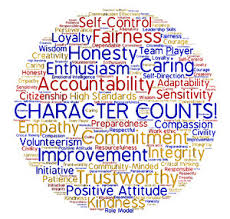
Numerous traits were evaluated and discussed by admissions professionals participating in think tanks and summit meetings regarding admissions and character. Character attributes were then rated according to importance.  Among these character attributes, honesty, integrity, empathy, curiosity, creativity, teamwork, adaptability, resilience, community, generosity, self-control, adaptability and optimism were included on the list of the most important.

Each institution considers the positive attributes in the light of the goals of the school with regard to their students’ success. They have spent the last several years determining the best way to evaluate students’ character attributes during the admissions process.

Intended to complement the cognitive measures currently assessed in the admission process, the new Character Skills Assessment (CSA) which is a non-cognitive assessment will offer insights into an applicant’s character attributes and add great value to the holistic evaluation of applicants.

This new assessment is intended to provide a more complete and comprehensive picture of each applicant, providing insight into important issues of character that currently are often difficult to evaluate.  Schools will use these assessments to make even better informed decisions.

The Character Skills Assessment will be fully implemented in the 2017-2018 private school admissions season.

———————————————————————————————————————————-

Dr. Paul Reginald Lowe is the managing director and lead admissions expert at Pinnacle Educational Center Admissions Advisors Group’s Private School Admissions Advisors.   Dr. Lowe specializes in providing exclusive concierge-type admissions advisory services for U.S. and international families and students who are interested in applying to top U.S. boarding and day schools.  Dr. Lowe also helps U.S. and international students gain admissions into their top choice private schools after they have been wait-listed and rejected.

Summer College Planning Checklist for Rising High School Juniors

college planning checklist
Happy August!  Are you busy enjoying the summer? Or are you preparing for college admissions as a rising junior?  Use your summer downtime to plan and organize your college admissions journey.
  1. Enroll in an ACT or SAT prep course during the summer while you still have time.
  2. Research and find out test dates for ACT or SAT.
  3. For international students, research and find out test dates for the TOEFL exam.
  4. Visit college campuses to see which types of schools appeal to you.
  5. Begin to develop a preliminary list of colleges.
  6. Continue your participation in internships, camps, research, community service and other activities and see how they fit in your college admissions journey.
  7. Review your online persona.  Examine your information on Facebook, Instagram, Snapchat, Twitter, etc.
  8. Begin to prepare for courses that you have enrolled in for the upcoming school year.

It’s never too early to start planning for college!

————————————————————————————————————————————

Dr. Paul Reginald Lowe is the managing director and lead admissions expert at Pinnacle Educational Center Admissions Advisors Group.  Dr. Lowe specializes in providing exclusive concierge-type admissions advisory services for U.S. and international families and students who are interested in applying to Ivy League and highly selective colleges and combined BS/MD programs.  Dr. Lowe also helps students gain admissions into their top choice private schools and colleges after they have been deferred, wait-listed and rejected.

As an experienced and trusted admissions advisor for over 20 years, Dr. Paul R. Lowe is an active member of the following organizations that uphold the ethical and professional standards and principles of good admission practices in college and independent school counseling: Higher Education Consultants Association (HECA), National Association for College Admissions Counseling (NACAC), New Jersey Association for College Admission Counseling (NJACAC), New York State Association for College Admissions Counseling (NYSACAC) and International Association for College Admissions Counseling (IACAC).

Summer College Planning Checklist for Rising High School Seniors

college planning checklist

For high school seniors applying to colleges this fall, there are a lot of things to do during the summer.

  1. Start working on your Common Application; review the new essay prompts and new features.
  2. Start working on your college essays.
  3. Start visiting or re-visit colleges.
  4. Narrow down the colleges being considered.
  5. Make decisions regarding early action or early decision programs.
  6. Register for the SAT and/or ACT if you didn’t take a college entrance exam as a junior or want to take one again.
  7. For international students, register for the TOEFL or take one again.
  8. Get organized and start creating a checklist and calendar to keep track of standardized test dates, college application due dates, and financial aid deadlines.

College admissions continues to be competitive especially in Ivy League and highly selective college and universities.  My recommendation is that rising seniors should use their summers to start the college admissions process sooner than later.

————————————————————————————————————————————-

Dr. Paul Reginald Lowe is the managing director and lead admissions expert at Pinnacle Educational Center Admissions Advisors Group.  Dr. Lowe specializes in providing exclusive concierge-type admissions advisory services for U.S. and international families and students who are interested in applying to Ivy League and highly selective colleges and combined BS/MD programs.  Dr. Lowe also helps students gain admissions into their top choice private schools and colleges after they have been deferred, wait-listed and rejected.

As an experienced and trusted admissions advisor for over 20 years, Dr. Paul R. Lowe is an active member of the following organizations that uphold the ethical and professional standards and principles of good admission practices in college and independent school counseling: Higher Education Consultants Association (HECA), National Association for College Admissions Counseling (NACAC), New Jersey Association for College Admission Counseling (NJACAC), New York State Association for College Admissions Counseling (NYSACAC) and International Association for College Admissions Counseling (IACAC).