It’s Getting Tougher To Get Into the Ivies

On Wednesday, March 28th, the Ivies notified high school seniors of their admissions decisions.  Thousands of students were disappointed.

Here is a list of the acceptance rates, number of students admitted, total number of applicants and rejection rates:

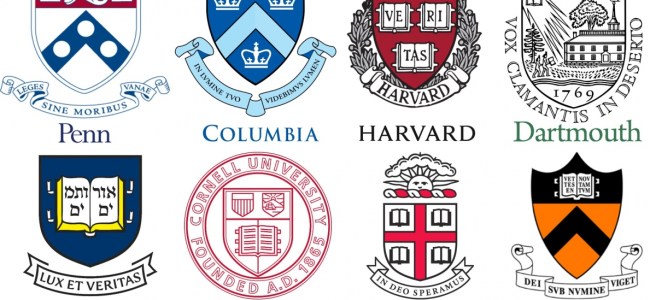
  • Brown: 7.2%; admitted 2,566 of 35,438  Rejection: 92.8%
  • Columbia: 5.5%; admitted 2,214 of 40,203  Rejection: 94.5% 
  • Cornell: 10.3%; admitted 5,288 out of 51,328  Rejection: 89.7%
  • Dartmouth: 8.7%; admitted 1,925 of 22,033  Rejection: 91.3%
  • Harvard: 4.6%; admitted 1,962 of 42,749  Rejection: 95.4%
  • Penn: 8.4%; admitted 3,731 of 44,491  Rejection: 91.6%
  • Princeton: 5.5%; admitted 1,941 of 35,370  Rejection: 94.5%
  • Yale: 6.3%; admitted 2,229 of 35,306  Rejection: 93.7%

Many of the applicants “looked” perfect on paper. Princeton reported that more than 14,200 of the 35,370 applicants had a 4.0 grade point average. Brown reported that 96% of its admitted students are in the top 10% of their high school classes, while at Dartmouth that rate hit 97%.

So why were so many qualified and paper perfect applicants rejected?  They sounded unique just like all the other applicants who were rejected – High SAT’s, high GPA, top class rank, outstanding volunteer, skilled musician and/or athlete, leader in extracirricular activities, “amazing” letters of recommendations, perceived “unique” application essays and the “perfect” connections.

In my firm, I emphasize your “Personal WOW-Factor“, your character and being different (based on your personal characteristics, accomplishments and achievements).  I spend countless hours with my team analyzing how to spotlight my client. This arduous process works because, this year, 98% of our clients who applied to the Ivies were accepted. My associates and I must be doing something right!

“Admissions is a competitive sport!  Why gamble with uncertainty?” – Dr. Paul Lowe

Dr. Paul Reginald Lowe, founder and managing director of Pinnacle Educational Center Admissions Advisors Group, provides comprehensive counseling advice, exclusively for admissions to top private schools; Ivy League and highly-selective colleges/universities; BS/MD programs; graduate and medical schools and top visual and performing arts programs.   The admissions affiliate: Ivy League Admissions Advisors specializes in admissions to Ivy League and highly selective colleges.  Dr. Lowe also specializes in helping students who have been wait-listed, deferred or rejected gain admission into their top-choice schools: College Application Rejected. and student who wish to transfer to another college:  College Transfer Admissions Advisors.  Summer camp:  Ivy League Application Boot Camp.
Disappointed That You’ve Been Rejected From Your Top Choice Colleges? Find Out What Your Next Step Should Be!

Based on my over 20 years experience as a college admissions advisor and admissions strategist, I thought I would share some advice with students who have been receiving disappointing decision results.

Admissions committees give careful, individual attention to each applicant.  They review each applicant with a magnifying glass and compare each applicant to other qualified applicants.  They accept applicants who will inspire those around them during their college years and beyond.

My firm’s strategies involve widening the lens through which our applicant-clients are viewed, recognizing and valuing the different dimensions that shape each student.  We understand, in real-time, how an admissions committee at a particular college may view each dimension separately and collectively in comparison to other students during the selection process by visiting schools and talking with admissions officers.  As an alternative to settling for a rejection decision (which most students do) to a student’s first choice school, I posit this possible solution:

The student may consider reapplying as a transfer student.  It is not too early for a high school senior to consider this.  I call it our Admissions Second Chance Program.  I review and investigate what went wrong, because,  in all cases of rejection decisions, something wasn’t right!  Usually I find innumerable mistakes or homogeneity on the Common Application and/or school-specific supplemental essays.  Many times I have discovered that no matter how “amazing” the student sounds on paper (top grades, high GPA and SATs, volunteerism, extracurricular activities, recommendations, ESE (Expensive Summer Experiences), to me, they were unconvincing to the admissions committee at a specific school for many reasons.  In these cases, we make recommendations to improve the student’s profile and properly connect the dots within their application and beyond.  In unique cases, we have been retained by clients who were initially rejected and after our review and intervention the student’s application was reconsidered and ultimately accepted for admission.

By visiting the Ivies and highly selective schools, understanding the dynamic changes and nuances in individual colleges, and knowing what to do to make a student stand out amongst other applicants, my team and I gain an insightful perspective of each school and develop strategies to help our clients get accepted.

“Admissions is a competitive sport!  Why gamble with uncertainty?” – Dr. Paul Lowe.

Dr. Paul Reginald Lowe, founder and managing director of Pinnacle Educational Center Admissions Advisors Group, provides comprehensive counseling advice, exclusively for admissions to top private schools; Ivy League and highly-selective colleges/universities; BS/MD programs; graduate and medical schools and top visual and performing arts programs.   The admissions affiliate: Ivy League Admissions Advisors specializes in admissions to Ivy League and highly selective colleges,  Dr. Lowe also specializes in helping students who have been wait-listed, deferred or rejected gain admission into their top-choice schools: College Application Rejected. and student who wish to transfer to another college:  College Transfer Admissions Advisors.

Ivy League Application Boot Camp 2018

Pinnacle Educational Center/Admissions Advisors Group (PECAAG) announces the launch of its 2018 Ivy League Application Boot Camp.  The 2-day comprehensive, intensive and informative application boot camps, held during the summer, are specifically for high school rising seniors (current juniors) who have decided to apply to Ivy League colleges and universities. (see Dr. Lowe’s blog: Why Your Child Should Apply to Ivy League College or University?)
The camp is also for current college students who are interested in transferring and current high school seniors who were rejected the first time around and interested in reapplying to the Ivies.  Camp activities include: Application (including essay) brainstorming, review, editing during the camp, followed by an application consultation prior to submission of application.  The fee is $8,500.

The rejection rate for Ivy League schools is as high as 95%.  On average 35,000 applicants apply to each school.  That means that on average 25,000 to 33,000 students are REJECTED each year from each school. “Schools like Harvard Yale and Princeton could pick everyone with 4.0s, perfect SAT scores (and top violinist and pianist) and they could fill an entire class 10 times over,” said camp coordinator, Dr. Diana Alexandrova, the camp’s coordinator and Pinnacle’s International Student Advisory’s managing director.  “Our camp is also beneficial to international students who attend U.S. boarding schools or schools in their respective countries who want a competitive edge in the Ivy League application process.”

“The numbers are staggering and speak to the value and worth of an Ivy League degree” said Dr. Paul R. Lowe, Pinnacle’s CEO and president and the camp’s director.  “It is enjoyable to help students in this way.  Our camp attendees benefit from our discovery of mistakes they could have made on their applications.”

Dr. Paul Reginald Lowe, founder and managing director of Pinnacle Educational Center Admissions Advisors Group, provides comprehensive counseling advice, exclusively for admissions to top private schools; Ivy League and highly-selective colleges/universities; BS/MD programs; graduate and medical schools and top visual and performing arts programs.   The admissions affiliate: Ivy League Admissions Advisors specializes in admissions to Ivy League and highly selective colleges,  Dr. Lowe also specializes in helping students who have been wait-listed, deferred or rejected gain admission into their top-choice schools: College Application Rejected. and student who wish to transfer to another college:  College Transfer Admissions Advisors.

BS MD Programs That Accept International Students

It’s  pretty difficult for U.S. high school students to be admitted to BS/MD programs (or medical school-from-high school programs).  It’s even more competitive and extremely difficult for international students from non-U.S.-based high schools or U.S. based-top boarding schools to be accepted to these programs.

Based on my professional experience as a BS/MD admissions advisor, visiting and touring colleges and talking with admissions officers and administrators, here is a current list of BS/MD programs that will consider reviewing applications of international students:

  • Boston University Seven-Year Liberal Arts/Medical Education Program
  • Brown University Program in Liberal Medical Education (PLME)
  • Case Western Reserve University Pre-Professional Scholars Program in Medicine
  • New Jersey Institute of Technology/American University of Antigua
  • New Jersey Institute of Technology/St. George’s University School of Medicine
  • Northwestern University Honor Program In Medical Education (HPME)
  • Pennsylvania State University Accelerated Premedical-Medical Program
  • Rice/Baylor Medical Scholars Program (MSP)
  • University of Connecticut Special Program in Medicine
  • University Rochester – Rochester Early Medical Scholars (REMS)
  • Washington University in St. Louis University Scholars Program in Medicine

Working with international high school students who desire to matriculate to BS/MD programs is a very involved, comprehensive and long-term process.  My team and I must clearly understand student goals, continuously help students with their applications and develop successful admissions strategies.

Of course, after this long and arduous admissions process one of the major benefits that I observe with our international BS/MD clients is that in their senior year in high school they (and their parents) are happy to know that they can be called “Dr”.  They also know that the next step in their medical career is matching to a U.S. medical residency program!

Dr. Paul Reginald Lowe is the managing director of Pinnacle Educational Center Admissions Advisors Group network. He and his team of admissions advisors, through the admissions affiliate, BS/MD Admissions Advisors, help high school students get accepted to BS/MD programs.  Many of Dr. Lowe’s BS/MD Admissions client are international students want to attend medical school from high school and then entire U.S. medical residency sub-specialties.

Regular Decision Notification Dates: 2018

It’s March 8, 2018! That means that within 20 days high school seniors will begin to discover, after all their hard work, where they will be accepted, wait-listed or rejected

Based on our research and discussions with directors of admissions, many colleges  regular admission decisions ready by March 31 or April 1.

Here are regular decision notification dates (and approximate times) for Ivy League and highly selective colleges and universities:

  • Barnard College:  Late March
  • Brown University:  March 28, 2018
  • Cal Tech:  Mid March – TBA
  • Carnegie Mellon University:  Mid April
  • Columbia University:  March 28, 2018
  • Cornell University:  March 29, 2018
  • Dartmouth University:  March 28, 2018
  • Duke University:  April 1, 2018
  • Georgetown University:  April 1, 2018
  • Georgia Institute of Technology:  March 10, 2018
  • Hamilton College:  Late March
  • Harvard University:  March 28, 2018
  • Johns Hopkins University:  March 16, 2018
  • Lehigh University:  Late March
  • MIT:  March 14, 2018 (Pi Day)
  • Northwestern University: Late March
  • Purdue University: (Jan 15 – March 15, 2018
  • Princeton University: March 28, 2018
  • Stanford University:  April 1, 2018
  • Swarthmore College: April 1, 2018
  • Tufts University:  April 1, 2018
  • University of Chicago:  Late March
  • University of Michigan: Late March
  • University of Notre Dame:  Late March
  • University of Pennsylvania:  March 28, 2018
  • University of Virginia:  Late March
  • Vanderbilt University:  April 1, 2018
  • Vassar College:  Late March
  • Villanova University:  Late March
  • Wesleyan University:  Late March
  • Yale University:  March 28, 2018

“Admissions is a competitive sport!  Why gamble with uncertainty?” – Dr. Paul Lowe

Dr. Paul Reginald Lowe, founder and managing director of Pinnacle Educational Center Admissions Advisors Group, provides comprehensive counseling advice, exclusively for admissions to top private schools; Ivy League and highly-selective colleges/universities; BS/MD programs; graduate and medical schools and top visual and performing arts programs.   The admissions affiliate: Ivy League Admissions Advisors specializes in admissions to Ivy League and highly selective colleges,  Dr. Lowe also specializes in helping students who have been wait-listed, deferred or rejected gain admission into their top-choice schools: College Application Rejected. and student who wish to transfer to another college:  College Transfer Admissions Advisors.

Top Colleges Enhance Efforts To Enroll Low-Income Students

As the cost of college continues to rise, college enrollment is becoming out of reach for low-income students.   According to the College Board, the average cost of tuition and fees for the 2017–2018 school year was $34,740 at private colleges, $9,970 for state residents at public colleges, and $25,620 for out-of-state residents attending public universities.

Launched in December 2016, the American Talent Initiative (ATI), funded by Bloomberg Philanthropies, was founded with a national goal of educating 50,000 additional high-achieving, lower-income students at the 270 colleges and universities with the highest graduation rates by 2025.

Based on the most recent federal data available, there are approximately 430,000 lower-income students enrolled at these 270 institutions.  ATI aims to increase and sustain the total number of lower-income students attending these top-performing colleges to about 480,000 by 2025. To reach this ambitious goal, ATI will work to support its members’ work while adding more top-performing colleges to its membership in the coming months and years. 

ATI now has 97 member colleges that are taking the steps toward socio-economic diversity in colleges. Each ATI member institution has started to enhance its own efforts to recruit, enroll, and support lower-income students, learn from each other, and contribute to research that will help other colleges and universities effectively serve lower-income students

Educators, college administrators and legislature recognize that America’s top-performing colleges have an important role to play in this effort.  Research shows that when high-achieving, lower-income students attend high-performing institutions, they graduate at higher rates, and have a greater chance of attaining leadership positions and other opportunities throughout their lives.  Yet in each graduating high school class, there are at least 12,500 lower-income young people with outstanding academic credentials who do not enroll at institutions where they have the greatest likelihood of graduating…

ATI currently represents many of the country’s most elite colleges and universities.  To date, all the Ivy League schools are ATI members.   Here is a direct effect of ATI:  After 28 years without transfer students, Princeton University will begin accepting students from community colleges in fall 2018.

Dr. Paul Reginald Lowe, founder and managing director of Pinnacle Educational Center Admissions Advisors Group, provides comprehensive counseling advice, exclusively for admissions to top private schools; Ivy League and highly-selective colleges/universities; BS/MD programs; graduate and medical schools and top visual and performing arts programs.   The admissions affiliate: Ivy League Admissions Advisors specializes in admissions to Ivy League and highly selective colleges,  Dr. Lowe also specializes in helping students who have been wait-listed, deferred or rejected gain admission into their top-choice schools: College Application Rejected. and student who wish to transfer to another college:  College Transfer Admissions Advisors.

Why Your Child Should Apply to an Ivy League College or University?

I often hear from some parents in my college admissions seminars or who call my firm inquiring about our service: “It doesn’t really matter if you attend an Ivy League school” or “it doesn’t  make a difference if you attend an Ivy League school” and finally, “its all about the fit; it doesn’t matter where you go to college”.  I even hear from many of my peer independent educational consultants, public high school guidance counselors and private school college counselors (who are not Ivy League undergraduate alumni) that it really doesn’t matter if that a student should applies to the Ivies or attends the Ivies.  I even hear from parents whose children have applied to the Ivies (after they have taken 9 AP courses, received tutoring in order to achieve near-perfect SAT scores and written that perceived awesome essay) that it does really matter.  Really?

As an Ivy-trained physician-scientist, prior to entering the admissions advisory field 22 years ago, I like to corroborate and validate my professional recommendations and advice with meaningful studies and reports, and real data that have linear correlations.

Year after year, thousands of students apply for coveted spots and are rejected (see my blog on rejection rates).  There must be a reason or reasons why each year one reads the following statistic 30,000 students applying for 2,000 spots, or why there is an uptick in the number of international applicants to Ivy Leagues schools.

So let’s review the reasons why your child should apply to the Ivies:

  1. A study in the journal, Research in Social Stratification and Mobility, confirms parental suspicions that the best route to a top job is to attend an Ivy League school.  According to Dr. Lauren Rivera, the author of the study, “Elite professional service employers rely more on academic pedigree more than any other factor.  Where you went to school rather than what you did there makes the difference”.
  2. PayScale Inc., an online provider of global compensation data, in a survey demonstrated that an Ivy League diploma is still worth its price of admission and tuition.   An Ivy League education makes a job candidate stand out, even before a recruiter talks to them!   The median starting salary for Ivy Leaguers is 32% higher than that of liberal-arts college graduates and at 10 or more years into graduates’ working lives, the spread is 34%.
  3. “Because of the bitter competition for premium salaries, elite educational credentials are often a precondition for even landing a job interview. With so many applicants for every vacancy, many consulting firms and investment banks, for example, now consider only candidates from a short list of top-ranked schools. Degrees from elite schools clearly open doors. For example, more than 40 percent of the 2007 graduating class at Princeton landed one of the most highly sought prizes: a position in the lucrative financial services industry.”  Dr. Robert H. Frank
  4. According to a U.S. Department of Education report, the median annual earnings for an Ivy League graduate 10 years after starting amount to well over $70,000 a year. For graduates of all other schools, the median is around $34,000. But things get really interesting at the top end of the income spectrum. The top 10 percent of Ivy League grads are earning $200,000 or more ten years after starting school. The top earners of other schools, on the other hand, earn $70,000.
  5. Top 20 universities producing billionaires is dominated by blue-chip, elite U.S. institutions.  Billionaires are likely to have attended some of the traditionally most prestigious universities.  Top universities have become the place where “global players gather”.  (Educational insights from an annual profile of the uber-rich – Wealth-X and UBS Billionaire Census.)
  6. Business Insider’s “The 48 best colleges in the Northeast” – 2015:  Of the top 10 colleges, the 8 Ivy League colleges/universities were on the list.
  7. Wall Street Journal article: “In Producing Presidents, Ivies Still Have It”. Ivy League colleges are the top U.S. President-producing schools.
  8. Globally, extreme wealth is closely connected to elite education. “The economic sectors where the very wealthy are most closely connected to elite education are hedge funds, venture capital, the internet, law and finance. Those fields may require greater smarts, better training and stronger elite social connections.”  – Wealth X Study
  9. “Elite firms hire from elite universities” from “Pedigree: How Elite Students Get Elite Jobs” by Lauren A. Rivera.
  10. The Economist has established that there is a direct correlation between education, the inheritance of privilege and class. According to an extensive report in The Economist: “For those at the top of the pile, moving straight from the best universities into the best jobs, the potential rewards are greater.”

The next time you are out and about and you see decals that have an Ivy League university, or a parent with sweatshirt that states: ” Ivy League school Mom” ask yourself does it really matter?

Dr. Paul Reginald Lowe, founder and managing director of Pinnacle Educational Center Admissions Advisors Group, provides comprehensive counseling advice, exclusively for admissions to top private schools; Ivy League and highly-selective colleges/universities; BS/MD programs; graduate and medical schools and top visual and performing arts programs.   The admissions affiliate: Ivy League Admissions Advisors specializes in admissions to Ivy League and highly selective colleges,  Dr. Lowe also specializes in helping students who have been wait-listed, deferred or rejected gain admission into their top-choice schools: College Application Rejected. and student who wish to transfer to another college:  College Transfer Admissions Advisors.

Top Colleges Speed Read College Applications

Top College Speed Read Applications Dr Paul Lowe

How long do you think it takes a top college to review your application?   24 hours, five hours or one hour?  Try less than 8 minutes!!!

Due to the ease of applying to multiple schools, the number of domestic and international students applying to elite schools, the number of applications to these schools continues to grow.  Additionally, top colleges have also increased recruitment from rural areas in  the U.S.  Last year, the number of applicants using the Common Application was 902,000 and as of Jan 15, 2018, 898,000 used the Common Application.  Expect that number to increase after transfer admissions totals are determined!

According to a recent article in the Wall Street Journal, admissions officers at top colleges do not have the time to read an applicant’s entire file.    As a result, many top colleges are using a team/committee-based approach to review applications .

In this new model, rather than work alone as an individual admissions officer assigned to a recruitment territory, admissions officers are now reading applications in pairs.  One reader is tasked with assessing and presenting the applicant’s academic credentials, reviewing transcripts, test scores, recommendations and course load and the other reader focuses on the “student’s voice”: essays, interviews and talents. The two-member team discusses and rates each applicant according to specific criteria based on the mission of the college and recommends a decision (reject or accept), typing notes into a system as they simultaneously discuss the applicant and concurrently reviewing each application on separate screens.

This new evaluation approach, initially developed by University of Pennsylvania, allows the admissions officer pairs to have an in-depth conversation about the applicant and render efficient decisions. It also allows them to read applications faster.  During team meetings there is a discussion on whether a candidate qualifies or not.

What does this mean for applicants who are applying to top colleges?

  • It’s getting even harder to be admitted to top colleges!
  • Every portion of a student’s application must now be able to highlight the student as well as somehow interconnected and interrelated with all other parts of the application.
  • Applying to top colleges is no longer just simply about top grades, AP courses, SAT scores and “jack-of-trades” and/or “drive by” extracirricular activities, and Expensive Summer Experiences (ESE) helping the poor in foreign countries and Expensive Summer Camps (ESC) – Summer camps/programs at elite colleges.
  • Students must assume and understand admissions etiquette and cultural as well as emotional intelligence, as you never know who will be reading your application.
  • Retain the services of an admissions advisor who visits colleges at least one or even twice annually.
  • Retain the services of an admissions advisor who understands the codes, language, complex metrics, unforeseen challenges and uncertainty in admissions.
  • Retain the services of an admissions advisor who understands and has the experience in preparing students whose applications are evaluated by the team/committee approach.

After four challenging years of college admissions preparation, your college decisions will be determined in 8 minutes or less!  Like competitive sports, getting into top schools is about have a competitive edge!

Dr. Paul Reginald Lowe, founder and managing director of Pinnacle Educational Center Admissions Advisors Group, provides comprehensive counseling advice, exclusively for admissions to top private schools; Ivy League and highly-selective colleges/universities; BS/MD programs; graduate and medical schools and top visual and performing arts programs.   The admissions affiliate: Ivy League Admissions Advisors specializes in admissions to Ivy League and highly selective colleges,  Dr. Lowe also specializes in helping students who have been wait-listed, deferred or rejected gain admission into their top-choice schools: College Application Rejected. and student who wish to transfer to another college:  College Transfer Admissions Advisors.

2018 Hardest Colleges To Get Into In America

College admissions decisions will be released in late March through early April.  Many top high schools seniors will be disappointed when they check their emails to discover that they will be rejected from the Ivies and highly-selective colleges.  Even with having a high GPA, top SAT scores, high grades and a “manufactured” application and personal statement will be rejected from these schools.  Year after year, I hear the horror stories from parents whose kids got in nowhere because they thought the college admissions race was just about grades, SAT scores, their perceived  ‘unique’ applications, generic essays and perfect connections.

Niche, a company that researches and compiles information on educational institutions released its latest list of the hardest colleges to get into in America.  The hardest colleges ranking is based on acceptance (rejection) rates and SAT/ACT test scores using data from the U.S. Department of Education.  The rejection rates of these colleges range from 85% to 95%.

Here is a list of the top 25:

  1. Harvard University:  95%
  2. Stanford University:  95%
  3. Yale University:  94%
  4. Massachusetts Institute of Technology:  92%
  5. California Institute of Technology:  92%
  6. Princeton University:  93%
  7. University of Chicago:  92%
  8. Columbia University:  93%
  9. Vanderbilt University:  89%
  10. Brown University:  91%
  11. University of Pennsylvania:  91%
  12. Duke University:  88%
  13. Dartmouth College:  88%
  14. Harvey Mudd College:  87%
  15. Pomona College:  91%
  16. Northwestern University:  88%
  17. Rice University:  89%
  18. Johns Hopkins University:  87%
  19. Swarthmore College:  87%
  20. Claremont McKenna College
  21. Washington University in St. Louis:  83%
  22. Cornell University:  87%
  23. Amherst College:  86%
  24. Bowdoin College:  85%
  25. Tufts University:  86%

Ivy League and highly selective colleges use holistic, committee-based and team-based approaches and review processes when evaluating applicants for admission.  That means admission to these colleges is not based on a simple formula of grades and test scores.  Instead, these colleges consider a variety of factors including but not limited to:  the student’s academic record, extracurricular interests, intellectual achievements, character, emotional intelligence and cultural intelligence and personal background to decide who will be rejected or accepted.

Dr. Paul Reginald Lowe, founder and managing director of Pinnacle Educational Center Admissions Advisors Group, provides comprehensive counseling advice, exclusively for admissions to top private schools; Ivy League and highly-selective colleges/universities; BS/MD programs;  graduate and medical schools and top visual and performing arts programs.  He also specializes in helping students who have been wait-listed, deferred or rejected gain admission into their top-choice schools: College Application Rejected. and student who wish to transfer to another college:  College Transfer Admissions Advisors.

College Transfer Admissions Tips

The college application season begins to draw to a close (decisions for competitive schools are being released in late March), one would believe that everything is slowing down.  But actually, we are in the throes of the college transfer season!  Many college freshmen and sophomores, after a semester or so,  have already decided that they need to transfer to another college.  Throughout the years, I have encountered many students who wish to transfer.  It is now becoming a growing trend.  In our practice, we are increasingly even seeing students who are making the decision to transfer while in their first semester, freshman year.  Here are some of the main reasons I see why students decide to transfer:

  • They are unhappy:  Why remain in an environment for four years where you will be unhappy and miserable – and pay tuition, room and board that will cost you (or your parents) $200,000 – $250,000.
  • Fresh start:  For time to time, a student may have faced unexpected challenges, disciplinary actions at a college and they need a new college environment
  • Institutional prestige:  You may be attending your safety school and you want a second shot or you were discouraged from applying to your dream school.  In any case, you desire what we call an UPGRADE.
  • Pre-graduate school preparation:  Your current college may not have a strong pre-law,  pre-med or pre-business program needed for graduate school admissions preparation or employment.

Whatever reason you may have for transferring, the bottom line is that you need to develop an effective action plan to transfer.   Here are ten tips for prospective college transfer students:

  1. Obtain your high school transcript:  As a transfer applicant, colleges like to see your official high school and college transcripts.
  2. Obtain college letters of recommendations:  What professors have known you and can write you a meaningful letter of recommendation?
  3. Common App Transfer Application:  Colleges use the Common App.  Take it seriously and be mindful of deadlines and required supporting documents.  Colleges have different policies for transfer students.
  4. Transfer Essays:  College transfer applicants must write meaningful and convincing essays to transfer into their top-choice school.  The main essay: What are your reasons for transferring?  Watch out for the school-specific supplementals!
  5. Provide a current college transcript:  Grades matter!  What are your current academic courses?
  6. Standardized tests:  If you have taken standardized tests make sure that you report them on your Common App.
  7. Extracirricular activities:  In what school organizations are you involved?  Are you involved in activities outside of school?
  8. Disciplinary actions:  If for any reason, no matter how minor, you had a disciplinary action while in college, it’s best (and honest) to report it on your Common App.  under Family Educational Rights and privacy Act (FERPA), your current college can disclose your school records, without your consent to other schools to which you are transferring.
  9. Research and visit your target schools:  It’s important to research as many schools as possible, develop of a short list and visit schools on this list.
  10. Consider seeking professional, expert advice:  Why?  In my professional experience, I find that prospective transfer students need to develop individualized, effective transfer plans and implement them.  As a transfer student, you no longer have the assistance of your public high school guidance or private high school college counselor.  You will need an educational consultant who specializes in college transfer admissions.  You’re basically on your own in a process that is even more competitive than when you applied to college the first time!

Dr. Paul Reginald Lowe, founder and managing director of Pinnacle Educational Center Admissions Advisors Group, provides comprehensive counseling advice, exclusively for admissions to top private schools; Ivy League and highly-selective colleges/universities; BS/MD programs;  graduate and medical schools and top visual and performing arts programs.  He also specializes in helping students who have been wait-listed, deferred or rejected gain admission into their top-choice schools: College Application Rejected. and student who wish to transfer to another college:  College Transfer Admissions Advisors.