Many students have the achievements and background to apply to Ivy-plus colleges, universities, and top BS/MD programs, but strong credentials alone do not make them a shoo-in.
The biggest challenge I see, as an admissions expert with 30 years’ experience, for high-achieving students is personal branding (self-expression, self-marketing): learning how to present their accomplishments clearly, concisely, and in a way that makes sense and is easy for admissions officers to understand.
Admissions officers spend only a limited amount of time reviewing each application before making a judgment and moving on to the next applicant. If you cannot clearly explain who you are, why your experiences matter, and what you want to study, your shot for acceptance is gone!
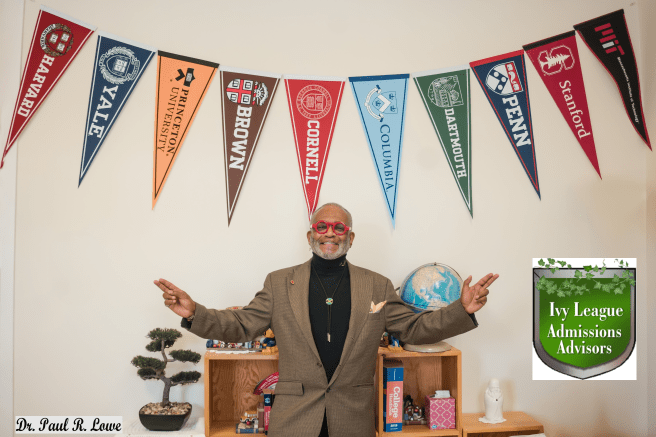
Ivy League Admissions Advisors, a division of Pinnacle Educational Center Admissions Advisors Group (PECAAG), specializes in helping students gain admissions to Ivy League and highly selective colleges. It also helps students transfer to Ivy League colleges!
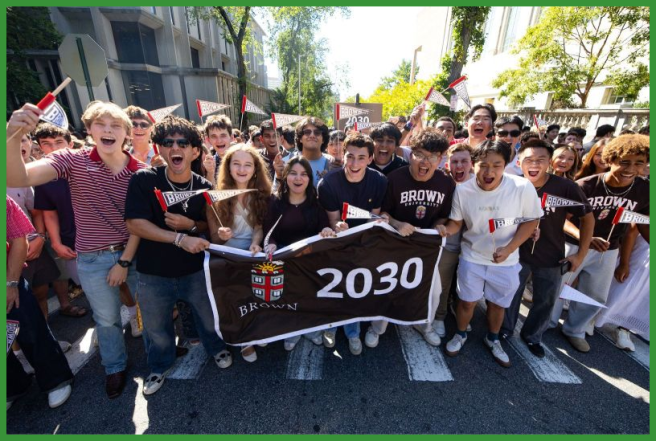
On Tuesday, Sept. 8, I was present at Brown’s 263rd Opening Convocation, welcoming the nearly 3,300 incoming undergraduate, master’s, doctoral and medical students.
Waving Brown pennants, Brown’s newest students passed through the Van Wickle Gates in a time-honored procession before gathering on the College Green. The Gates open for two ceremonial purposes: to welcome new students to Brown and to allow graduating students to process outward at the conclusion of their Brown experience.
Dr. Paul Lowe, through BS/MD Admissions Advisors, helps his clients get accepted to top BS/MD programs: Brown PLME, RPI/Albany Med, U Rochester (REMS), NJIT/NJMS, TCNJ/NJMS, Case Western PPSP, UConn SPM, Penn State/Jefferson, etc. Dr. Lowe also specializes in helping students who have been rejected by BS/MD programs reapply to BS/MD programs as a Gap Year applicant: GAP Year BS/MDAdmissions.
Applying to BS/MD programs can feel mysterious from the outside. Applicants and parents spend years attempting to develop a profile and months preparing applications, personal statements and supplementary essays. Yet few truly understand what happens once applications are submitted.
Admissions committees review thousands of applications every year, and the evaluation process is far more structured than many students and parents expect. Through continual visits to leading BS/MD programs and conversations with admissions professionals, Dr. Lowe has gained insight into how committees evaluate applicants and how students can avoid common mistakes and get rejected.
Here is a step-by-step look at how BS/MD Admissions Committeestypically review applications.
Step 1: Initial Application Screening
After applications are submitted, schools begin with an initial screening to confirm that applicants meet baseline school requirements, such as prerequisite coursework and minimum academic standards.
Many schools also use internal systems to sort applications by GPA, SAT/ACT scores, and institutional priorities. This step does not determine admission, but it helps admissions officers organize files for deeper review.
Applicants may assume numbers alone decide outcomes at this stage. In reality, admissions committees use a holistic framework that weighs academic readiness alongside experience, leadership, service, and personal qualities.
Step 2: File Assignment to Reviewers
Once screening is complete, applications are assigned to admissions staff, faculty or trained reviewers. Each file is typically read independently by more than one reviewer.
Reviewers examine the full application, including the personal statement, activities list, recommendation letters, academic record, and secondary essays. They usually apply a rubric or scoring system to assess qualities each program values.
These criteria often include academic preparation, commitment to service, professionalism, resilience, character, communication skills, and alignment with the school’s mission.
Step 3: Personal Statement and Experiences Review
After confirming academic readiness, reviewers focus on the applicant’s narrative components. The personal statement and activities section provide context to grades and test scores and help committees understand the real person behind the application.
Step 4: Letters of Recommendation Evaluation
Letters of recommendation show committees how applicants perform in academic and high school and community settings. Choosing the right recommender can strengthen an application and influence whether a student receives an interview, acceptance, waitlist offer, or rejection.
Reviewers consider how well recommenders know the applicant and whether they provide specific examples about character rather than general praise.
Often, these letters confirm whether the applicant’s self-description matches how others perceive them.
Step 5: Secondary Application/Essay(s) Assessment
If an applicant passes the first review stage, secondary essays become an important part of the evaluation. Reviewers assess how thoughtfully and specifically applicants respond to each prompt. Reviewers love short essays because they force applicants to be direct, reveal their true voices and characters quickly, and show genuine authenticity without fillers
Step 6: Committee Discussion and Scoring
After individual reviewers complete their evaluations, applications are discussed in committee meetings. These discussions allow reviewers to compare perspectives and decide whether applicants should advance, be waitlisted, or be denied.
Committees evaluate a combination of factors, including academic metrics, shadowing, experiences, leadership, and personal qualities. A holistic review ensures that no single factor determines the result.
At this stage, applicants with strong preparation and authentic motivation for medicine are most likely to move forward in the selection process.
Step 7: Interview Invitation Decisions
Some BS/MD programs include an interview phase.
Applicants with strong overall evaluations are invited to interviews, where schools assess qualities that are difficult to evaluate on paper, such as communication skills, professionalism, empathy, and critical thinking.
Interview invitations do not mean acceptance is guaranteed, but they indicate that the admissions committee believes the applicant may be a strong fit for the program.
Step 8: Final Committee Decisions
After interviews are completed, committees meet again to make final decisions. Interview performance, application strength, and institutional priorities all play a role in determining whether applicants are accepted, waitlisted, or denied.
Admissions committees ultimately aim to build a balanced class of students who demonstrate academic readiness, commitment to service, and the personal qualities needed for success in a BS/MD program.
Dr. Lowe’s understanding of how admissions committees review applications helps his clients approach the process more strategically. Every component of the application including academic record, experiences, essays, and recommendations contributes to a broader narrative about who you are and why you should be a member of a specific BS/MD program.
Drawing on 30 years of admissions experience, acceptance results and conversations with admissions committees, Dr. Lowe understands that the strongest applications are not merely impressive on paper; they must a present clear story of growth, purpose, maturity, character and readiness for the responsibilities of being BS/MD program class member.
Dr. Paul Lowe, through BS/MD Admissions Advisors, helps his clients get accepted to top BS/MD programs: Brown PLME, RPI/Albany Med, U Rochester (REMS), NJIT/NJMS, TCNJ/NJMS, Case Western PPSP, UConn SPM, Penn State/Jefferson, etc. Dr. Lowe also specializes in helping students who have been rejected by BS/MD programs reapply to BS/MD programs as a Gap Year applicant: GAP Year BS/MDAdmissions.
Many parents wait until their child is a rising senior before contacting Dr. Lowe for BS/MD admissions advice. Some may have planned to handle admissions on their own, later realize their current consultant does not specialize in BS/MD admissions and is making mistakes, or assume Dr. Lowe will accept them late in the process at a discounted fee. Dr. Lowe typically does not work with new clients who are rising seniors or seniors; however, he may work with those families in December after they receive rejection results.
However, there are parents of high school seniors who sometimes want and still need guidance. When time permits, Dr. Lowe helps these families strengthen their admissions profiles before they submit their applications (Early Decision and Regular Decision).
Dr. Lowe’s clients who hired him as freshmen, sophomores, or juniors—based on his BS/MD admissions acceptance track record, especially with Brown PLME—are highly likely to be accepted. He does not work with new inquiries (rising seniors/seniors) to compete with the current clients he has been advising for years.
If you’re asking why Dr. Paul Lowe recommends starting BS/MD preparation as early as freshman, sophomore or early junior year rather than waiting until senior year, his reasoning is essentially that BS/MD admissions is not won by the application alone—they are the result of a multi-year admissions student profile development and planning.
For ASSURED ADMISSIONS RESULTS, Dr. Lowe works with students well before the application year and even offers planning for middle-school students.
Why Dr. Lowe advises freshmen, sophomores and juniors?
You cannot manufacture a strong BS/MD admissions profile in senior year. BS/MD programs look holistically at academics, extracurriculars, clinical exposure, research, leadership, volunteer service, recommendations, essays and the student’s overall motivation for medicine. Dr. Lowe’s guidance specifically emphasizes developing a holistic and comprehensive application rather than relying on one or two linear components.
Freshman/sophomore years give you time to make course and activity decisions. Freshman and sophomore coursework, grades, and activities will eventually appear on the college application. Dr. Lowe’s freshman and sophomore planning emphasizes the same point: early admissions strategy decisions can shape a student’s application trajectory and strengthen the likelihood of assured acceptance.
Sophomore year is the “course-correction” window. If a student has weak extracurricular depth, no meaningful medical exposure, an unfocused profile, or academic choices that aren’t ideal for BS/MD programs, sophomore year still provides time to fix the situation. Waiting until junior spring can leave very little time to demonstrate meaningful change – but it still can be done with Dr. Lowe’s guidance!
Junior year is when the strategy needs to become much more serious. Dr. Lowe specifically describes sophomores/juniors as being at the point where they should reevaluate and implement their BS/MD plans because the admissions environment is highly competitive and continually changing.
BS/MD admissions require school-specific strategy. There isn’t one universal BS/MD formula. Different programs have different requirements, selection philosophies, testing policies, interviews and expectations. Dr. Lowe and his team continually visit BS/MD programs and medical schools and talk with admissions personnel to understand changes in their admissions policies.
Work Directly with Dr. Paul Lowe, Admissions Expert: Unlike other educational consulting firms, where clients are assigned to different employees or consultants, you work directly with Dr. Lowe. As lead consultant/admissions advisor, Dr. Lowe personally works with each of his clients so that they directly benefit from his expertise, experience, contacts and the collective knowledge of his educational team. Dr. Lowe’s exclusivity allows him to provide individualized attention, commitment and personalized support to each client through Admissions Strategy sessions. Dr. Lowe develops and crafts personalized winning admissions strategies for each client. ****
Supportive Team & Global Knowledge Network: Dr. Lowe’s admissions advisory team consists of a network of educational advisors who are graduates of Ivy League institutions, former Ivy League admissions directors and officers, board members and trustees, active alumni and board members at selected educational institutions, and students currently enrolled at Ivy League schools. No other educational consulting firm has developed this type of 30-year-old expansive network!
“Parents who want their children accepted to Ivy-plus colleges/universities should hire an expert who understands shifting admissions trends, knows what committees look for through firsthand school visits, and has a proven record of unmatched results.” – Dr. Paul Lowe.
Ivy League Admissions Advisors, a division of Pinnacle Educational Center Admissions Advisors Group (PECAAG), specializes in helping students gain admissions to Ivy League and highly selective colleges. It also helps students transfer to Ivy League colleges!
Fast-food-style admissions services offer mass-produced, highly processed, prepackaged support designed for quick turnaround at a low, budget-friendly price.
Dr. Lowe’s approach is more like a five-star restaurant: focused on quality, personalized service, professional expertise, and results.
Many parents are happy to choose the fast-food model with its budget-friendly price and that is perfectly fine. Dr. Lowe’s services are not for everyone—they are designed for parents who prioritize HEALTHY and HAPPY RESULTS and choose to receive acceptance letters for their children!
As an admissions/knowledge advisor with 30 years’ experience, insider knowledge, vast networks and contacts, Dr. Lowe’s clients get accepted to elite boarding schools: Andover, Exeter, Choate, Deerfield, etc.; Ivy League colleges/universities: Harvard, Yale, Princeton, etc.; top BS/MD programs: Brown PLME, RPI/Albany Med, U Rochester (REMS) and top medical schools: Harvard Med, Johns Hopkins Med, UPenn Perelman Med.
Pinnacle Educational Center Admissions Advisors Group (PinnacleAAG) is a global advisory firm providing strategic admissions advisory services to families and students seeking admissions to elite U.S. boarding and day schools, Ivy League and highly selective colleges and universities, direct BS/MD programs, top medical school and graduate programs.
PinnacleAAG is headquartered in Woodbridge, Connecticut, with satellite offices in Greenwich, Manhattan, White Plains, Boston, Fort Lee & Princeton, NJ, Wilmington, DE, and Houston; and international affiliate partners in London, Beijing, Delhi, Paris, Sao Paulo, Kuala Lumpur, Dubai, Lagos and Singapore, our clients hail from 50 countries!
Where Do Dr. Paul Lowe, Admissions Expert Clients Come From? “All knowledge is spendable currency depending on the market” – Maya Angelou
People ask: What’s your clientele? Where are your clients from?
ANSWER: Parents and students who view admissions as a competitive, high-stakes process and are looking for and choosing to pay for EXPERT and tailored guidance to secure spots in prestigious institutions.
Parents who desire an ADMISSIONS EXPERT who has a peerless and unmatched track record of RESULTS/ACCEPTANCES, not just promises or simple guidance.
Parents who view their children’s education as an asset class tantamount to gold.
Where are these parents? All over the world!
Dr. Paul Lowe’s U.S. and international clients get accepted to elite boarding schools: Andover, Exeter, Choate, Deerfield, etc.; Ivy League colleges/universities: Harvard, Yale, Princeton, etc.; top BS/MD programs: Brown PLME, RPI/Albany Med, U Rochester (REMS) and top medical schools: Harvard Med, Johns Hopkins Med, UPenn Perelman Med, etc.
Dr. Paul Reginald Lowe, founder/managing director and lead admissions advisor of Pinnacle Educational Center Admissions Advisors Group, provides comprehensive counseling advice, exclusively for admissions to top private schools; Ivy League and highly-selective colleges/universities; BS/MD programs; graduate and medical schools and top visual and performing arts programs. The admissions affiliate: Ivy League Admissions Advisors specializes in admissions to Ivy League and highly selective colleges. Dr. Lowe helps students gain admissions to BS/MD programs:| BS/MD Admissions Guru| BS/MD Admissions Advisors and also specializes in helping students who have been rejected by BS/MD programs reapply to BS/MD programs as a Gap Year applicant: GAP Year BS/MDAdmissions.
Artificial intelligence is rapidly transforming college admissions, as families increasingly rely on data and online tools to help students apply to Ivy League schools and top BS/MD programs. However, successful admissions strategies cannot be built by algorithms alone.
While AI is effective at providing information, it cannot replicate human intuition or fully grasp the holistic nature of admissions. It lacks the ability to interpret emotional nuance and mercurial thought, build trusted long-term relationships, or recognize the subtle biases that influence admissions committees—factors that often determine whether a student is accepted or rejected.
These human elements distinguish Dr. Paul Lowe and his team from parents navigating the process independently or working with other educational consultants. College admissions is deeply personal. Elite institutions are not simply selecting high-achieving individuals; they are carefully shaping a class, investing in the long-term potential of future alumni, and seeking a cohesive and complementary group of students.
Understanding these priorities requires more than data. It demands experience, insight, judgment, vision, insider’s knowledge, diplomacy and a deep understanding of human behavior and institutional perspective and their goals.
AI will remain an important tool in education, but its true value lies in complementing—not replacing—human expertise and judgement. In a competitive and constantly evolving admissions landscape, the combination of technology, professional insight, and meaningful relationships provides a decisive competitive advantage—the difference between ACCEPTANCE and REJECTION.
Dr. Paul Reginald Lowe, founder/managing director and lead admissions advisor of Pinnacle Educational Center Admissions Advisors Group, provides comprehensive counseling advice, exclusively for admissions to top private schools; Ivy League and highly-selective colleges/universities; BS/MD programs; graduate and medical schools and top visual and performing arts programs. The admissions affiliate: Ivy League Admissions Advisors specializes in admissions to Ivy League and highly selective colleges. Dr. Lowe helps students gain admissions to BS/MD programs:| BS/MD Admissions Guru| BS/MD Admissions Advisors and also specializes in helping students who have been rejected by BS/MD programs reapply to BS/MD programs as a Gap Year applicant: GAP Year BS/MDAdmissions.
High School Sophomores/Juniors: if you are interested in applying to BS/MD programs—it’s time to reevaluate your BS/MD Plans with an expert! With such a competitive environment and the immeasurable value and benefits of BS/MD programs, the need for an effective admissions game plan is CRUCIAL.
Many aspects of the BS/MD admissions environment are continually changing. At BS/MD Admissions Advisors, Dr. Paul Lowe and his team of advisors discover that many students and parents are clueless about what to do, when to do it, where to do it, who to contact, and why. If you are a high school junior or your son or daughter is a high school junior and you are thinking about applying to direct BS/MD programs, it’s time to reassess your plans.
Most students (even with the help of their parents) read books, look at videos or visit college forum-type websites which they believe may provide personalized answers for them.
Many parents who call us (and whose children are performing the above and have the below profile) then believe that their child is a shoo-in for BS/MD programs and just need “some” advice.
Here is the typical BS/MD applicant-student profile of students when parents contact us:
GPA: 4.85 (weighted)
ACT: 35
SAT: 1580
APs: usually 10 -14 classes
Honors/Awards: several
Teacher/Counselor Recommendations: Excellent
Resume: 3-4 pages
Volunteer: Several organizations
Shadowed Doctors: 3-4
Extracurricular Activities: Several
Published a paper: 1-2
Laboratory Research: Participated and/or possibly published
With all of the above you would believe that this student will definitely be accepted – WRONG! This represents the most common and well-known factors for admissions. However, there are many more things to consider.
Here’s a small list of factors by admissions expert, Dr. Paul Lowe that you should consider if you are a sophomore/junior seriously thinking about applying to BS/MD programs.
Student CHARACTER – Each institution considers a student’s positive attributes in the light of the goals of the particular institution. BS/MD programs thoroughly evaluate character attributes of a student as a factor for admissions. Among the most important character attributes are honesty, integrity, empathy, curiosity, creativity, teamwork, adaptability, resilience, community, generosity, self-control, adaptability and optimism. Lip-service or just stating that one possesses these attributes will not help.
COLLEGE-SPECIFIC SUPPLEMENTALS – You must complement and synergize your supplementals with your personal statement. All the school-specific essays are important, even the 50 word-count answers! Students have been rejected because of mistakenly using one word or a sentence in 50 word-count essays!
WOW FACTOR – What’s your WOW Factor? How and when can you use it to WOW admissions? You want the admissions committee to say “WOW! We want this applicant on our campus.”
ETIQUETTE –Are you mindful of how you present yourself and how people perceive you? Etiquette matters! We provide personalized etiquette strategies for our clients.
MANNERS – When you say something (or write something) what counts is not what you mean but how you are heard and perceived. Are you mindful of your manners? Manners matter! Do you know when or if you sound rude, pretentious, impolite, disrespectful, unrefined or uncultured?
WHO ARE YOU? – What are your values? What do you stand for? Can you define you? Why are you different?
INTERVIEWS – You may be perfect on paper (grades, SATs recommendations, volunteering to save the world, 1000 hours of shadowing), however, one incorrect word or statement in an interview results in a rejection – That’s right, just one!
The KNOW-HOW. Our proprietary-knowledge, unmatched experience, admissions success and years of close working relationships with admissions professionals ensures that you do it right! Reevaluate your BS/MD admissions and application strategies with expert guidance to discover how you can stand out in a competitive admissions environment to get ACCEPTED!
If you know how to plan, develop and implement (1-7) and how they are used in BS/MD admissions – that’s wonderful!!! But if you don’t, there is an increased probability that you (and your child) will make irrevocable mistakes that will cause instant rejections to all schools. Would you want this to happen after your years of planning as a parent and your child’s hard work?
Dr. Paul Reginald Lowe, founder/managing director and lead admissions advisor of Pinnacle Educational Center Admissions Advisors Group, provides comprehensive counseling advice, exclusively for admissions to top private schools; Ivy League and highly-selective colleges/universities; BS/MD programs; graduate and medical schools and top visual and performing arts programs. The admissions affiliate: Ivy League Admissions Advisors specializes in admissions to Ivy League and highly selective colleges. Dr. Lowe helps students gain admissions to BS/MD programs:| BS/MD Admissions Guru| BS/MD Admissions Advisors and also specializes in helping students who have been rejected by BS/MD programs reapply to BS/MD programs as a Gap Year applicant: GAP Year BS/MDAdmissions.
Many U.S. as well as international middle school and high school students are actively involved and compete in lacrosse as an interscholastic sport. Accordingly, many parents seek boarding schools that support the lacrosse scholar-athlete. Many universities including, Duke, Harvard, Yale, Princeton, Columbia, University of Pennsylvania, Brown, Dartmouth, Sanford University, have lacrosse teams and are actively seeking lacrosse players!
Here is a list of top boarding schools with lacrosse programs.
Phillips Academy Andover
Phillips Exeter Academy
Lawrenceville School
The Taft School
Deerfield Academy
Choate Rosemary Hall
The Hill School
Hun School of Princeton
The Frederick Gunn School
The Masters School
Middlesex School
The Thacher School
Paul Reginald Lowe is the managing director and lead admissions expert at Pinnacle Educational Center Admissions Advisors Group’s Private School Admissions Advisors and its affiliate: Boarding School Admissions Consultants. Dr. Lowe specializes in providing exclusive concierge-type admissions advisory services for U.S. and international students who are interested in applying to top U.S. boarding and top private schools. Dr. Lowe also helps U.S. and international students gain admissions into top U.S. boarding schools even after they have been wait-listed and rejected.