6 Common Mistakes International Students Make During the College Admissions Process

International Students

As an admissions advisor and educational consultant for over 20 years, I have seen more and more international students who are enrolled in their local high schools or U.S. boarding schools applying to U.S. colleges.  Year after year, I have observed common mistakes that they make during the college admissions process that cause their applications to be rejected.

  1. Not doing research:  Most international students know a little about a few universities and not much more. They haven’t researched key things like academic programs and financial aid. They haven’t considered the accessibility, weather or cost of living in the city where they’ll be living.
  2. Not asking questions: Many international students don’t ask questions.  To many it’s not culturally appropriate. By not asking questions they may obtain misinformation and be misguided during the admissions process. 
  3. Not planning ahead: Most international students expect U.S. college admissions to be very streamlined and the same at each university.  In reality, every university has a different process and schedule.  International students need to develop a timeline and checklist and plan ahead accordingly.
  4. Not understanding the Common Application:  The Common Application is a way which schools assess students and select students.  Many international students misunderstand the complexity and nuances of the Common Application and make egregious and irrevocable mistakes on the Common Application which inevitably result in rejections.
  5. Not Marketing Themselves:  The competitive college admissions process is about developing and marketing your personal brand not just about your A-levels, TOEFL scores, or SAT scores.  Many international students view college admissions selection process quantitatively not qualitatively.  They need to understand the American schools’ expectations during the selection process. They need to share their accomplishments and achievements in a meaningful and compelling way to schools through the Common App.
  6. Depending solely on educational agents:  While educational agents in their countries are resources for international students, many agents in their countries do not constantly travel to U.S. colleges and universities to know, in real-time, the changes in each university admissions policies.  For example, Harvard’s admissions policy and mission is different from Yale, Princeton, Brown, MIT, Columbia, etc.

———————————————————————————————————————-

Dr. Paul Reginald Lowe is the managing director and lead admissions expert at Pinnacle Educational Center Admissions Advisors Group.  Dr. Lowe specializes in providing exclusive concierge-type admissions advisory services for U.S. and international families and students who are interested in applying to Ivy League and highly selective colleges and combined BS/MD programs.  Dr. Lowe also helps students gain admissions into their top choice private schools and colleges after they have been deferred, wait-listed and rejected.

As an experienced and trusted admissions advisor for over 20 years, Dr. Paul R. Lowe is an active member of the following organizations that uphold the ethical and professional standards and principles of good admission practices in college and independent school counseling: Higher Education Consultants Association (HECA), National Association for College Admissions Counseling (NACAC), New Jersey Association for College Admission Counseling (NJACAC), New York State Association for College Admissions Counseling (NYSACAC) and International Association for College Admissions Counseling (IACAC).
Character Counts in Private School Admissions

Character in Private School Admissions Dr Lowe

Being thorough and particular when evaluating a private school choice is extremely important for parents.  But one thing is certain…the competitive private schools will be equally as picky when choosing your child as a member of its incoming class.  Private schools have been using the traditional academic criteria of SSAT/ISEE and grades for a number of decades.  However, admissions personnel have long recognized that these cognitive measures are limited in their ability to predict a student’s fit in their schools’ community and program.  Increasingly they are determining how to accurately evaluate character attributes of a student as a factor in private school admissions.

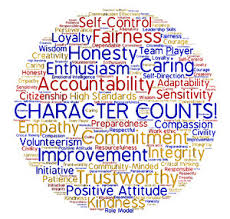
Numerous traits were evaluated and discussed by admissions professionals participating in think tanks and summit meetings regarding admissions and character. Character attributes were then rated according to importance.  Among these character attributes, honesty, integrity, empathy, curiosity, creativity, teamwork, adaptability, resilience, community, generosity, self-control, adaptability and optimism were included on the list of the most important.

Each institution considers the positive attributes in the light of the goals of the school with regard to their students’ success. They have spent the last several years determining the best way to evaluate students’ character attributes during the admissions process.

Intended to complement the cognitive measures currently assessed in the admission process, the new Character Skills Assessment (CSA) which is a non-cognitive assessment will offer insights into an applicant’s character attributes and add great value to the holistic evaluation of applicants.

This new assessment is intended to provide a more complete and comprehensive picture of each applicant, providing insight into important issues of character that currently are often difficult to evaluate.  Schools will use these assessments to make even better informed decisions.

The Character Skills Assessment will be fully implemented in the 2017-2018 private school admissions season.

———————————————————————————————————————————-

Dr. Paul Reginald Lowe is the managing director and lead admissions expert at Pinnacle Educational Center Admissions Advisors Group’s Private School Admissions Advisors.   Dr. Lowe specializes in providing exclusive concierge-type admissions advisory services for U.S. and international families and students who are interested in applying to top U.S. boarding and day schools.  Dr. Lowe also helps U.S. and international students gain admissions into their top choice private schools after they have been wait-listed and rejected.

Summer College Planning Checklist for Rising High School Juniors

college planning checklist
Happy August!  Are you busy enjoying the summer? Or are you preparing for college admissions as a rising junior?  Use your summer downtime to plan and organize your college admissions journey.
  1. Enroll in an ACT or SAT prep course during the summer while you still have time.
  2. Research and find out test dates for ACT or SAT.
  3. For international students, research and find out test dates for the TOEFL exam.
  4. Visit college campuses to see which types of schools appeal to you.
  5. Begin to develop a preliminary list of colleges.
  6. Continue your participation in internships, camps, research, community service and other activities and see how they fit in your college admissions journey.
  7. Review your online persona.  Examine your information on Facebook, Instagram, Snapchat, Twitter, etc.
  8. Begin to prepare for courses that you have enrolled in for the upcoming school year.

It’s never too early to start planning for college!

————————————————————————————————————————————

Dr. Paul Reginald Lowe is the managing director and lead admissions expert at Pinnacle Educational Center Admissions Advisors Group.  Dr. Lowe specializes in providing exclusive concierge-type admissions advisory services for U.S. and international families and students who are interested in applying to Ivy League and highly selective colleges and combined BS/MD programs.  Dr. Lowe also helps students gain admissions into their top choice private schools and colleges after they have been deferred, wait-listed and rejected.

As an experienced and trusted admissions advisor for over 20 years, Dr. Paul R. Lowe is an active member of the following organizations that uphold the ethical and professional standards and principles of good admission practices in college and independent school counseling: Higher Education Consultants Association (HECA), National Association for College Admissions Counseling (NACAC), New Jersey Association for College Admission Counseling (NJACAC), New York State Association for College Admissions Counseling (NYSACAC) and International Association for College Admissions Counseling (IACAC).

Intellectual Wealth and Education

Intellectual wealth and education

When people hear the word “wealth” they think of finances, economics of dollars, pounds, gold, etc. or making money. These are actually the materialization of what is seldom discussed: Intellectual Wealth.  What is Intellectual Wealth? What does it have to do with education and wealth?

Intellectual Wealth results from the acquisition of intellectual capital. Specifically, intellectual wealth results from obtaining knowledge, multiple intelligences and education. Intellectual wealth is not passive; it is very active.  Education is a critical component of intellectual wealth, especially in the global economy.

According to Wealth X, a leading global wealth information and insight firm, more and more international students are applying to elite and prestigious private day and boarding schools, as well as Ivy League undergraduate and graduate school programs. Affluent international parents consider the education of their children as their premier investment.  To international parents, a superior education and a pedigree degree for their child, is worth more than real estate or luxury items.  Education has become the new global currency and path to wealth.

———————————————————————————————-

Dr. Paul Reginald Lowe is the managing director and lead admissions expert at Pinnacle Educational Center Admissions Advisors Group. Dr. Lowe specializes in providing exclusive concierge-type admissions advisory services for U.S. and international families and students who are interested in applying to Ivy League and highly selective colleges and combined BS/MD programs. Dr. Lowe also helps students gain admissions into their top choice private schools and colleges after they have been deferred, wait-listed and rejected.

As an experienced and trusted admissions advisor for over 20 years, Dr. Paul R. Lowe is an active member of the following organizations that uphold the ethical and professional standards and principles of good admission practices in college and independent school counseling: Higher Education Consultants Association (HECA), National Association for College Admissions Counseling (NACAC), New Jersey Association for College Admission Counseling (NJACAC), New York State Association for College Admissions Counseling (NYSACAC) and International Association for College Admissions Counseling (IACAC).