Top Colleges Speed Read College Applications

Top College Speed Read Applications Dr Paul Lowe

How long do you think it takes a top college to review your application?   24 hours, five hours or one hour?  Try less than 8 minutes!!!

Due to the ease of applying to multiple schools, the number of domestic and international students applying to elite schools, the number of applications to these schools continues to grow.  Additionally, top colleges have also increased recruitment from rural areas in  the U.S.  Last year, the number of applicants using the Common Application was 902,000 and as of Jan 15, 2018, 898,000 used the Common Application.  Expect that number to increase after transfer admissions totals are determined!

According to a recent article in the Wall Street Journal, admissions officers at top colleges do not have the time to read an applicant’s entire file.    As a result, many top colleges are using a team/committee-based approach to review applications .

In this new model, rather than work alone as an individual admissions officer assigned to a recruitment territory, admissions officers are now reading applications in pairs.  One reader is tasked with assessing and presenting the applicant’s academic credentials, reviewing transcripts, test scores, recommendations and course load and the other reader focuses on the “student’s voice”: essays, interviews and talents. The two-member team discusses and rates each applicant according to specific criteria based on the mission of the college and recommends a decision (reject or accept), typing notes into a system as they simultaneously discuss the applicant and concurrently reviewing each application on separate screens.

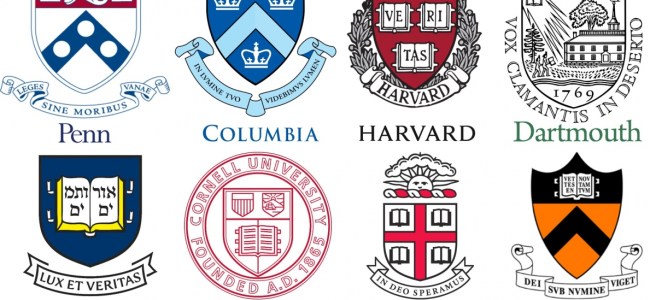
This new evaluation approach, initially developed by University of Pennsylvania, allows the admissions officer pairs to have an in-depth conversation about the applicant and render efficient decisions. It also allows them to read applications faster.  During team meetings there is a discussion on whether a candidate qualifies or not.

What does this mean for applicants who are applying to top colleges?

  • It’s getting even harder to be admitted to top colleges!
  • Every portion of a student’s application must now be able to highlight the student as well as somehow interconnected and interrelated with all other parts of the application.
  • Applying to top colleges is no longer just simply about top grades, AP courses, SAT scores and “jack-of-trades” and/or “drive by” extracirricular activities, and Expensive Summer Experiences (ESE) helping the poor in foreign countries and Expensive Summer Camps (ESC) – Summer camps/programs at elite colleges.
  • Students must assume and understand admissions etiquette and cultural as well as emotional intelligence, as you never know who will be reading your application.
  • Retain the services of an admissions advisor who visits colleges at least one or even twice annually.
  • Retain the services of an admissions advisor who understands the codes, language, complex metrics, unforeseen challenges and uncertainty in admissions.
  • Retain the services of an admissions advisor who understands and has the experience in preparing students whose applications are evaluated by the team/committee approach.

After four challenging years of college admissions preparation, your college decisions will be determined in 8 minutes or less!  Like competitive sports, getting into top schools is about have a competitive edge!

Dr. Paul Reginald Lowe, founder and managing director of Pinnacle Educational Center Admissions Advisors Group, provides comprehensive counseling advice, exclusively for admissions to top private schools; Ivy League and highly-selective colleges/universities; BS/MD programs; graduate and medical schools and top visual and performing arts programs.   The admissions affiliate: Ivy League Admissions Advisors specializes in admissions to Ivy League and highly selective colleges,  Dr. Lowe also specializes in helping students who have been wait-listed, deferred or rejected gain admission into their top-choice schools: College Application Rejected. and student who wish to transfer to another college:  College Transfer Admissions Advisors.

Top Manhattan Private School Kindergarten Programs

Private preschools have become an institution in Manhattan.  Tuition can be as high as $50,000 and that’s just for a few hours a day for school.  There are often more than 1000 applications for 60 spots in kindergarten at many schools.   Often the kindergarten programs are feeders to top secondary schools and these secondary schools send off students to Ivy League and highly selective college and universities.

Here is a list of top private school kindergarten programs in Manhattan:

  • Dalton School
  • Trinity School
  • Collegiate School
  • Riverdale Country School
  • Chapin School
  • Friends Seminary
  • Dwight School
  • The Spence School
  • Brearley School
  • Columbia Grammar & Preparatory School
  • The Avenues

On or about Friday, February 9th parents will be notified whether their child is accepted or rejected from kindergarten programs in Manhattan.  After that, the real competitive process begins!

Dr. Paul Reginald Lowe is the managing director and lead admissions expert at Pinnacle Educational Center Admissions Advisors Group’s Private School Admissions Advisors.  Manhattan affiliate: Manhattan Private School Admissions.  Dr. Lowe specializes in providing exclusive concierge-type admissions advisory services for U.S. and international students who are interested in applying to top U.S. boarding and day schools.  Dr. Lowe helps U.S. and international students gain admissions into top U.S. private schools even after they have been wait-listed and rejected.  Dr. Lowe and his team of admissions advisors also visit prestigious and elite private schools, where they have the unique opportunity of interacting one-on-one with heads of schools, directors of admissions and senior admissions personnel.   Dr. Lowe provides parents with the knowledge they need to decide where there children should attend and the admissions strategies they need to be admitted into their top-choice school.

Top U.S. Law Schools

Top US Law Schools Dr Paul Lowe

Does it matter where you attend law school?  The answer is absolutely!

Top law schools have a strong alumni network, prestige and connections to top law firms.  As the number of lawyers in the world increases, the importance of obtaining a law degree from a top school increases.   The major law firms, major corporations and high-profile government agencies actively recruit from top law firms.

The traditional top 14 US law schools (T14) include:

  • Yale Law School
  • Harvard Law School
  • Stanford Law School
  • Columbia Law School
  • Chicago Law School
  • New York University School of Law
  • University of Pennsylvania Law School
  • University of Virginia Law School
  • University of California Berkeley Boalt Law School
  • Duke Law School
  • University of Michigan Ann Arbor Law School
  • Northwestern Law School
  • Cornell Law School
  • Georgetown Law School

So the next time you are considering why you should consider top laws schools remember my blog!

Dr. Paul Lowe is the managing director of Pinnacle Educational Center Admissions Advisors Group network.  He and his team of advisors, through the admissions affiliate Law School Admissions Advisors, help applicants gain admissions to top U.S. law schools.

2018 Hardest Colleges To Get Into In America

College admissions decisions will be released in late March through early April.  Many top high schools seniors will be disappointed when they check their emails to discover that they will be rejected from the Ivies and highly-selective colleges.  Even with having a high GPA, top SAT scores, high grades and a “manufactured” application and personal statement will be rejected from these schools.  Year after year, I hear the horror stories from parents whose kids got in nowhere because they thought the college admissions race was just about grades, SAT scores, their perceived  ‘unique’ applications, generic essays and perfect connections.

Niche, a company that researches and compiles information on educational institutions released its latest list of the hardest colleges to get into in America.  The hardest colleges ranking is based on acceptance (rejection) rates and SAT/ACT test scores using data from the U.S. Department of Education.  The rejection rates of these colleges range from 85% to 95%.

Here is a list of the top 25:

  1. Harvard University:  95%
  2. Stanford University:  95%
  3. Yale University:  94%
  4. Massachusetts Institute of Technology:  92%
  5. California Institute of Technology:  92%
  6. Princeton University:  93%
  7. University of Chicago:  92%
  8. Columbia University:  93%
  9. Vanderbilt University:  89%
  10. Brown University:  91%
  11. University of Pennsylvania:  91%
  12. Duke University:  88%
  13. Dartmouth College:  88%
  14. Harvey Mudd College:  87%
  15. Pomona College:  91%
  16. Northwestern University:  88%
  17. Rice University:  89%
  18. Johns Hopkins University:  87%
  19. Swarthmore College:  87%
  20. Claremont McKenna College
  21. Washington University in St. Louis:  83%
  22. Cornell University:  87%
  23. Amherst College:  86%
  24. Bowdoin College:  85%
  25. Tufts University:  86%

Ivy League and highly selective colleges use holistic, committee-based and team-based approaches and review processes when evaluating applicants for admission.  That means admission to these colleges is not based on a simple formula of grades and test scores.  Instead, these colleges consider a variety of factors including but not limited to:  the student’s academic record, extracurricular interests, intellectual achievements, character, emotional intelligence and cultural intelligence and personal background to decide who will be rejected or accepted.

Dr. Paul Reginald Lowe, founder and managing director of Pinnacle Educational Center Admissions Advisors Group, provides comprehensive counseling advice, exclusively for admissions to top private schools; Ivy League and highly-selective colleges/universities; BS/MD programs;  graduate and medical schools and top visual and performing arts programs.  He also specializes in helping students who have been wait-listed, deferred or rejected gain admission into their top-choice schools: College Application Rejected. and student who wish to transfer to another college:  College Transfer Admissions Advisors.

Private High Schools that Offer Top Rowing Programs

Most rowing schools offer daily access to a lake or river and a large fleet of boats. Many of the best rowing schools are boarding schools where rowers are afforded lots of access to boats and equipment.  There are several top private high schools that offer top rowing programs.

Here is a list of schools that offer top rowing programs:

  • Brunswick School – Greenwich, CT
  • Buckingham Browne & Nichols School – Cambridge, MA
  • Choate Rosemary Hall – Wallingford, CT
  • Deerfield Academy – Deerfield, MA
  • Greenwich Academy – Greenwich, CT
  • Groton School – Groton, MA
  • The Gunnery – Washington, CT
  • Kent School – Kent, CT
  • Middlesex School – Concord, MA
  • Noble & Greenough School – Dedham, MA
  • Phillips Academy Andover – Andover, MA
  • Phillips Exeter Academy – Exeter, NH
  • St. Paul’s School – Concord, NH
  • Taft School – Watertown, CT

Dr. Paul Reginald Lowe is the managing director and lead admissions expert at Pinnacle Educational Center Admissions Advisors Group’s Private School Admissions Advisors.  Dr. Lowe specializes in providing exclusive concierge-type admissions advisory services for U.S. and international students who are interested in applying to top U.S. boarding and day schools.  Dr. Lowe helps U.S. and international students gain admissions into top U.S. private schools even after they have been wait-listed and rejected.  Dr. Lowe and his team of admissions advisors also visit prestigious and elite private schools, where they have the unique opportunity of interacting one-on-one with heads of schools, directors of admissions and senior admissions personnel.   Dr. Lowe provides parents with the knowledge they need to decide where there children should attend and the admissions strategies they need to be admitted into their top-choice school.

College Transfer Admissions Tips

The college application season begins to draw to a close (decisions for competitive schools are being released in late March), one would believe that everything is slowing down.  But actually, we are in the throes of the college transfer season!  Many college freshmen and sophomores, after a semester or so,  have already decided that they need to transfer to another college.  Throughout the years, I have encountered many students who wish to transfer.  It is now becoming a growing trend.  In our practice, we are increasingly even seeing students who are making the decision to transfer while in their first semester, freshman year.  Here are some of the main reasons I see why students decide to transfer:

  • They are unhappy:  Why remain in an environment for four years where you will be unhappy and miserable – and pay tuition, room and board that will cost you (or your parents) $200,000 – $250,000.
  • Fresh start:  For time to time, a student may have faced unexpected challenges, disciplinary actions at a college and they need a new college environment
  • Institutional prestige:  You may be attending your safety school and you want a second shot or you were discouraged from applying to your dream school.  In any case, you desire what we call an UPGRADE.
  • Pre-graduate school preparation:  Your current college may not have a strong pre-law,  pre-med or pre-business program needed for graduate school admissions preparation or employment.

Whatever reason you may have for transferring, the bottom line is that you need to develop an effective action plan to transfer.   Here are ten tips for prospective college transfer students:

  1. Obtain your high school transcript:  As a transfer applicant, colleges like to see your official high school and college transcripts.
  2. Obtain college letters of recommendations:  What professors have known you and can write you a meaningful letter of recommendation?
  3. Common App Transfer Application:  Colleges use the Common App.  Take it seriously and be mindful of deadlines and required supporting documents.  Colleges have different policies for transfer students.
  4. Transfer Essays:  College transfer applicants must write meaningful and convincing essays to transfer into their top-choice school.  The main essay: What are your reasons for transferring?  Watch out for the school-specific supplementals!
  5. Provide a current college transcript:  Grades matter!  What are your current academic courses?
  6. Standardized tests:  If you have taken standardized tests make sure that you report them on your Common App.
  7. Extracirricular activities:  In what school organizations are you involved?  Are you involved in activities outside of school?
  8. Disciplinary actions:  If for any reason, no matter how minor, you had a disciplinary action while in college, it’s best (and honest) to report it on your Common App.  under Family Educational Rights and privacy Act (FERPA), your current college can disclose your school records, without your consent to other schools to which you are transferring.
  9. Research and visit your target schools:  It’s important to research as many schools as possible, develop of a short list and visit schools on this list.
  10. Consider seeking professional, expert advice:  Why?  In my professional experience, I find that prospective transfer students need to develop individualized, effective transfer plans and implement them.  As a transfer student, you no longer have the assistance of your public high school guidance or private high school college counselor.  You will need an educational consultant who specializes in college transfer admissions.  You’re basically on your own in a process that is even more competitive than when you applied to college the first time!

Dr. Paul Reginald Lowe, founder and managing director of Pinnacle Educational Center Admissions Advisors Group, provides comprehensive counseling advice, exclusively for admissions to top private schools; Ivy League and highly-selective colleges/universities; BS/MD programs;  graduate and medical schools and top visual and performing arts programs.  He also specializes in helping students who have been wait-listed, deferred or rejected gain admission into their top-choice schools: College Application Rejected. and student who wish to transfer to another college:  College Transfer Admissions Advisors.

Do Admissions Officers Consider Diversity In College Admissions?

Diversity in college admissions

Diversity in college admissions:  Colleges are looking for cultural, intellectual and meta-cognitive diversity in their classes as well as students who can relate to diverse populations.  Colleges accept classes not just great students.  They are seeking students who understand and appreciate other races cultures and ethnicities.  With regard to diversity, admissions committees ask the following questions: Can the applicant co-exist in our diverse community of different students who are global thinkers?  Does the applicant profile demonstrate a lack of a diversity experience?  Has the applicant meaningfully interacted with people outside of their socio-economic, cultural and ethnic norms?  It has been my observation that college admissions officers and deans of admissions behave like forensic investigators; they analyze and assess how, why and when dots are connected.

Colleges want talented, intellectually engaged students who will be meaningful contributing members of a diverse incoming class and future alumni who will be their global ambassadors.  They do not seek students who are “unique just like everyone else” in their respective communities.  In my experience, applicants who are accepted are those who can standout and lucidly articulate their achievements, goals and personalities and project themselves in a positive light to a committee of six to ten diverse people!

In my firm, which consists of a culturally, ethnically and racially diverse team, we truly appreciate and understand this emphasis, and we innately embrace the meaning and value of standing out and apply it to the competitive admissions process.  Our “Diversity Competitive Advantage” translates to successful admissions results for our clients!

Dr. Paul Reginald Lowe, founder and managing director of Pinnacle Educational Center Admissions Advisors Group, provides comprehensive counseling advice, exclusively for admissions to top private schools; Ivy League and highly-selective colleges/universities; BS/MD programs;  graduate and medical schools and top visual and performing arts programs.  He also specializes in helping students who have been wait-listed, deferred or rejected gain admission into their top-choice schools: College Application Rejected.

Top U.S. Private High Schools with the Highest Percentage of Graduates Accepted To Ivy League Universities

Top U.S. Private High Schools with the Highest Percentage Graduates of Accepted To Ivy League Universities Dr Paul Lowe

Did you ever wonder why parents pay as high as $60,000 a year for private high school?  Did you ever wonder why the private school admissions process in Manhattan is so hyper-competitive?

I am always surprised in my college admissions seminars at parents who assume that it really doesn’t matter where their kids attend school when their kid is interested in Ivy League colleges.

As many parents suspect, the path to Ivy League acceptance is most successfully traveled via exclusive, elite private schools.  College counselors at private schools spend more time and resources to guide students on this journey.  Furthermore, Ivy League universities recruit heavily from these high schools because of long standing and historical relationships, as well as the fact that they view students as potentially successful in their institution, having already competed to gain entrance into and demonstrated success with the curriculum in their respective private schools.

Although public high schools now account for approximately half of the admissions to Ivy League universities, when you examine the per-school percentage, private high students still have a have a competitive advantage and edge.  According to a study conducted by Worth magazine, 94 of the top 100 Ivy League feeder schools were private high schools.

Here is a list of the top 14 private high schools that send the greatest percentage of students to the Ivies.

  1. Trinity School – NY, NY:  40%
  2. Collegiate School – NY, NY:  40%
  3. Brearley School – NY, NY:  37%
  4. Horace Mann School – Bronx, NY:  36%
  5. Roxbury Latin School – West Roxbury, MA:  36%
  6. Phillips Academy Andover – Andover, MA:  33%
  7. The Spence School – NY, NY:  33%
  8. The Winsor School – Boston, MA:  31%
  9. The Dalton School – NY, NY:  31%
  10. St. Paul’s School – Concord, NH:  30%
  11. Chapin School – NY, NY:  30%
  12. Harvard-Westlake School – Los Angeles, CA:  30%
  13. Phillips Exeter Academy – Exeter, NH:  29%
  14. The College Preparatory School – Oakland, CA:  29%

As you see, the average acceptance rate for these elite private high schools to the Ivies is approximately 33%.  For public high schools, even those located in coveted suburban towns, the rate is on average 2%.  For parents who want their kids to get into the Ivies, they may want to consider one of the top private schools or may alternatively consider a specialized college admissions consultant who has expert knowledge of the Ivy League admissions process.

Dr. Paul Reginald Lowe is the managing director and lead admissions expert at Pinnacle Educational Center Admissions Advisors Group’s Private School Admissions Advisors.  Dr. Lowe specializes in providing exclusive concierge-type admissions advisory services for U.S. and international students who are interested in applying to top U.S. boarding and day schools.  Dr. Lowe helps U.S. and international students gain admissions into top U.S. private schools even after they have been wait-listed and rejected.  Dr. Lowe and his team of admissions advisors also visit prestigious and elite private schools, where they have the unique opportunity of interacting one-on-one with heads of schools, directors of admissions and senior admissions personnel.   Dr. Lowe provides parents with the knowledge they need to decide where there children should attend and the admissions strategies they need to be admitted into their top-choice school.


Is Diversity Really Needed- In Schools?

Is Diversity Really Needed In Schools?

Some people view diversity as a nebulous and intangible descriptor, a court-ordered societal mandate or, in some cases, even unconstitutional.  In truth, diversity is an invaluable asset and in the financial sense has an unlimited ROI.  We live in a competitive and interconnected global society; not in the small, homogenous and insular communities that many may perceive.  Diversity has always been America’s greatest asset!  Diversity is a necessary precondition to our democracy and has provided the impetus for engagement in the full kaleidoscope of “American culture”.

In this series:  “Is Diversity Really Needed?”, I will address the importance of diversity in (1) Schools – Prek-12th, (2) College Admissions, (3) Business & Commerce, and (4) International Relations.

Diversity in schools (PreK-12th):  Learning in a truly culturally, ethnically, racially, socio-economically and visibly diverse school community is a valuable asset in a global society where local as well as international communication are essential.  Does diversity really matter?  Does it really matter if a child interacts with another student or a faculty member who is socio-economically, ethnically, culturally and racially different?  Perhaps it is not important to some.  However, studies show that interacting with others who are different can bring new ideas, benefits and advantages.  Diversity improves the way children think.  It inspires independent thinking and intellectual risk-taking.

By disrupting conformity and insularity, racial and ethnic diversity prompts and enhances students’ analytical and creative thinking, problem-solving, cultural and communicative intelligences and cognitive development and performance.  A diverse school environment, not one of homogeneity and sameness, has been proven by studies to improve the learning environment for children.

Diversity contributes ingenuity, creativity, cognitive friction and intellectual vibrancy to a school community.   Schools are entrusted with the responsibility of preparing students for tomorrow’s world.  Exposure to different cultures, ethnicities and races and learning to respect them is a formative experience for children in a world where cultures are more than ever interdependent and interconnected.  How will an adult interact with different cultures and appreciate other ethnicities and races if he/she has been culturally isolated or developed and learned misconceptions as a child?  Diversity precludes cultural-intelligence and competitive disadvantages.

Dr. Paul Reginald Lowe, founder and managing director of Pinnacle Educational Center Admissions Advisors Group, provides comprehensive counseling advice, exclusively for admissions to top private schools; Ivy League and highly-selective colleges/universities; BS/MD programs;  graduate and medical schools and top visual and performing arts programs.  He also specializes in helping students who have been wait-listed, deferred or rejected gain admission into their top-choice schools.

2018 Top 5 U.S. Junior Boarding Schools

In my previous blog: “Why Parents Choose Junior Boarding Schools”, I described the features, advantages and benefits of junior boarding school.

Here is a list of the top five U.S. junior boarding schools where the primary focus is boarding:

  1. Rumsey Hall School: Coed – Washington, CT
  2. Eaglebrook School: All-boys – Deerfield, MA
  3. The Fessenden School:  All-boys – West Newton, MA
  4. Hillside School: All-boys – Marlborough, MA
  5. Bement School:  Coed – Deerfield, MA

Pictured: Ben Tuff, Director of Admissions and Matt Hoeniger, Headmaster, Rumsey Hall School, with Dr. Paul Lowe at Rumsey Hall.

Dr. Paul Reginald Lowe is the managing director and lead admissions expert at Pinnacle Educational Center Admissions Advisors Group’s Private School Admissions Advisors.  Dr. Lowe specializes in providing exclusive concierge-type admissions advisory services for U.S. and international students who are interested in applying to top U.S. boarding and day schools.  Dr. Lowe helps U.S. and international students gain admissions into top U.S. private schools even after they have been wait-listed and rejected.  Dr. Lowe and his team of admissions advisors also visit prestigious and elite private schools, where they have the unique opportunity of interacting one-on-one with heads of schools, directors of admissions and senior admissions personnel.   Dr. Lowe provides parents with the knowledge they need to decide where there children should attend and the admissions strategies they need to be admitted into their top-choice school.