Your BS/MD Admissions Game Plan: Choosing the Best Advice

Your_BS_MD_Admissions_Game_Plan_Choosing_the_Best_Advice_Dr_Paul_Lowe_Independent_Educational_Consultant_Advisor

Your_BS_MD_Admissions_GAME_PLAN_Dr_Paul_Lowe

“Your BS/MD Admissions Game Plan” is a blog series created by Dr. Paul Lowe that discusses BS/MD Admissions.  With such a competitive environment and the immeasurable value and benefits of BS/MD programs, the need for an admissions game plan is ESSENTIAL.

At BS/ MD Admissions, we discern that many students and parents are clueless about what to do, when to do it, where to do it, who to contact, and why do it.  They fail to discover what they are doing that’s wrong, or they discover what they’ve been doing is wrong when it’s too late!


Expert_Admissions_Advice_Dr_Paul_Lowe_Boarding_School_Advisor

When considering a BS/MD program, we advise our clients to PLANPLANPLAN, and then re-PLAN.  Early planning and goal-setting are important in the long run for admissions success!

If you’re parent of a high school student looking for BS/MD admissions guidance, you’re probably overwhelmed in finding the best and meaningful advice that increases their chances of acceptance into a BS/MD program. You can complement their years of hard work by seeking the correct advice that gets them noticed by admissions officers.

  • While high school counselors provide college counseling, based on our interaction with our clients, high school counselors do not specialize in BS/MD admissions advising nor have the school-specific knowledge of BS/MD programs.
  • Books and guides are wonderful to give you a general overview of applying to BS/MD programs. However, they are not student-specific or school-specific.  They tell about the general “how-to’s”, but these strategies are not specific to an individual student profile and character.  Furthermore, from the time of manuscript completion to publication, sometimes 1 to 3 years, the BS/ MD admissions landscape changes.  Take, for example, the COVID-19 pandemic.  This has disrupted the conventional BS/MD application process.
  • Free college-planning websites – There is a saying: “You get what you pay for!”
  • Many independent educational consultants are experts in college admissions counseling, but do not have our unparalleled knowledge of BS/MD programs and knowledge of BS/MD programs as it relates to international students and H4 students.  Additionally, as experienced BS/MD Admissions Advisors, we know and understand what it takes to be a successful BS/MD applicant.

Help_button_Dr_Paul_Lowe_Admissions_Advisors_Independent_Educational_Consultant

WHAT TO DO:  Seek an BS/MD Admissions Advisor who has had experience and expertise in admissions strategies to BS/MD programs for U.S. as well as international students.  Choose an admissions advisor, who specializes in BS/MD admissions, who is not doing it part-time, who understands the medical school journey and or is a BS/MD graduate and who has admissions success.

OUR GAME PLAN STRATEGY: We have dedicated advisors for our BS/MD Admissions Advisory services. It’s one of the reasons that parents hire us to help them develop a strategic admissions plan to increase their child’s chances of acceptance. Our dedicated medical-school-specific knowledge and expertise WORKS!

With a lot at stake, in a short period of time, in such a competitive environment, BS/MD applicants need a winning BS/MD Admissions Game Plan that works in the COVID-19 environment.

Our over 20 years of admissions advisory experience and proprietary admissions strategies provides the basis for our methods and knowledge to help our clients successfully navigate the BS/MD Admissions process in any and all environments, including the COVID-19 landscape.

Our BS/MD Admissions practice is specialized: Dr. Lowe and his team only work with parents who understand that the BS/MD admissions process is competitive, who desire help from an admissions expert and who see the value and investment in paying for expert advice through a detailed and ongoing comprehensive admissions advisory service for their child’s dream of becoming a doctor.  He also specializes in helping international students in the BS/MD process. BS/MD Admissions Advisors – 2020 Acceptances.  Parents who chose to use our services want to call their son or daughter – “Doctor” when they are seniors in high school.
BS_MD_Admissions_surgeon

Dr. Paul Reginald Lowe is the managing director of Pinnacle Educational Center Admissions Advisors Group network.  He and his team of admissions advisors, through the admissions affiliate, BS/MD Admissions Advisors, help high school students get accepted to BS/MD programs. 
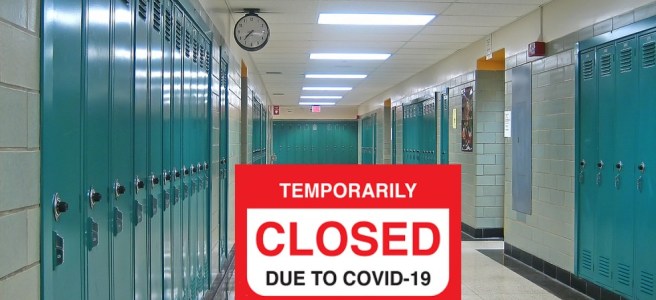
Coronavirus (COVID-19): Schools Closed This Fall?

Temporarily_CLOSED_COVID-19_High_School_Dr_Paul_Lowe_Admissions_Expert_Independent_Educational_Consultant

We are currently receiving calls from parents who are receiving emails about the upcoming school agenda from their local school districts. The shift to online instruction is a predicament for many schools.   Some school districts are still figuring out whether to reopen, how they should reopen and if they should reopen. Some school districts are still in the midst of the planning stages of best practices for each grade level of education, including distance learning and online instruction.  This uncertainty has beset the over 13,000 school districts nationwide, with many pushing back start dates, planning hybrid models or deciding to go entirely online.

A recent study published by the Journal of the American Medical Association stated that school closures this past spring may have prevented 1.37 million cases of COVID-19 in the country between day 17 and day 42 of schools’ closure periods. The researchers estimated that 40,600 fewer Americans died overall during that period because schools shuttered.

Even with the possibility of some schools reopening (which, based on the current progression of COVID-19, is a low probability), many parents in our “Dr. Lowe’s Admissions Strategies” discussion groups were reluctant to have their children return to school, not only for the safety of their children, but also because of the risks of dissemination to other demographic groups.  Their concern is based on the fact that there have been reports of parents sending their children to summer camps and within weeks of attending (even with social distancing policies and strict safety and hygienic measures) there have been COVID-positive tests among attendees.  The worry is that the school environment will be an even more challenging venue to prevent COVID-19 outbreaks.

Parents are understandably concerned about the safety of their children at school amid the complexities and unknowns of COVID-19.  Several parents from different areas in the U.S. have told us that they are pooling resources for their children’s education.  They are gathering small groups of children to learn at home this fall called pandemic pods, home-school pods or learning pods in which groups of three to 10 students learn together in homes under the tutelage of the children’s parents or a hired teacher.  Other parents have formed parent pods with the intention of not sending their children to schools and conducting their own home school networks.

In terms of college counseling, parents have expressed concerns because of the shift to online education and the reduced in-person contact with high school counselors.  With college admissions dynamically changing and the effect of COVID-19 on college admissions to Ivy League and highly selective colleges and universities and BS/MD programs, our goal is to ensure students successfully navigate the college admissions process.  This can be especially more challenging for current rising juniors and seniors.  Admissions requirements have changed and many students will need more comprehensive, individualized guidance.  The new milieu created by COVID-19 will require innovative approaches to successfully navigate the new college admissions environment.

Dr_Paul Lowe_Ivy_League_Admissions_Expert_AdviceWe-are-the-best_let_us_prove_it_Dr_Paul_Lowe_Admissions_Advisor_Educational_Consultant_Ivy_League_Boarding_School

“Admissions is a competitive sport!  Why gamble with uncertainty?” – Dr. Paul Lowe

“Parents hire us because they chose to pay an admissions expert who will help them avoid making mistakes.” – Dr. Paul Lowe

Dr. Paul Reginald Lowe, founder and managing director of Pinnacle Educational Center Admissions Advisors Group, provides comprehensive counseling advice, exclusively for admissions to top private schools; Ivy League and highly-selective colleges/universities; BS/MD programs; graduate and medical schools and top visual and performing arts programs.   The admissions affiliate: Ivy League Admissions Advisors specializes in admissions to Ivy League and highly selective colleges,  Dr. Lowe also specializes in helping students who have been wait-listed, deferred or rejected gain admission into their top-choice schools: College Application Rejected. and student who wish to transfer to another college: College Transfer Admissions Advisors.

Diversity: Utilizing Our Differences for Success

Diversity_Utilizing_Our_Differences_for_Success_Dr_Paul_Lowe_Admissions_Expert_Independent_Educational_Consultant

In our society, although many organizations continue to grapple with issues of diversity, in a multitude of businesses, including retail, fashion, media, entertainment and sports, diversity is reflected at many levels.  Still, at this time it is clear that there is still more to be done as people realize that there continues to be a lack of communication and understanding on certain levels within our society.

Everyone who participates in a common endeavor as part of a collective is simply a citizen of that collective.  This of course applies to businesses.  All within the collective have different experiences which contribute positively and are generally interesting and useful to others within the collective.  Studies have shown that when each individual is allowed to provide their unique perspectives to the collective, when embraced, results in better than expected outcomes to solutions to problems being addressed.  All would agree that beautifully harmonic music is preferable to a monotone.

Of course, there continues to exist issues of access, racism, prejudice, bigotry, egalitarian treatment, etc.  “Racism in the United States continues to be so pervasive and systematic that, in August 2014, the United Nations Committee on the Elimination of Racial Discrimination (CERD) published a report that examined racial equality and justice in the US. CERD noted that black Americans disproportionately face economic and social disparity and urged the US to halt not only the excessive use of force by police, but also broader racism. “This is not an isolated event and illustrates a bigger problem in the United States, such as racial bias among law enforcement officials, the lack of proper implementation of rules and regulations governing the use of force, and the inadequacy of training of law enforcement officials,” said Noureddine Amir, CERD committee vice chairman. “Racial and ethnic discrimination remains a serious and persistent problem in all areas of life from de facto school segregation to access to health care and housing.”  This should not be for companies and businesses in the United States of America in this day and age.  As a successful admissions expert, with over 20 years of experience and an enviable acceptance track record, my exposure to and experiences with systemic racism, bigotry and prejudice are not new.  They, understandably, have been and continue to be the norm (par for the course) because who I am.  These experiences and my continually being viewed as different and inferior (and, at times, unqualified) have paradoxically empowered me, as an admissions advisor, to creatively and innovatively help my clients stand out and gain admissions to their top-choice private schools, colleges and universities and BS/MD programs!

Parents who overcome various issues as well who understand, respect and appreciate the value of different perspectives allow us to provide their children with unmatched COMPETITIVE admissions advantages!  In essence, their children benefit immensely from my being continually viewed and times treated as different – What an empowering paradox!

Racial, ethnic, generational and cultural differences have always been America’s greatest assets!  They have collectively been the glue that have made America great!  Diversity was a necessary precondition to our democracy and has provided the impetus for engagement in the full kaleidoscope of “American culture”.  Furthermore, it has produced an enviable position that other nations strive for in our world.

  1. Diversity in business and commerce:  In today’s globalizing, fast-changing, highly-competitive and networked world, the capacity to turn diversity to one’s advantage is critical and necessary.  It is not just a nice thing to do for racial and ethnic minorities; it is a MUST.  As the world evolves dramatically, cultural, ethnic and racial immersion has become a widespread organizational imperative – from Google to IBM.
  2. Research shows that diversity usually trumps familiarity, insularity and ability.  Diverse teams are much better at problem-seeking and problem-solving. They bring different cognitive, intellectual and experiential tool kits and ways of approaching a problem to the table.  Diverse teams see customers, products, and market opportunities in creative, new and unforeseen ways.  Even among the most well-meaning, a homogeneous team comes with a limited outlook., whereas a diverse team often yields nuanced deliberated decisions made from multiple perspectives and experiences that result in deeper and wider considerations and probable outcomes and results.
  3. A report entitled, “Innovation, Diversity, and Market Growth” found that when teams have one or more members who represent the gender, ethnicity, culture, generation, or sexual orientation of the team’s target end user, the team is as much as 158 percent more likely to clearly understand that target subject. This difference significantly increases the team’s likelihood of creating successful programs or products for their target subject.
  4. The American Sociological Association has demonstrated that in organizations with diverse teams there is a 9% rise in sales revenue and significant increase in business performance.  In contrast, monolithic and homogeneous thought within a group makes a cohesive team, but one that will happily and repeatedly agree on the same mistake as the rest of world evolves.
  5. Wall Street financial firms have recognized that in “superforecasting” (forecasting and predicting future market shifts) the wisdom and judgement of diverse teams can broaden knowledge base and focuses more on constantly updating probabilities rather than a non-diverse team that is involved in group think.
  6. Former Federal Reserve Chairwoman Janet Yellen, the American Economic Association’s president, and other prominent economists have said a lack of diversity limits how the economics field analyzes issues and crafts policies that affect broad swaths of people.
  7.  Diversity decreases mistakes: Individuals with different backgrounds and styles approach problems differently.  Research published by a MIT professor exploring past literature, found that diverse teams tend to be less susceptible to groupthink, which can drastically reduce the likelihood of making avoidable mistakes.
  8. A 2014 study of Columbia University showed that ethnically diverse trader teams priced assets more accurately, avoided conformity, and thwarted bubbles.
  9. Diversity and Innovation: The Difference: How the Power of Diversity Creates Better Groups, Firms, Schools and Societies. Diverse perspectives with in office settings consistently allow for more powerful breakthroughs in innovation.  Research shows that that daily interactions with co-workers from different racial and economic backgrounds help a team develop the ability to view and understand complex problems and events through multiple lenses.  Research also has demonstrated that an integrated workforce helps companies design and sell products more effectively to a wide range of customers on global scale.
  10. A study by Rocio Lorenzo and Martin Reeves: “How and Where Diversity Drives Financial Performance”, in the Harvard Business Review of 1700 companies in eight countries, found that diversity among managers was associated with greater organizational innovation and profitability. 
  11. A McKinsey & Company research report: “Why Diversity Matters”, revealed that of 366 public companies analyzed, those in the top quartile for racial and ethnic diversity are 35% more likely to have financial returns above national industry medians.  In the United States, there is a linear relationship between racial and ethnic diversity and better financial performance: for every 10 percent increase in racial and ethnic diversity on the senior-executive team, earnings before interest and taxes (EBIT) rise 0.8 percent.
  12. A McKinsey & Company research report analyzes how inequality shapes the Hollywood industry and how much it ultimately costs its bottom line. The consulting firm deduced that the $148 billion film and TV industry loses $10 billion, or 7%, every year by undervaluing Black films, filmmakers and executives.
  13. The Great British Diversity Experiment proved that being in a diverse group makes you more creative because you get many different perspectives and you connect the dots in different ways.  The study’s findings indicated that “Diversity is the New Darwinism
  14. In a study about groupthink, Wiser: Getting Beyond Groupthink to make Groups Smarter, homogenous groups have a high probability of making poor or self-destructive decisions and intensify biases:  (1) Groups do not merely fail to correct the errors of their members; they amplify them.  (2) They fall victim to cascade effects, as group members follow the statements and actions of those who spoke or acted first. (3) They become polarized, taking up positions more extreme than those they held before deliberations. (4) They focus on what everybody knows already—and thus don’t take into account critical information that only one or a few people have.  
  15. According to a Brookings Institution report on the 12 regional U.S. Fed banks and diversity,  “bank directors are overwhelmingly white, overwhelmingly male, and overwhelmingly drawn from business communities within their districts, with little participation from minorities, women, or from areas of the economy – labor, nonprofits, the academy – with important contributions to make to Fed governance.  Promotions of Reserve Bank Presidents form within creates a risk for groupthink and intellectual homogeneity.”

Scott Page, author of The Difference, a book on the power of diversity, makes an very interesting analogy:  a good toolbox is not the same as a toolbox full of good tools: two dozen top-quality hammers will not do the job.  However, what is needed for an excellent job is variety (diversity):  a hammer, pliers, saw, a choice of screwdrivers and more.:

Racial and ethnic differences is not just a good idea and good for society, it’s good for business.  We should continue to embrace and acknowledge our differences for its importance in contributing to business, cultural and academic success that has made the United States of America the shining example that many other countries have attempted to emulate.

Diversity_equals_success Diversity_Advantage_Dr_Paul_Lowe_Admissions_Expert_Independent_Educational_Consultant

Admissions is a competitive sport!  Why gamble with uncertainty? – Dr. Paul Lowe

We provide our clients access to our specialized knowledge!” – Dr. Paul Lowe

Dr. Paul Reginald Lowe, founder and managing director of Pinnacle Educational Center Admissions Advisors Group, provides comprehensive counseling advice, exclusively for admissions to top private schools; Ivy League and highly-selective colleges/universities; BS/MD programs; graduate and medical schools and top visual and performing arts programs.   The admissions affiliate: Ivy League Admissions Advisors specializes in admissions to Ivy League and highly selective colleges,  Dr. Lowe also specializes in helping students who have been wait-listed, deferred or rejected gain admission into their top-choice schools: College Application Rejected. and student who wish to transfer to another college: College Transfer Admissions Advisors.

Taking a Gap Year: Covid-19

coronavirus_gap_year_Dr_Paul_Lowe_Admissions_Expert_Independent_Educational_Consultant

As speculation and uncertainty continue to dominate course and outcome of the COVID-19 pandemic and its effect on colleges opening this fall, many students, both here and from abroad, are considering taking a gap year and then enrolling next year.

If you are in the minority of high school senior students who are considering a gap year (and your deferral request is approved by your college or university), remember that planning is the essential component of a successful gap year.  There are plenty of resources for students including books and websites to determine what types of programs appeal to you.  Two websites that will help you to research gap year programs: the Gap Year Association and the Gap Year.

Once you have an idea of what opportunities are available, think about the goals you should have for your time off.  There are thousands of options for time off as well as infinite combinations of activities.

What are the factors you should consider in planning to have a productive and meaningful gap year?  You can simplify your planning by answering these few questions:

  • What do I want to learn?
  • How much structure do I want or need?
  • What kinds of things do I want to do?
  • Where in the world do I want to be? (Assuming that in the midst of your gap year, travel restrictions are lifted.

Once you have an idea of what opportunities are available, think about the goals you should have for your time off.  There are thousands of options for time off as well as infinite combinations of activities.

Here are common ways to consider spending your gap year:

  • Internships:  Spend time working in a career field that interests you.
  • Volunteer work:  You can find volunteer work both in the U.S. and abroad.
  • Academics:  Take online classes at a local college.
  • Work:  Here is where students can become creative.

When considering a gap year, we advise our clients to PLAN, PLAN and PLAN to successfully accomplish their personal goals as well as to have a memorable experience!


Dr_Paul_Lowe_Ivy_League_Admissions_Expert_AdviceWe-are-the-best_let_us_prove_it_Dr_Paul_Lowe_Admissions_Advisor_Educational_Consultant_Ivy_League_Boarding_School

Admissions is a competitive sport!  Why gamble with uncertainty? – Dr. Paul Lowe

We provide our clients access to our specialized knowledge!” – Dr. Paul Lowe

Dr. Paul Reginald Lowe, founder and managing director of Pinnacle Educational Center Admissions Advisors Group, provides comprehensive counseling advice, exclusively for admissions to top private schools; Ivy League and highly-selective colleges/universities; BS/MD programs; graduate and medical schools and top visual and performing arts programs.   The admissions affiliate: Ivy League Admissions Advisors specializes in admissions to Ivy League and highly selective colleges,  Dr. Lowe also specializes in helping students who have been wait-listed, deferred or rejected gain admission into their top-choice schools: College Application Rejected. and student who wish to transfer to another college: College Transfer Admissions Advisors.

Coronavirus Effect on Applying to BS/MD Programs

Applying to BS_MD_Programs_Coronavirus_Dr_Paul_Lowe_Admissions_Expert_Independent_Educational_Consultant

Over the past month, our offices have been receiving many phone and email inquiries about BS/MD programs.  Most of these inquiries are from very anxious parents of high school juniors who have read guides or books about BS/MD programs, researched information and talked with their friends whose children are currently attending BS/MD programs.

Their children typically have this type of applicant profile: High GPA, at least 5 AP courses, high SATs (if they were able to take them), musical, artistic and/or athletic extracurricular activities, research/clinical internships, shadowing doctors, helping the poor or starting a not-for-profit organization to help the poor or traveling to a developing country to volunteer; and of course, a two-page resume!  What parents don’t understand or seem to ignore is that their children sound all the same on paper and as a result can be easily thrown in the rejection pool.

What parents are really calling me about is to find out what to do  during the COVID-19 pandemic and determine its impact on their children’s college admissions chances.  Internships, upcoming summer programs, volunteer programs, doctor shadowing and research opportunities have all been cancelled.  In several weeks, their children will be rising seniors and in the throes of the competitive college application process to Ivy League and highly selective colleges, universities and BS/MD programs.

In our recent webcast: Applying to BS/MD Programs – COVID -19,  we discussed our go-to strategies that should be used when applying to BS/MD programs in the COVID-19 pandemic landscape.  The sudden onset of these unprecedented times has brought new changes in applying to BS/MD programs.  Books and guides regarding BS/MD programs (which were published before COVID-19), although informative, do not address the how-to’s and the do’s and dont’s of applying to BS/MD programs during the pandemic.  They do not address the new variables such as lack of availability of test scores, cancellation of internships, summer programs, research projects and gaps in resumes.  Past strategies and guides do not show students how to navigate these changes and what students need to do in order to be strongly considered for these programs. In addition, high school counselors do not specialize in providing advice for BS/MD programs.

Our recent discussions with admissions officers at institutions with BS/MD programs revealed that they anticipate that BS/MD candidates’ applications and resumes will have vacuums/gaps including entire spring quarter or trimester without extracurricular activities volunteer work, sports, and scientific research in addition to new and online classroom experiences and grading systems. The consensus is that students have to be creative and innovative with these gaps and have to explain what they are doing with their time.  Admissions officers are not just looking at resume-building based on online activities.

As one admissions officer stated: “The COVID-19 crisis has reset how we will be evaluating BS/MD applicants this fall.”   Several stated that for qualified candidates they will base college and BS/MD application decisions on the information that is available to them at the time of the application. What they are looking for is an insight into how the student thinks, how they interact, and how well they can articulate a point of view under these unprecedented conditions.  BS/MD programs will be even more competitive!  Even in the COVID -19 admissions environment, BS/MD programs will NOT have a lot of trouble filling their seats.  Especially, when they guarantee admissions to medical school from high school!

With a lot at stake, in a short period of time in such a competitive environment, BS/MD applicants (and their parents) need a winning game plan that works in the COVID-19 environment.

Our over 20 years of advisory admissions experience and long-standing professional relationships with admissions officers provide us with the tool-kit of strategies and knowledge to help our clients successfully navigate the BS/MD Admissions process in the COVID-19 landscape.

Our BS/MD Admissions practice is specialized: Dr. Lowe and his team only work with parents who understand that the BS/MD admissions process is competitive, who desire help from an admissions expert and who see the value and investment in paying for expert advice through a detailed and ongoing comprehensive admissions advisory service for their child’s dream of becoming a doctor.  He also specializes in helping international students in the BS/MD process. BS/MD Admissions Advisors – 2020 AcceptancesParents who chose to use our services can now call their son or daughter – “Doctor”.

Coronavirus Effect on High School Counseling

coronavirus_high_school_counseling_college admissions_Dr_Paul_Lowe_Admissions_Expert_Independent_Educational_Consultant

The Coronavirus pandemic continues to cause unprecedented changes in college admissions.  Because schools remain shuttered, high schoolers now lack the in-person help they traditionally could receive from high school counselors to meet critical admissions deadlines and requirements. This situation is exacerbating the already difficult role that school counselors face in providing adequate help with college admissions.

There are many high schoolers who have not met with their school counselors and their school counselors don’t really know them.  High school counselors in public schools spend the majority of their time on school activities unrelated to college admissions.

The National Association for College Admission Counseling’s (NACAC) 2019 State of College Admissions (using data from NACAC’s 2018–19 Counseling Trends Survey and the US Department of Education) reported: “that on average, public high school counselors spend only 19 percent of their time on college admissions counseling.  On the other hand, the counseling staff at private schools spent an average of 31 percent of their time on college counseling.  The results of NACAC’s 2018–19 Counseling Trends Survey indicated the average overall student-to-counselor ratio for public secondary schools (ending in grade 12) was 263-to-1. Data regarding the extent to which college advising is part of counselors’ job responsibilities showed the average student-to-college counselor ratio was 309-to-1. Public institutions assigned substantially more students to counselor.”

The American School Counselor Association (ASCA) recommends a maximum 250-to-1 ratio.  Most states are significantly higher than this. The most recent student-school counselor data (2018-2019) available from the U.S. Department of Education, National Center for Education Statistics.  The student-to-college counselor ratio is based on both the total number of counselors who exclusively provide college counseling for students and the total number who provide college counseling among other services for students.

High school counselors are tasked with a multitude of duties.  It is a well-documented fact that public school systems burden counselors with many duties unrelated to college counseling including but not limited to, testing, scheduling, crisis counseling, social/emotional counseling, occupational counseling/job placement, etc.  Now they must do all of this without the benefit of personal contact with their students.

With the heavy workload of most high school counselors, few are able to know their students well or have the time to provide the personalized attention needed during the college admissions process.  Now add to this mix the new and unfamiliar challenges of closed schools, distance learning, cancelled standardized testing, alterations in traditional student evaluations, limited ability to visit colleges, cancelled summer activities, cancelled internships, cancelled sports, changes in extracurricular activities, etc.  Welcome to the new era of college admissions!

Many high school parents who call us are anxious over the fact that their children currently aren’t in school and they are focused very much on day-to-day living.  Some parents are aware of the differences in methods of providing education between independent schools, which provide remote active classroom interactions with student participation, as well as assignments and projects vs public schools, requiring parental home-schooling for completion of assignments.  Furthermore, they have not been planning ahead and are not keeping up to date with various changes in admissions deadlines, test cancellations and other issues that usually require multiple in-person school counselor meetings.

Given the level of uncertainty and the timing of the pandemic at a point when high school juniors are on the verge of college application planning, it’s important to understand the impact on student (and parental) planning.

Many parents are concerned with how the COVID-19 pandemic has and will affect their children’s chances of acceptance to colleges, especially to Ivy League and highly selective colleges and universities and BS/MD programs.

In our recent webinar: “Navigating the College Admissions Process: COVID-19”, many parents stated that they have a very hard time keeping up with college admissions.  Parents are frustrated, exhausted, overwhelmed and at times confused as they try to understand the competitive process, because they rely on books, algorithms and unreliable third-party advice about college admissions.  From these antiquated and outdated sources, many parents believed that they knew all there was to know about competitive college admissions.  However, they are now in new and unfamiliar territory.

Navigating this new frontier requires expert admissions advice, insight, foresight, specialized predictive analysis, research and the experience to spot pitfalls and avoid irrevocable mistakes that may result in rejections letters.


Dr_Paul_Lowe_Ivy_League_Admissions_Expert_Advice     We-are-the-best_let_us_prove_it_Dr_Paul_Lowe_Admissions_Advisor_Educational_Consultant_Ivy_League_Boarding_School


Admissions is a competitive sport!  Why gamble with uncertainty? – Dr. Paul Lowe

We provide our clients access to our specialized knowledge! – Dr. Paul Lowe

Dr. Paul Reginald Lowe, founder and managing director of Pinnacle Educational Center Admissions Advisors Group, provides comprehensive counseling advice, exclusively for admissions to top private schools; Ivy League and highly-selective colleges/universities; BS/MD programs; graduate and medical schools and top visual and performing arts programs.   The admissions affiliate: Ivy League Admissions Advisors specializes in admissions to Ivy League and highly selective colleges,  Dr. Lowe also specializes in helping students who have been wait-listed, deferred or rejected gain admission into their top-choice schools: College Application Rejected. and student who wish to transfer to another college: College Transfer Admissions Advisors.

BS/MD Admissions Advisors-2020 Acceptance Rates

BS_MD_Admissions_Acceptance-Rate_2020_Dr_Paul_Lowe_Admissions_Expert

BSMD_Admissions_Acceptance_Rates_2020_Dr_Paul_Lowe_Admissions_Expert_Independent_Educational_Consultant

This year was an amazing year for us!!!

All of our BS/MD Admissions clients including international students were accepted to BS/MD programs!

Our parents of the below students are happy, overjoyed and excited that they can now call their sons and daughters Doctors

  • Boston University – 2
  • Brown University PLME – 3
  • ​CUNY/Sophia – 1
  • Drexel University – 2
  • Northwestern University – 2
  • NJIT/Albert Dorman Honors College – 1
  • Penn State/Jefferson Medical College – 2
  • RPI/Albany Medical College – 1
  • ​Rice/Baylor – 1
  • Rutgers/New Jersey Medical – 2
  • Siena College/Albany Medical College – 1
  • Stony Brook University – 2
  • SUNY – Downstate – 2
  • SUNY – Upstate – 2
  • Temple University – 1
  • TCNJ/New Jersey Medical
  • Union College/Albany Medical College – 2​
  • University of Cincinnati UCD – 1
  • University of Rochester – 2
  • Washington University in St. Louis USPM – 2

Our BS/MD Admissions practice is specialized: Dr. Lowe and his team only work with parents who understand that the admissions process is competitive, who desire help from an admissions expert and who see the value and investment in paying for expert advice through a detailed and ongoing comprehensive admissions advisory service for their child’s dream of becoming a doctor.  He also specializes in helping international students in the BS/MD process.

BS_MD_Admissions_boy_medical_doctor_Dr_Paul_Lowe

Dr. Paul Reginald Lowe is the managing director of Pinnacle Educational Center Admissions Advisors Group network.  He and his team of admissions advisors, through the admissions affiliate, BS/MD Admissions Advisors, help high school students get accepted to BS/MD programs. 
Hiring An Admissions Expert – One Less Thing To Worry About

Worried_wrinkles_Dr_Paul_Lowe_Admissions_Advisor_Expert_Independent_Educational_Consultant

It’s April and we are receiving calls and emails from parents whose children were rejected or placed on the or wait-list (which means that “we love your child, but we don’t have spot available today, tomorrow or perhaps never”) for Ivy League and highly selective colleges and universities and top private day and boarding schools.

When I ask the question: “Did you hire an admissions expert?”  The answer is always No!

It is surprising to me that these same parents may hire the best tutor for academic subjects, the best building experts for house repairs, the best soccer or lacrosse coach or the best hairstylist.  However, when it comes to their children’s educational future, which ultimately affects their future, they choose to make the decision that an admissions expert is unnecessary.

Benjamin Franklin famously advised “An ounce of prevention is worth a pound of cure.”  For those of you who tend to worry, here are the reasons why you should hire an admissions expert so that you don’t develop irreversible worry wrinkles or “the dreaded elevens”:

  • Admissions experts have personal and current specialized knowledge of what is happening at educational institutions because of their long-standing professional relationships with admissions departments and officers.
  • Admissions experts know that the devil is in the details; research, due diligence and thorough assessment are par for the course.
  • Admissions experts understand how to use an application as personal branding and marketing tool for your child’s admissions success.
  • Admissions experts understand the diplomacy, advocacy and strategic game plan are needed for admissions success.
  • Admissions experts understand and embrace the competitive nature of admissions process.
  • Admissions experts understand that valuable advice is investment in your child’s future, not an expense.
  • Admissions experts view admissions as a non-formulaic, competitive endeavor.  Admissions experts help your child achieve the goal they’ve worked on since childhood – acceptance into their top choice school.

The question that parents who are about to enter the admissions process should ask themselves:  Why worry?

Admissions is a competitive sport!  Why gamble with uncertainty? – Dr. Paul Lowe

We provide our clients access to our specialized knowledge! – Dr. Paul Lowe

We-are-the-best_let_us_prove_it_Dr_Paul_Lowe_Admissions_Advisor_Educational_Consultant_Ivy_League_Boarding_School      key-to-success_admissions_success_Dr_Paul_Lowe_Admissions_Expert_Independent_Educational_Consultant

Dr. Paul Reginald Lowe, founder and managing director of Pinnacle Educational Center Admissions Advisors Group, provides comprehensive counseling advice, exclusively for admissions to top private schools; Ivy League and highly-selective colleges/universities; BS/MD programs; graduate and medical schools and top visual and performing arts programs.   


Class of 2024 Total Admissions Rates

It’s April and all the Ivies and highly competitive colleges and universities have notified applicants of their decisions.  Even with the COVID-19 pandemic, college admissions offices are in operation.  For some of the Ivies and selective colleges the admissions rates have slightly increased.  The reality is that even with these small increases, it’s still hyper-competitive to gain admissions to these schools.  For example, Harvard’s admit rate was 4.9%, up from 4.6% last year.  However, the 4.9% indicates that 1,980 applicants were admitted of the 40,248 who applied or 38,368 (95.4%) applicants were rejected!  Yale’s admit rate was 6.54% up from 5.91% last year.  Therefore, the 5.1% represents 2,304 accepted applicants of the 35,220 who applied or 32,916 (94.8%) applicants who were rejected.

The coronavirus pandemic may have disrupted college tours, SAT test dates, and high school in-person classes, but not college admissions activity! The fundamentals of college committee assessment and selection are the same: they will be selecting the best students who will be contributing to their individual college communities and mission.

If you are a high school junior and will start the application process in 6 months, admissions committees will be evaluating your applications! You should prepare accordingly!

Here are this year’s total admissions rates for Ivy League and some of the highly selective colleges and universities (last year’s rates are in red):

  • Boston College:  24% | 27.1%
  • Boston University:  18.5% | 18%
  • Bowdoin College:  8.3% | 8.9%
  • Brown University:  6.9% | 6.6%
  • Carnegie Mellon University:  TBA
  • Colby College: 9.4% | 9.6%
  • Columbia University:  6.1% | 5.3%
  • Cornell University:  TBA
  • Dartmouth College:  8.8% | 7.9%
  • Duke University:  7.7% | 7.4%
  • Harvard University:  4.92% | 4.6%
  • Johns Hopkins University:  8.8% | 9.1%
  • MIT:  7.2% | 6.6%
  • New York University:  15% | 16%
  • Princeton University:  5.55% | 5.8%
  • Swarthmore College:  8.8% | 8.7%
  • University of Chicago:  TBA | 5.9%
  • University of Pennsylvania:  8.0% | 7.4%
  • University of Southern California: 16% | 11%
  • University of Virginia:  20.5% | 24.3%
  • Yale University:  6.54% | 5.91%

This year, all of our clients were accepted into their top-choice colleges including Ivy League and highly selective colleges and universities.  In fact, several of our clients were accepted to two or more Ivies!

Dr_Paul_Lowe_Ivy_League_Admissions_Expert_AdviceWe-are-the-best_let_us_prove_it_Dr_Paul_Lowe_Admissions_Advisor_Educational_Consultant_Ivy_League_Boarding_School

Admissions is a competitive sport!  Why gamble with uncertainty? – Dr. Paul Lowe

We provide our clients access to our specialized knowledge! – Dr. Paul Lowe

Dr. Paul Reginald Lowe, founder and managing director of Pinnacle Educational Center Admissions Advisors Group, provides comprehensive counseling advice, exclusively for admissions to top private schools; Ivy League and highly-selective colleges/universities; BS/MD programs; graduate and medical schools and top visual and performing arts programs.   The admissions affiliate: Ivy League Admissions Advisors specializes in admissions to Ivy League and highly selective colleges,  Dr. Lowe also specializes in helping students who have been wait-listed, deferred or rejected gain admission into their top-choice schools: College Application Rejected. and student who wish to transfer to another college: College Transfer Admissions Advisors.

A New College Admissions Landscape: What High School Juniors Need to Know

A New College Admissions Landscape: What High School Juniors Need to Know

This week is decision time for many Ivies and highly selective colleges and universities!  COVID-19 has closed down many K-12 school districts around the world for the rest of the school year.  If you’ve been following the directions of well-known books and/or chats, by now you must realize that your current college admissions “playbook” or plan may be ineffectual.  What will high school juniors need to do as they continue their admissions journey and prepare for their senior year?

1. Plan, plan and plan.

“By failing to prepare, you are preparing to fail.” – Benjamin Franklin

“A goal without a plan is just a wish.” – Antoine de Saint-Exupéry

“If you don’t know where you’re going, you’ll wind up somewhere else” – Yogi Berra

As the world around you changes daily, you will need to formulate a new plan, create a timeline and meet your goals.  Deadlines are a crucial aspect of the college admissions process.

2. Make a balanced preliminary college list. Start your search by familiarizing yourself with many different colleges and universities and facilitate your research on the different options that are available. Visit the websites of the schools you are considering.

3. “Visit” colleges. Start to “visit” campuses. Review college websites, take a virtual tour, and learn more about student life by reading the student blogs linked there.

4. Begin to consider letters of recommendation. It’s not who is writing or what they are writing. It’s how they are writing about you in a meaningful way.  Choose your recommenders wisely.

5. Standardized Tests. Plan your SAT and/or ACT timelines. Even though standardized tests are cancelled through June you should still plan for the future!

6. Grades. Colleges view grades with the utmost importance. Remember, your grades should come first.  Colleges look at junior year grades to understand the academic abilities of a student.  Junior year grades are the last full year of grades for admissions committees to look at in determining a student’s acceptance.  A recent survey by the National Association for College Admission Counselors (NACAC) found that admissions officers gave “considerable importance” to grades in students’ college-prep classes.  Even though your school is now providing online courses, take them seriously.  From my discussions with admissions officers at several of the Ivies and highly competitive colleges, they will be closely reviewing your performance in these courses.

7. For BS/MD applicants. For many students, their internships and research projects have been cancelled.  From my discussion with BS/MD program admissions officers, they “will be seeking bright students who, in these unprecedented times, show a commitment to the BS/MD track and want to be a doctor”.

8. Seek expert admissions advice. With the disruption in school schedules and so many schools closed, the challenge for high school guidance or college counselors to provide students with adequate college counseling has dramatically increased.  In many private as well as public high schools, remote/online learning does not apply to college counseling, leaving many students to navigate the college admissions process on their own in a competitive admissions environment fraught with minefields.  High school juniors and their parents need valuable advice from experts who understand the competitive admission process, as well as those who have long-standing professional relationships with college admissions officers.

My recent conversations with admissions officers have been informative and valuable.  As an admissions officer stated; “The current COVID-19 pandemic will NOT negatively impact how we review applications this fall”.  Another mentioned to me, “We still want students who are involved, academically motivated, who have demonstrated success and are willing to contribute to the future vibrancy of our campus community.”


Dr_Paul_Lowe_Ivy_League_Admissions_Expert_Advicekey-to-success_admissions_success_Dr_Paul_Lowe_Admissions_Expert_Independent_Educational_Consultant

Admissions is a competitive sport!  Why gamble with uncertainty? – Dr. Paul Lowe

We provide our clients access to our specialized knowledge! – Dr. Paul Lowe

Dr. Paul Reginald Lowe, founder and managing director of Pinnacle Educational Center Admissions Advisors Group, provides comprehensive counseling advice, exclusively for admissions to top private schools; Ivy League and highly-selective colleges/universities; BS/MD programs; graduate and medical schools and top visual and performing arts programs.   The admissions affiliate: Ivy League Admissions Advisors specializes in admissions to Ivy League and highly selective colleges,  Dr. Lowe also specializes in helping students who have been wait-listed, deferred or rejected gain admission into their top-choice schools: College Application Rejected. and student who wish to transfer to another college: College Transfer Admissions Advisors.