6 Common Mistakes International Students Make During the College Admissions Process

International Students

As an admissions advisor and educational consultant for over 20 years, I have seen more and more international students who are enrolled in their local high schools or U.S. boarding schools applying to U.S. colleges.  Year after year, I have observed common mistakes that they make during the college admissions process that cause their applications to be rejected.

  1. Not doing research:  Most international students know a little about a few universities and not much more. They haven’t researched key things like academic programs and financial aid. They haven’t considered the accessibility, weather or cost of living in the city where they’ll be living.
  2. Not asking questions: Many international students don’t ask questions.  To many it’s not culturally appropriate. By not asking questions they may obtain misinformation and be misguided during the admissions process. 
  3. Not planning ahead: Most international students expect U.S. college admissions to be very streamlined and the same at each university.  In reality, every university has a different process and schedule.  International students need to develop a timeline and checklist and plan ahead accordingly.
  4. Not understanding the Common Application:  The Common Application is a way which schools assess students and select students.  Many international students misunderstand the complexity and nuances of the Common Application and make egregious and irrevocable mistakes on the Common Application which inevitably result in rejections.
  5. Not Marketing Themselves:  The competitive college admissions process is about developing and marketing your personal brand not just about your A-levels, TOEFL scores, or SAT scores.  Many international students view college admissions selection process quantitatively not qualitatively.  They need to understand the American schools’ expectations during the selection process. They need to share their accomplishments and achievements in a meaningful and compelling way to schools through the Common App.
  6. Depending solely on educational agents:  While educational agents in their countries are resources for international students, many agents in their countries do not constantly travel to U.S. colleges and universities to know, in real-time, the changes in each university admissions policies.  For example, Harvard’s admissions policy and mission is different from Yale, Princeton, Brown, MIT, Columbia, etc.

———————————————————————————————————————-

Dr. Paul Reginald Lowe is the managing director and lead admissions expert at Pinnacle Educational Center Admissions Advisors Group.  Dr. Lowe specializes in providing exclusive concierge-type admissions advisory services for U.S. and international families and students who are interested in applying to Ivy League and highly selective colleges and combined BS/MD programs.  Dr. Lowe also helps students gain admissions into their top choice private schools and colleges after they have been deferred, wait-listed and rejected.

As an experienced and trusted admissions advisor for over 20 years, Dr. Paul R. Lowe is an active member of the following organizations that uphold the ethical and professional standards and principles of good admission practices in college and independent school counseling: Higher Education Consultants Association (HECA), National Association for College Admissions Counseling (NACAC), New Jersey Association for College Admission Counseling (NJACAC), New York State Association for College Admissions Counseling (NYSACAC) and International Association for College Admissions Counseling (IACAC).

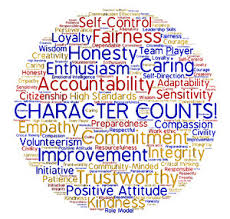
Character Counts in Private School Admissions

Character in Private School Admissions Dr Lowe

Being thorough and particular when evaluating a private school choice is extremely important for parents.  But one thing is certain…the competitive private schools will be equally as picky when choosing your child as a member of its incoming class.  Private schools have been using the traditional academic criteria of SSAT/ISEE and grades for a number of decades.  However, admissions personnel have long recognized that these cognitive measures are limited in their ability to predict a student’s fit in their schools’ community and program.  Increasingly they are determining how to accurately evaluate character attributes of a student as a factor in private school admissions.

Numerous traits were evaluated and discussed by admissions professionals participating in think tanks and summit meetings regarding admissions and character. Character attributes were then rated according to importance.  Among these character attributes, honesty, integrity, empathy, curiosity, creativity, teamwork, adaptability, resilience, community, generosity, self-control, adaptability and optimism were included on the list of the most important.

Each institution considers the positive attributes in the light of the goals of the school with regard to their students’ success. They have spent the last several years determining the best way to evaluate students’ character attributes during the admissions process.

Intended to complement the cognitive measures currently assessed in the admission process, the new Character Skills Assessment (CSA) which is a non-cognitive assessment will offer insights into an applicant’s character attributes and add great value to the holistic evaluation of applicants.

This new assessment is intended to provide a more complete and comprehensive picture of each applicant, providing insight into important issues of character that currently are often difficult to evaluate.  Schools will use these assessments to make even better informed decisions.

The Character Skills Assessment will be fully implemented in the 2017-2018 private school admissions season.

———————————————————————————————————————————-

Dr. Paul Reginald Lowe is the managing director and lead admissions expert at Pinnacle Educational Center Admissions Advisors Group’s Private School Admissions Advisors.   Dr. Lowe specializes in providing exclusive concierge-type admissions advisory services for U.S. and international families and students who are interested in applying to top U.S. boarding and day schools.  Dr. Lowe also helps U.S. and international students gain admissions into their top choice private schools after they have been wait-listed and rejected.


Summer College Planning Checklist for Rising High School Juniors

college planning checklist
Happy August!  Are you busy enjoying the summer? Or are you preparing for college admissions as a rising junior?  Use your summer downtime to plan and organize your college admissions journey.
  1. Enroll in an ACT or SAT prep course during the summer while you still have time.
  2. Research and find out test dates for ACT or SAT.
  3. For international students, research and find out test dates for the TOEFL exam.
  4. Visit college campuses to see which types of schools appeal to you.
  5. Begin to develop a preliminary list of colleges.
  6. Continue your participation in internships, camps, research, community service and other activities and see how they fit in your college admissions journey.
  7. Review your online persona.  Examine your information on Facebook, Instagram, Snapchat, Twitter, etc.
  8. Begin to prepare for courses that you have enrolled in for the upcoming school year.

It’s never too early to start planning for college!

————————————————————————————————————————————

Dr. Paul Reginald Lowe is the managing director and lead admissions expert at Pinnacle Educational Center Admissions Advisors Group.  Dr. Lowe specializes in providing exclusive concierge-type admissions advisory services for U.S. and international families and students who are interested in applying to Ivy League and highly selective colleges and combined BS/MD programs.  Dr. Lowe also helps students gain admissions into their top choice private schools and colleges after they have been deferred, wait-listed and rejected.

As an experienced and trusted admissions advisor for over 20 years, Dr. Paul R. Lowe is an active member of the following organizations that uphold the ethical and professional standards and principles of good admission practices in college and independent school counseling: Higher Education Consultants Association (HECA), National Association for College Admissions Counseling (NACAC), New Jersey Association for College Admission Counseling (NJACAC), New York State Association for College Admissions Counseling (NYSACAC) and International Association for College Admissions Counseling (IACAC).

Summer College Planning Checklist for Rising High School Seniors

college planning checklist

For high school seniors applying to colleges this fall, there are a lot of things to do during the summer.

  1. Start working on your Common Application; review the new essay prompts and new features.
  2. Start working on your college essays.
  3. Start visiting or re-visit colleges.
  4. Narrow down the colleges being considered.
  5. Make decisions regarding early action or early decision programs.
  6. Register for the SAT and/or ACT if you didn’t take a college entrance exam as a junior or want to take one again.
  7. For international students, register for the TOEFL or take one again.
  8. Get organized and start creating a checklist and calendar to keep track of standardized test dates, college application due dates, and financial aid deadlines.

College admissions continues to be competitive especially in Ivy League and highly selective college and universities.  My recommendation is that rising seniors should use their summers to start the college admissions process sooner than later.

————————————————————————————————————————————-

Dr. Paul Reginald Lowe is the managing director and lead admissions expert at Pinnacle Educational Center Admissions Advisors Group.  Dr. Lowe specializes in providing exclusive concierge-type admissions advisory services for U.S. and international families and students who are interested in applying to Ivy League and highly selective colleges and combined BS/MD programs.  Dr. Lowe also helps students gain admissions into their top choice private schools and colleges after they have been deferred, wait-listed and rejected.

As an experienced and trusted admissions advisor for over 20 years, Dr. Paul R. Lowe is an active member of the following organizations that uphold the ethical and professional standards and principles of good admission practices in college and independent school counseling: Higher Education Consultants Association (HECA), National Association for College Admissions Counseling (NACAC), New Jersey Association for College Admission Counseling (NJACAC), New York State Association for College Admissions Counseling (NYSACAC) and International Association for College Admissions Counseling (IACAC).


2017-2018 Common App Introduces New Features

2017-2018 Common Application New Features

If you are applying this fall during the 2017-2018 admissions cycle, here’s what to expect from the recent changes to the Common App features (in my previous blog, I covered essay prompts):

  1. Google Drive Integration:  Students will now be able to use Google Docs and Google Drive to upload such documents as  essays, resumes and other materials within the Common App.
  2. More Access for Mentors/Advisors:  Students who are working with community-based organizations, independent counselors or other advisors can assign them to their Common App account.  These advisors can observe the students’ progress and provide guidance.
  3. Self Report Courses and Grades:  Students will be asked the names of courses taken (or to be taken) over the four years of high school as well as grades that appear on their transcripts.  In other words, students will be responsible for self reporting all courses and grades.
  4. Resources for Spanish-Speakers:  For student and families where Spanish is the first language in the household, the Common App will be translatable into Spanish.

The above changes are aimed at streamlining the college application process while making it easier for more students to access the Common App.  However, these changes, including the essay prompts, allow admissions committees using the new team approach and committee approach, during the admissions selection process, to better analyze student profiles and will additionally, increase the number of colleges to which students will apply to in turn increasing the number of applications that many schools will receive.  As a result, expect heightened competition to Ivy League and highly selective colleges and universities in the 2017-2018 admissions season.

———————————————————————————————-

Dr. Paul Reginald Lowe is the managing director and lead admissions expert at Pinnacle Educational Center Admissions Advisors Group.  Dr. Lowe specializes in providing exclusive concierge-type admissions advisory services for U.S. and international families and students who are interested in applying to Ivy League and highly selective colleges and combined BS/MD programs. Dr. Lowe also helps students gain admissions into their top choice private schools and colleges after they have been deferred, wait-listed and rejected.

As an experienced and trusted admissions advisor for over 20 years, Dr. Paul R. Lowe is an active member of the following organizations that uphold the ethical and professional standards and principles of good admission practices in college and independent school counseling: Higher Education Consultants Association (HECA), National Association for College Admissions Counseling (NACAC), New Jersey Association for College Admission Counseling (NJACAC), New York State Association for College Admissions Counseling (NYSACAC) and International Association for College Admissions Counseling (IACAC).

Why Parents Are Choosing Private Schools

Private Schools vs Public schools Dr Paul Lowe

This season, I have increased my annual tour of schools to include a wider variety of private schools.  I have had the opportunity to speak with heads of schools, directors of admissions, admissions and development office personnel, administrative and support staff, faculty members, students, alumni and especially parents. Having had this opportunity, I have developed list of reasons why parents are sending their children to private schools.

(1)  Small class size.   Private schools assign on average about 9.8 students to each teacher, thus guaranteeing the individual attention each child needs to thrive intellectually, socially and emotionally.

(2)  Excellent educators.  Private school teachers teach as well as educate.  They passionately nurture and motive young minds.  They provide a truly bespoke education for your child. Personal development intellectually, socially and emotionally and academic achievement are par for the course.

(3) Personalized education. Private school education is not a one-size-fits-all affair.  Independent schools come in all shapes and sizes.

(4) Diversity. Private schools are multicultural and embrace diversity. They are committed to creating and fostering a welcoming community that is inclusive for all its members (faculty and students) regardless of race, ethnicity, ability, socio-economic status, religion, age, gender, sexual orientation, or any other attribute that does not define a person’s character.

(5) College counseling. Private schools have college counselors whose job is to specifically help students in the college admissions process. The National Association for College Admission Counseling’s 2014 State of College Admissions reported that on average, public high school guidance counselors spend only 24 percent of their time on college admissions counseling, while their private school counterparts spent 52 percent of their time on college admissions counseling.

(6) Sense of community.  In private schools, the atmosphere is cooperative and collaborative.  Private schools are like large families, with every member eager to contribute their individual characteristics to the good of every other member and the good of the whole school community.

(7) Building Relationships.  Many parents stated that in addition to receiving a superior education, their children would be building meaningful and long-lasting relationships with peers from well-connected families that would prove invaluable in the future.

There is truly a private school for every child. I have found that each school has a different atmosphere and chemistry.  The independent sector gives parents the opportunity to CHOOSE a school that is right for their child.  However, because of the increase in numbers of domestic as well as international applicants, the private school admissions process has become extremely competitive!

Though the cost of private school is not inexpensive, (the average tuition for day schools is $30,000 and for seven-day boarding is approximately $55,000 per year) the true value and dividends for educating your child, watching them happily learn and successfully thrive, is priceless!

————————————————————————————————-
Dr. Paul Reginald Lowe is the managing director and lead admissions expert at Pinnacle Educational Center Admissions Advisors Group’s Private School Admissions Advisors.   Dr. Lowe specializes in providing exclusive concierge-type admissions advisory services for U.S. and international families and students who are interested in applying to top U.S. boarding and day schools.  Dr. Lowe also helps U.S. and international students gain admissions into their top choice private schools after they have been wait-listed and rejected.
Top Advantages of Being Accepted to BS/MD Programs

Top BS/MD Programs

High school students who are interested in a medical career should consider combined BS/MD programs. Many of these medical school-from-high school pathways reduce the overall number of years students will spend studying to become a medical doctor.

If you are certain that your child wants to be a physician, why wait? You may want your child to consider the accelerated BS/MD option that guarantees acceptance into medical school after college.

Many of these specialized programs don’t even require the MCATs so students don’t have to worry about studying or registering for MCAT prep courses. Because students in these programs already know that they are admitted to medical school, they can pursue a major of interest rather than a “traditional” premed major although they will have to take basic premed courses: organic chemistry, biology physics and other courses.  There is also the financial aspect.  It cost thousands of dollars to apply to medical school:  MCAT prep courses, visiting medical schools, unpaid internships and application fees.  In addition depending on the program if it’s a 7-year med program, you could save as much as $100,000.

Of course, one of the great advantages that I observe with our BS/MD admissions clients is that in their senior year in high school they know that they can be called “Dr.”

————————————————————————————————————————–

Dr. Paul Reginald Lowe is the managing director and lead admissions expert at Pinnacle Educational Center Admissions Advisors Group‘s BS/MD Admissions Advisors.  

Intellectual Wealth and Education

Intellectual wealth and education

When people hear the word “wealth” they think of finances, economics of dollars, pounds, gold, etc. or making money. These are actually the materialization of what is seldom discussed: Intellectual Wealth.  What is Intellectual Wealth? What does it have to do with education and wealth?

Intellectual Wealth results from the acquisition of intellectual capital. Specifically, intellectual wealth results from obtaining knowledge, multiple intelligences and education. Intellectual wealth is not passive; it is very active.  Education is a critical component of intellectual wealth, especially in the global economy.

According to Wealth X, a leading global wealth information and insight firm, more and more international students are applying to elite and prestigious private day and boarding schools, as well as Ivy League undergraduate and graduate school programs. Affluent international parents consider the education of their children as their premier investment.  To international parents, a superior education and a pedigree degree for their child, is worth more than real estate or luxury items.  Education has become the new global currency and path to wealth.

———————————————————————————————-

Dr. Paul Reginald Lowe is the managing director and lead admissions expert at Pinnacle Educational Center Admissions Advisors Group. Dr. Lowe specializes in providing exclusive concierge-type admissions advisory services for U.S. and international families and students who are interested in applying to Ivy League and highly selective colleges and combined BS/MD programs. Dr. Lowe also helps students gain admissions into their top choice private schools and colleges after they have been deferred, wait-listed and rejected.

As an experienced and trusted admissions advisor for over 20 years, Dr. Paul R. Lowe is an active member of the following organizations that uphold the ethical and professional standards and principles of good admission practices in college and independent school counseling: Higher Education Consultants Association (HECA), National Association for College Admissions Counseling (NACAC), New Jersey Association for College Admission Counseling (NJACAC), New York State Association for College Admissions Counseling (NYSACAC) and International Association for College Admissions Counseling (IACAC).

Ready to Start Thinking About Applying to Boarding School?

The kids are settling in summer camp.  Moms and Dads have a much needed respite from the demands of school schedules, play dates, practices, rehearsals and other extracurricular activities.  But soon enough, it will be time to start the seemingly daunting tasks of the private school admissions season.  It is important to realize that the private school application process has become increasingly competitive due to increased interest from international families, as well as domestic families looking for alternatives to public school and the even more heightened competition for day school admissions.  It would be wise, therefore, to begin thinking of admissions strategies and to consider visiting these schools as well as other schools in your area to get an idea of which school would be best for your child.

When you are ready to start the process for boarding school admissions, here is a list of schools for you to consider that many of our clients end up attending:  Phillips Exeter Academy, Exeter, NH;  Phillips Academy Andover, Andover, MA;  St. Paul’s School, Concord, NH;  Deerfield Academy, Deerfield, MA;  Groton School, Groton, MA;  The Lawrenceville School, Lawrenceville, NJ;  Milton Academy, Milton, MA;  Middlesex School, Concord, MA;  The Hotchkiss School, Lakeville, CT;  Choate Rosemary Hall, Wallingford, CT;  Peddie School, Hightstown, NJ;  The Taft School, Watertown, CT;  The Loomis Chaffee School, Windsor, CT;  Concord Academy, Concord, MA;  St. George’s School, Newport, RI;  Blair Academy, Blairstown, NJ;  The Masters School, Dobbs Ferry, NY;  St. Mark’s School, Southborough, MA;  Kent School, Kent, CT ;  Northfield Mount Hermon, Mount Hermon, MA;  Berkshire School, Sheffield, M;  Emma Willard School, Troy, NY;  The Governor’s Academy, Byfield, MA;  The Hill School, Pottstown, PA;  Westminster School, Simsbury, CT;  Westover School, Middlebury, CT;  Mercersburg Academy, Mercersburg, PA;  Suffield Academy, Suffield CT;  Brooks School, North Andover, MA;  Portsmouth Abbey School, Portsmouth, RI;  Miss Porter’s School, Farmington, CT and The Hun School of Princeton, Princeton, NJ.

———————————————————————
Dr. Paul Reginald Lowe is the managing director and lead admissions expert at Pinnacle Educational Center Admissions Advisors Group’s Private School Admissions Advisors.   Dr. Lowe specializes in providing exclusive concierge-type admissions advisory services for U.S. and international families and students who are interested in applying to top U.S. boarding and day schools.  Dr. Lowe also helps U.S. and international students gain admissions into their top choice private schools after they have been wait-listed and rejected.
Common Application 2017-2018 Essay Prompts

Every year the Common Application adds or revises essay prompts.  Here are the announced changes to essay prompts that rising seniors can expect to answer:

2017-2018 Common Application Essay Prompts

1. No Change:  Some students have a background, identity, interest, or talent that is so meaningful they believe their application would be incomplete without it. If this sounds like you, then please share your story. 

2. Revised:  The lessons we take from obstacles we encounter can be fundamental to later success. Recount a time when you faced a challenge, setback, or failure. How did it affect you, and what did you learn from the experience?

3. Revised:  Reflect on a time when you questioned or challenged a belief or idea. What prompted your thinking? What was the outcome?

4. No Change:  Describe a problem you’ve solved or a problem you’d like to solve. It can be an intellectual challenge, a research query, an ethical dilemma – anything that is of personal importance, no matter the scale. Explain its significance to you and what steps you took or could be taken to identify a solution.

5. Revised:  Discuss an accomplishment, event, or realization that sparked a period of personal growth and a new understanding of yourself or others. 

6. New:  Describe a topic, idea, or concept you find so engaging that it makes you lose all track of time. Why does it captivate you? What or who do you turn to when you want to learn more? [New]

7. New:  Share an essay on any topic of your choice. It can be one you’ve already written, one that responds to a different prompt, or one of your own design. 

After reviewing the essay prompts with my core team and discussing it with several admissions officers at different Ivy league and highly selective colleges, we have developed a list of tips that you should consider when choosing and answering a question so that your essay stands out:

  • Choose a prompt that best describes you.
  • Answer the question!
  • When you write your essay, write about something that matters to you.
  • Use your own voice.
  • Be honest.
  • Pick a topic that will give the admissions committee an idea of who you are.
  • Write about your perspective – the lens through which you view your topic.
  • Consider the schools’ perspectives
  • Write succinctly.
  • Proofread, proofread and proofread!

When I give advice to my clients about their essays, I literally spend hours getting to know them, their motivations, their passions, their strengths and weaknesses. This exercise inspires them to free-think and brainstorm.  We then, together, consider different essay themes as they apply to their individual personality, in an in depth conversation.  My clients then individually re-brainstorm and commence writing their essays in their own voices.  Their peerless and unparalleled essays become memorable and powerful lyrics to great songs enjoyed by the admissions committees.

My belief is that a college essay is a personal branding and marketing tool to convince a group of culturally, emotionally, academically, intellectually and socio-economically diverse people in a room (at each college) in 2-5 minutes why they should accept YOU in their institution! This is easier said than done when students are taught to speak, tweet, text, email (and look) just like everyone else in their respective communities.